
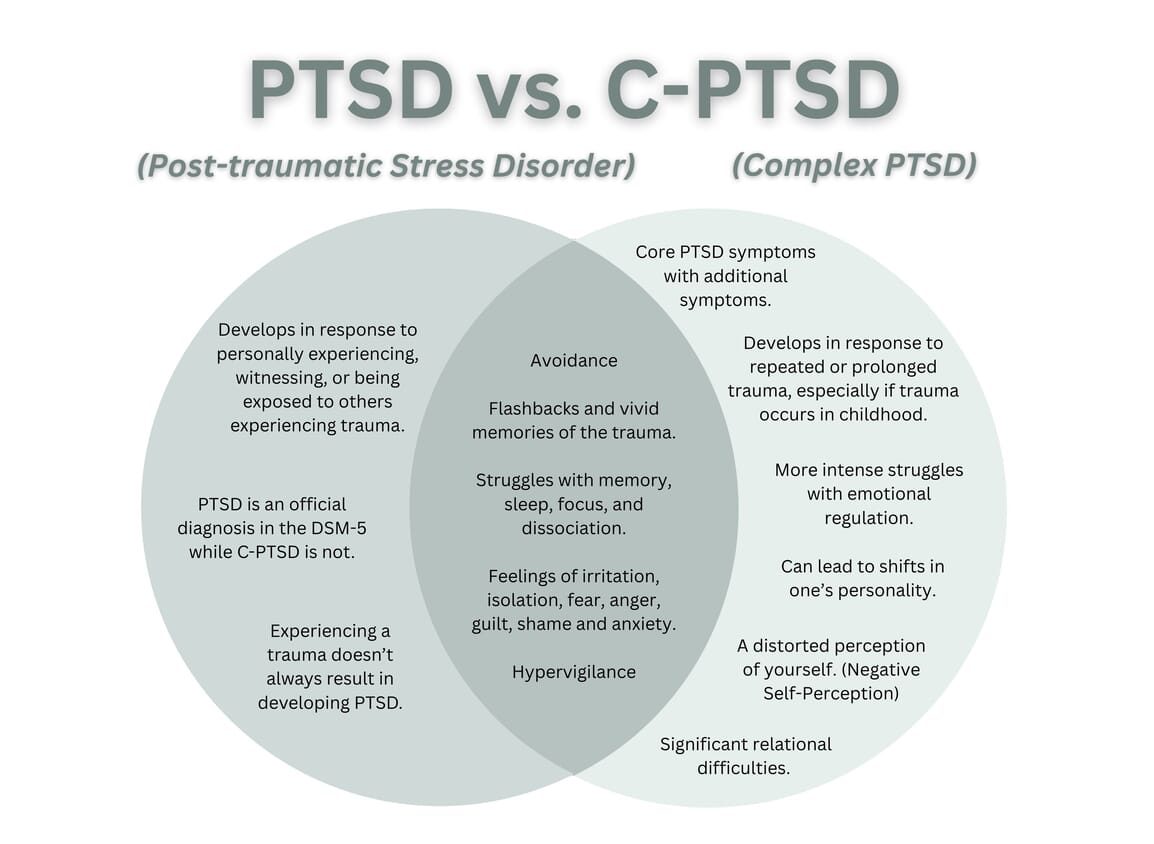
Complex Post-Traumatic Stress Disorder (C-PTSD) is a mental health condition related to Post-Traumatic Stress Disorder (PTSD). The two conditions share some symptoms, such as flashbacks, nightmares, insomnia, avoidance, and hyperarousal. However, C-PTSD is often accompanied by additional symptoms, including difficulty regulating emotions, negative self-view, significant relationship difficulties.
While PTSD originates from a single traumatic event, C-PTSD is caused by complex trauma. Complex trauma refers to trauma that persists over an extended period, from months to years. Trauma leading to C-PTSD typically occurs during the vulnerable stages of one’s life, such as childhood or adolescence and is often inflicted by those that are supposed to be providing physical and emotional support such as parents and/or other caregivers. Common sources of this trauma include child abuse, child neglect, child abandonment, witnessing domestic violence, or any similar event where an individual is under the control of another person and unable to easily escape.
For Further Information
Complex Trauma Podcast Episode [ACCFS]
Sometimes PTSD cannot be traced back to a single event. Rather, for a person with a web of traumatic events in their past and present, PTSD is a state of “normal”. In this episode of Breaking Bread, Kathy Knochel and Brian Sutter teach us what complex PTSD is.