

 in Transitions
Redeeming Transitions Podcast Episodes
Part 1
Transcript:
Welcome, everyone to the show. This is Breaking Bread Podcast, brought to you by Apostolic Christian Counseling and Family Services. I’m your host Matt Kaufman, and with me is Ted Witzig, Jr. Ted, welcome to the show. Hello, Matt. It’s great to be here. He is a resident clinician here at the counseling service, and glad to have you here.
Thank you, Ted. We’re going to talk about redeeming transitions. Yes. And so, provide us a little bit of context. What do we mean by a transition and are they going on in my life or is this for somebody else? Yes. Transitions are a constant motion in our lives to move from where we currently are to somewhere else.
I even think of it like this, the classic sixth grade assignment where you chronicle the timeline of your family, for example. There you go. And all of those, in a sense, are transitions, aren’t they? They sure are. There are a couple kinds of transitions. Some are welcome, some we’re looking forward to and some are unwelcome, which we get pulled into.
When we talk about welcome transitions, we’re talking about the ones that people are looking forward to. Like it might be a 15-year-old looking forward to learning to being able to drive on their own. Somebody might be excited about going off to college or starting a new job or getting married, right?
And those are very exciting things, and welcome transitions are the ones we push for. We seek; we anticipate welcome transitions. On the other side are ones that we feel like we get pulled into and there are things that are going on in life and nobody gets to skip those. They’re part of our life.
But it’s things like watching a parent or grandparent age and going into a nursing home. Or seeing somebody lose a job, for example. Something that we didn’t anticipate all of a sudden, boom, there we are. Yeah. So even in those, we have both anticipated unwelcome transitions and then we have the unexpected loss of a job or loss of a loved one.
Yeah. That sends us into transition whether we were ready for it or not. Exactly. But sometimes too, unwelcome transitions are things like just the kids growing up and moving out of the house. And while there is sometimes a lot of joy when that happens, there’s also a mixture of emotions with that. A reset of what is normal. Yeah. Life is moving on and this is awkward and who am I now that I’m not caring for these children at home? So, you’re really casting a vision of what we mean by transitions. Yes. They’re both welcome. They’re also unwelcome in a sense. Yes.
And large and small. That’s right. So, we go through, even in a day’s time, a number of transitions. Sure. A transition to work, right? I came here, that means I have a different role than I had two hours ago when I was at home. Exactly. Think about a family whose schedule goes from the school year to summer. Okay. That’s a transition. Or back to school. That’s a transition and every family feels it that has school-aged children. Yeah. And not bad, but it’s transition, Ted, whether they’re welcome or unwelcome, small or large, there is some commonality in transitions, isn’t there?
There is a way to transition through in terms of having some upheaval or having a new normal. Sure. You can think of transition as moving from a state of what is familiar to the state of what is unfamiliar, chaos, and then back to a new normal. So, if you think of it, we oftentimes use the word picture of a transition bridge.
So, think about a bridge on one side of the river, and there you are. It’s familiar, it’s comfortable, it’s what you know. And many people just would choose the familiar over the unfamiliar any day of the week. Sure. And that’s me. There you go. Because there’s something comfortable about that. Transition then moves us out from that place and sometimes we’re moved out over the bridge, and we sometimes refer to that as unsettling. That is a process now, a planned transition. People think through that unsettling, and they’re thinking about the positives and the negatives of making this transition. When we get thrown into a sudden transition, sometimes we go immediately into the unsettling phase and we’re right into the center part of the transition called chaos.
So, you’re really showing there are some steps to transition. Yes. And sometimes we don’t realize them, but there is an uprooting of yourself. That’s right. And if you know that transition’s coming, you do that over time. That’s right. But if something is thrown at you, think of a loss, right? Yeah. All of a sudden, whether you wanted that uproot or not, it’s happened. And now you are journeying across this bridge to a new normal. And there’s chaos in between. That’s right. And that chaos is that place where we don’t feel rootedness. We know we can’t go back to the way we wish it was, the way we wanted it to be, or the way it was where we felt rooted, but we’re also not in the new normal.
And so, it feels like we’re up in the air a bit. Do you hold your breath when you go over bridges? No, I don’t. You turn blue in your face if this doesn’t happen quickly. Yeah, but we want to get settled, don’t we? There’s no question. And I think that desire to have something firm under us and to know we’re planted is very human, very understandable. But that is also where we’re looking for this roadmap to take me from point A to point B in the straightest way. And sometimes that roadmap just isn’t available to us.
So, if I’m in a moment of chaos, for example, I’m in between settled point A to a new settled point B. I’m in this chaos. Yep. Because I’m in that chaos doesn’t mean things are going terribly wrong. No, it doesn’t. And in fact, when I think of our missionaries that move from the states to somewhere overseas, or if I think about somebody that gets married and moves to another place, they have to figure out things like, where do I go for groceries?
How do I get to point A to point B, and how do I learn this language? All those different things are there, and they’re not bad. It just means you’re not feeling rooted or settled. And I think that’s an important point. As we talk about in this podcast, we’re talking about transitions, both welcome and unwelcome.
Correct. Because sometimes that puts us in a bit of a tailspin when it’s a welcome transition. We’re like, I’m happy that I’m married. Yes. But why am I struggling like this? Yes. Oh, well, you’re in the middle of these shores. Yeah. And that’s not bad. Yeah. That’s to be understood.
Well think about the delight of a couple that welcomes their first baby into their home, and they’re delighted to see this new creation. It’s just so wonderful. And everybody with children smiles especially when they say, oh, we’re just going to go on like normal. Yeah. And things like that. And then they find out that having a child is like a tsunami on their schedule. Right? And it’s wonderful. And at the same time, somebody who is used to having some order in their day, all of a sudden, it’s, wait a minute, I’m having trouble getting a shower by noon.
You had no idea how much inertia that little bundle of joy is for sure. Okay, so Ted, now land us on the other side of the shore. Then how does that work? Yes. What’s that feel like? The resettling phase takes time and sometimes it’s not long, sometimes it takes months or longer.
But the point here is that it is about finding this new normal. And it’s a struggle sometimes to find a new normal, especially with unwelcome transitions. But what ends up happening as the new normal becomes more familiar, there becomes more rootedness. And oftentimes people don’t recognize that they’ve ended up settled.
And oftentimes they say, oh yeah, I am feeling more settled. It’s not like I can say to somebody, oh, you know what, give it seven days. You know? Yeah. Give it 21 days and you will feel settled. Yeah. And I think there is actually a lot of hope in that Ted. Definitely. But that settledness happens, and then going back to where we began, it becomes a point on our timeline. It does. And a very important point. It’s one that we would definitely cite saying this was transformative in my life. Okay, Ted, we’re going to use the biblical account of Jacob as a spinal column for this podcast series on Redeeming transitions.
Yes, Jacob went through a transition and everybody goes through transitions. We could look at David, Abraham, Moses, and the rest. But Jacob’s got a special, very articulate transition from his home life which was a bit disorderly and dysfunctional. Jacob and his brother Esau, and his mom and his dad and deception.
And he gets sent away to go to Laban’s house, his uncle, and he finds himself right in the middle of some important encounters. Walk us through that. What does this look like? Yes. Jacob’s transition starts off with deception. It starts off with family drama and bad cutoffs.
He is headed to his uncle’s house to try to find a wife. Great time for marriage. I wouldn’t suggest it quite frankly, but the point here is that he is out walking in this desert place and he’s going to a place that he doesn’t know to find a wife. He doesn’t know all these things because he just made some really bad choices in his relationships.
And here comes nighttime, and he needs to sleep. And so, he lays down there because it got dark and uses some stones for a pillow, which had to be very different than what he was used to. Okay. I have to stop you right there, Ted. I mean, there’s a sure tell sign of a person who doesn’t know how to camp. That’s right. It’s a person who piles up rocks for a pillow. No question. And Jacob was no camper. Exactly. I think Scriptures bear that out, right? Yeah. Esau would’ve handled this much better than Jacob.
But Jacob was out there. He used stones for a pillow and there he is. And then he has this dream, this vision, and he sees this ladder with angels going up and down the ladder, God at the top of the ladder, and receives some messages from God that are very, very pivotal. And Jacob actually wakes up to seeing God wanting to work in his life. And when Jacob recognizes that, he all of a sudden sees this stony place, this transition, as something much bigger.
So, he ends up taking the stones that he put his head on for a pillow and ends up turning it into an altar and starts worshiping God. Isn’t that a picture of redemption? This place has now been redeemed. That’s right. This is Bethel, and for our listeners, you’ll find it in the 28th chapter of Genesis that this becomes a monumental place. A place that Jacob will go back to in his thoughts. A place that’s more important than his home and more important than Laban’s place. Yes, right. This place where he intersected with God and to him who was there on a whim, and it was a desperate place.
Yeah. It was a place of transition. Kind of the middle of the river as you mentioned before. Oh yeah. This bridge. It was right in chaos. And God changes the stony place to now be a place where an altar can be made, and worship is done. Yeah. And we want to use this in this series to be a model.
Yes. So, there are some things to take away. Right. Definitely. Lead us through what lessons we’re going to learn and apply from Jacob’s transition. Alright, we’ve got four main lessons that we’re going to cover in this podcast. There are many more that you could draw from this, but the first one is found in verse 14 where it says all the families of the earth will be blessed.
What his transition teaches us is that transitions are an opportunity to bless others. The next one is in verse 16, where Jacob said, the Lord is in this place, and I knew it not. And what we learned from that is that Jacob’s transition taught him that he wasn’t a product of his environment. The third one is in verse 18 where it says he took the stone that he had put for his pillow and set it up for a pillar.
And we’re going to talk about how transition brings us to worship. The fourth point we’re going to cover is found in verse 20, if God will be with me and will keep me in this way that I go and will give me bread to eat and raiment to put on so that I come again to my father’s house in peace, then shall the Lord be my God.
What we learn about this is that Jacob’s transition helped him to clarify who he was and what it was that he truly needed. Our transition is redeemed then by us blessing others and helping us see that we’re not a product of our environment. Our transition is a stage for worship helping clarify who we are what we need. I think that’s very helpful. It is. When you have a coupon and you go to the grocery store, how much is that coupon worth? Nothing. But when you take that coupon and you hand it to the clerk, all of a sudden it becomes worth 50 cents or worth a dollar. Yeah. Right. And so. What happens is when you take that and you put that piece of paper down, it is then redeemed for something worth more than it’s apparent value.
And that’s what we mean by transitions here, that when we go through them sometimes, we’re saying, I don’t know, Lord, why am I here? How am I going to get out of this? What are we going to do? But that’s where we find in this, that God redeems and he makes it worth something more than we can see or mention.
And a couple of things come to mind when you use that example of redemption in a coupon. You have to give it to the right person, for sure, to be redeemed. Sure. You give that coupon to the wrong store or the wrong clerk in the wrong setting and they just look at you and say, what is this?
Right, but to the right person and that person is Christ, right? Yeah. That person is God. He is going to be the redeemer. That’s right. In terms of being able to see God’s eternal purposes, that Christlikeness has a goal, that heaven is real, all those things, our vision is so limited, and that’s often what happens when we’re in transitions.
We’re kind of shocked into the moment or focused on the here and now. And what we want to do is help listeners step back and see the bigger picture and get a glimpse of what God sees when he sees transitions. And I want to place this in these two different camps of transition, welcome and unwelcome.
Yes, for the unwelcome. That makes a lot of sense because there seems like nothing good can come out of this loss, out of this difficult situation that has come upon me. But we’re saying that transitions can be redeemed, and God can redeem it, but also the welcome. Sometimes we have our sights way too shortsighted for the benefit of even a welcome transition.
And so, there’s hope here too. No question. I think for the person, the unwelcome transition, we are not trying to say that the transition itself or the pain that you’re feeling is automatically good. Yeah. We’re not trying to convince somebody, Hey, wow, it’s great. You’re in pain. What we are trying to say is that coming out of it, God, by his grace and his power can take things that seemed like millstones, that certainly our adversary, Satan would like to be millstones around our neck, that God can take those and turn those into steppingstones over time.
And sometimes we won’t understand that fully until we get to heaven, sometimes in life we will be able to say, oh boy, look at what God brought out of this. Also in welcome transitions, like you said, sometimes our vision is just way too short, too simple. Or we have presupposed this is going to be the blessing out of this. I know this, option A here, is going to be a blessing. When all of a sudden, we find out that God has a different plan and bigger purpose. So, as we bring this episode to a close, Ted, a little bit of vision as we look further to two more episodes that continue this conversation.
What can our listeners expect? Our listeners can expect that we’re going to go through each of these four redemptive qualities, and we’re going to apply and give applications to how they can think about the transitions they’re going through in their lives, whether big or small, welcome or unwelcome and use Jacob’s life as an example that they can say, oh, this is how this can apply to my life.
Terrific. And with that, to our listeners, we trust that this series could be a blessing to you as we intend to break the bread of life and allow him to minister to us in our transitions. As we all know, we have countless transitions that come and intersect our lives every day and throughout, throughout the years.
We look forward to those future conversations. Thanks.
Unwelcome circumstances landed Jacob in Bethel, an uncomfortable place. He happened upon this desperate place as he fled from his brother Esau. This in-between place was desolate, an unsettled place of transition. No doubt it marked a new low in Jacob’s life. However, God had other plans for this transition. He met Jacob there and redeemed it. This is the first of three episodes in the Redeeming Transitions series. Ted Witzig Jr., interviewed by Matt Kaufmann, speaks to the issue of transitions. Hope is offered as we see how God intends to redeem our transitions as he redeemed Jacob’s.
Part 2
Transcript:
Welcome back to the podcast series, Redeeming Transitions. Welcome, Ted. Good to have you back. Thank you very much. I am Matt Kaufman, and we’re picking up with a conversation that we started, Redeeming Transitions and we said that we would use Jacob and his transitional place in Bethel. The first lesson that we learned is God says, out of this place, out of the stony, desperate place, Jacob, all the nations of the world will be blessed.
And I can’t help but think Jacob felt dreadfully alone in that place. I mean, isn’t this very paradoxical? Yeah. It really is striking, especially since he had just come from making a wreck out of some of his family relationships. He just earned an enemy in Esau. He just deceived his father.
So, talk about families. Oh my, isn’t it interesting that God even used that word, family? Yeah. I mean, right now family’s weighing heavy on him. Yeah. He kind of like majorly blew it. Yes. He majorly blew it. And to believe that God can work with us or even be willing to work with us after we’ve majorly blew something.
It really says something amazing about God and his ability to take broken and fallen people and be able to make something come out of the messes that we make. So, Ted, the very first component that we need to consider is to realize that whatever transition we’re going through, God also wants us to bless others.
Now, there are some transitions that we’re in, there’s obvious intersection with people. Sure. We go through it together as a church family. We go through it together. A biological family. Yes. We go through it in these ways and some transitions are like, well, I’m going off to college.
Isn’t that just about me? But even those are not. Right. That’s right. And we have an opportunity to bless others in our transition. Yes. When we’re going through transitions, we need to understand too that not only is it a positive time or a painful time, but it’s also a stressful time. And so, when we go through those things, the opportunity to look at the people around us and to think about how I can be a support to them, how I can minister to them is a really helpful frame of reference.
And I think that’s where we would like to go. And I would like you to help us, Ted, what are some of, what are some of the finer points here? Because there is an awareness that we need to have about others, isn’t there? There is. Isn’t that part of the solution? It sure is. Take the family with younger children and let’s say we’re transitioning from school to summer or summer to school, for the parents to understand how each of their children handles transition. Again, some are going to just handle it and you’re going to be like, well, they went one day, they were in the swimming pool the next day and it seemed like nothing. The next child, that’s a really big thing. They’re going to start having stomach aches three weeks out.
And that speaks again to your metaphor that you spoke of in the last episode about crossing this bridge. That’s right. Some seemingly skate across it without a problem. Without even noticing that they did and others with a great deal of trepidation. For sure. And that’s where we can bless others by understanding how they are transitioning.
And it doesn’t do much good to look at the child who’s struggling with school coming up to just say, hey, shape up. Okay. Because their nature is such that they need help working through it. Understanding yourself and how you transition can also be helpful because oftentimes too, we don’t understand how stress is affecting us, so we can sometimes get more irritable or impatient with others.
Okay. So, you just mentioned they’re irritable, impatient with others. Yeah. So, there is a reaction piece, right? Yes. Okay, now that I understand how I process things and how another person processes, I can understand maybe how we interact with one another for good or bad. I have a little saying I like to use, and that is that a reaction to a reaction is an overreaction.
So, somebody is responding with difficulty to this change, and you see them react in a rigid way or whatever. And then what’s so human is to say, well, if you’re going to react that way, then I’m going to do this, or I’m going to show you and then eventually it’s this battle of wills that generally doesn’t produce much light, but it produces a lot of heat.
Well, the picture that I’m getting is jumping on the trampoline with my kids. If sometimes you get the landing just right, you can really shoot that other person off the charts. Sure. You can do that just by bouncing right. Yeah. And that’s emotional or even with a reaction. We don’t want to throw another metaphor into the mix here, but we’re kind of bouncing when we’re in this unsettledness.
Oh. Yes, definitely. If you think about that analogy, they’re feeling like they’re getting bounced around and they can’t get up and you keep bouncing and they say, hey, stop. I give up. And you keep bouncing. What do they do? They get more and more frustrated. Ted, do you like Winnie the Pooh? There’s a story where Tigger bounces, sure. Do you remember that one? Yes. That’s mainly what I’m thinking about. It’s so classic. I haven’t thought of that in a long time. Yeah. Tigger. He bounced me, Eeyore says. I’ve been bounced. Anyway, Tigger bounces with a smile on his face. There you go. And Eeyore doesn’t smile. Right. And so, another way to think about it is to think about some different levels of tension that we could have.
And you can kind of think of it this way, like a zero to 10 scale where zero to three is the green zone or calm, and four to six is the yellow zone or tense. And then seven to 10 is the red zone or that’s high tension or anxiety. And depending on where you are at and depending on where other people are at in their tension will greatly predict how your interactions are going to go.
If a family is trying to move. I can already predict what you’re going to say, Ted. So, you’re telling me now when I’m trying to transition to church on a Sunday morning that there are some things that I want to say in that car ride as we’re speeding very fast down the road.
Oh yeah. That might just as well wait until I get to green. Yes. Do you know what? When we’re in the red zone, we oftentimes say and do things that make a lot of sense to us. When we’re in that zone, oftentimes the things that we regret later, we tend to act in a way that is more abrupt, more irritable, more impatient, because in the red zone emotions are driving. Do we sell any medallions here at ACCFS that would give an indicator, oh, a light, a color indicator on a person? I totally wish that there was a way to be able to just read what somebody’s tension level was at any given time.
That would be wonderful. Because so many times that would be great to know. When I’m walking into somebody’s office or when I’m coming home after work to know, okay, this person is at yellow. Yeah, this person is in green. What you’re speaking to really is encouraging us towards responding towards another person and maybe set that aside and compare that to reacting.
Yes, I can see where this reacting is going but the antidote would be responding. Yes. Is that true? Yeah. The Bible speaks to how to respond. It speaks with things like being gentle and easy to be entreated. That means being able to hear where somebody’s at and not just turn around with a sharp response.
It talks about speaking truth but speaking truth in love. And if we’re going to speak truth in love to people, it means we’re going to look and see how can they best receive this. Again, when you or I or any of our listeners are in the red zone, we’re thinking win lose here, we’re thinking, I have a message. You’re going to listen to it and you’re going to like it. As it says in Philippians, to esteem others higher and what one of the things we’re doing is we’re trying to find ways to make things work for each other. We can bring out the best in each other or bring out the worst.
Ted, I’d like to maybe raise a point here for you to comment on. I noticed that part of the answer to responding is being careful not to react, be we should respond. Okay. So, we said that it’s natural to react. And some of the Scripture that you cited there, speaking the truth in love and seeking others’ best interest in Philippians really speaks to a law of love. It does. Is there a redemptive quality about our interaction with people now realizing that, whoa, the answer to walking through difficult transitions with people is I will have an opportunity to love and that’s in step with God’s purposes? Yes. There are so many amazing things about the gospel and about Jesus, but one of those amazing things is that he treats us as we need, not as we deserve.
And you know what? There are times when I least deserve love or I’m irritable or short or whatever. That’s when I need to be treated with a response and I need to be treated with truth in love and it’s not that I deserve it. But even in the sense that you don’t deserve it, it requires grace on the other one. And that requires us to remember that we are responding, not in our own power, not in our own strength, but in Christ. See that’s what makes me excited too, Ted, as you say that because what you’ve just cast is a solution that requires Jesus to be a part of it.
Yeah. And would we want any other solution for our lives apart from Christ? No, and I think what happens is sometimes when people just look at their circumstances, we look at it and say, how couldn’t I react this way? I mean, this is what they did. Was this what I did? And they deserved it. That when you think of this through the concept of how do I bless others?
How do I be part of God’s solution to this situation? It means, God, work through me, speak through me, and help the words of my mouth to be like Jesus’s words. Ted, as we talk about intersecting with people, being a blessing towards people, working with people as we go through transitions, I hear this counseling service distinguishing a lot between events and issues.
Yes. Okay. I’m catching on to some of the lingo. Yes. But I think there’s something powerful here. Speak to that. Yes. When we talk about events and issues, you can think about it as two layers, or you can think about it like an iceberg. The event is like the part that’s above the water. It’s the topic that we’re talking about, and then the issues or the hidden issues are the things that are below the surface.
Now, when I say hidden issues, I don’t necessarily mean that it’s sinister in some way. It just means that it’s not necessarily recognized. So, I think about my trip to church, to my kids. Okay, so I couldn’t find my shoes. Yes, Ted, do you ever have a hard time finding your shoes?
I do not. My shoes are very reliable. Yeah. You know where to put your shoes. Well, anyway, sometimes we have a hard time finding our shoes. You know, it’s amazing how you can be on time and then quickly, I’m very late. Because you cannot find shoes. Exactly. But at any rate, it seems like I’m nitpicky about an event.
Yeah. I couldn’t find my shoes, but to me it was a larger organizational event. That’s really what I’m boiling about. Exactly. And it’s like, come on folks. Everybody knows we’re going to church. This is what we do every week. Why does this have to be a trial? I think this provides a lot of context and help as we think about going across this bridge that we’ve talked about. And very typically we go with people. Yes. And in my transition now I have an opportunity to bless others. And by understanding how I go across that bridge and understanding that other people are in that point of chaos, they’ve gone from settled and are moving towards settled but they are not yet.
That means that we have an amped up situation here where I need to be very careful to respond and not react towards people. Let’s move to the next lesson that we learned from Jacob’s experience. And that is he realized the Lord is in this place. And I knew it not. Yeah. How could he be in this desperate place?
But he is. His comfort then rested upon God being there and it he wasn’t a product of his environment. Yes, he is a product of God’s presence. Yes. Again, it’s very human to look at our circumstances and then base our sense of wellbeing off of what those circumstances are, to some degree. We all use our circumstances as a barometer. Am I okay or not? Sometimes it’s where the checkbook is at right now sets my mood. Yeah. Sometimes if it’s harvest time and it’s time to really push hard and it’s raining or there are breakdowns, you know, those kinds of things happen. It throws us for a loop.
And then a transition unsettles all of that. Yes, it does. Who am I if I’m not who I was on that shore? Exactly, and I’m not comfortable with being anybody else besides who I was. Sure, and what has changed, but circumstances have changed. I just went out on a limb by saying transitions are circumstantial. Yep. Is that true? I believe you. I think that is correct. One of the things that happens is that because we tend to get signals from our environment as to is this going the way that I thought it would when things come unexpectedly or we’re going through a transition, we can then come back and say, I feel uncomfortable, therefore this is bad.
And really what I would like to encourage listeners to do is to ask themselves a question. How can I think and live like Christ right here, right now? And you must identify yourself in the identity of Christ rather than the identity of that former shore. Exactly. I’d like to run a situation by you.
So, picture this with me. You’ve got a person there, and I put a backdrop behind him of a cornfield and a red barn. Tell me about that person. Yeah. There’s a farmer and he’s getting ready to do something in the field, whether it’s taking care of the cows or picking the corn. He’s a hard worker. Oh, definitely. All kinds of things. Right. And he can fix anything, by the way. That’s right. He knows how to do everything. And if I swipe that backdrop away from him. Yeah. Now it’s Times Square, New York. Same person. I didn’t change that person at all.
Now who’s that person? Yeah. You’re going to look at that person and say, oh, you know what? He’s somebody that works in the financial district or he’s a businessman office guy who knows how to work a deal, but doesn’t know how to fix an engine, that’s for sure.
Right. Isn’t that interesting? And all that I swiped was the backdrop. And then we think of people. And we think of living on the farm. Swipe that backdrop. I’m living at an assisted living place. Swipe the backdrop. I’m at a nursing home. Does my identity change in all of those backdrop swipes?
Our occupational identity might change, but the question is ultimately who we are. That is rested in Christ. Don’t you think? That’s when Jacob said, I didn’t know you were in this place, he found his grounding and said, oh, it’s okay that I’m here. Yeah. And I think what was happening is he was putting his sense of wellbeing in getting that birthright and blessing. Think about what those things gave him. They gave him position and entitlement to possessions. And here in the middle of the desert, all of a sudden, he’s saying, oh wow, this isn’t about position and possessions.
Well, he came face to face with God. I think that provides a lot of context for transitions. God might be trying to teach me that I am not necessarily a product of these circumstances. Now let’s put that in light of a welcome transition.
He wants to teach us also that I am not a product of the new house I’m moving to. Right. He wants to teach me also that I am not defined by the job that I’ve elected to take. That’s right. If we swipe the backdrop of that job from being a business owner to not being a business owner. Have I, as a person, changed? These are really heavy and hard things. They are. And many people haven’t thought about the difference between having an occupation or having a stage of life, which is fine. I’m a psychologist, that’s my occupation. That’s fine. A mother raising children, that’s her stage of life. It’s fine to identify with those things, to have joy in those things.
That is an aspect of our identity, but ultimately our grounding, if we put it in something outside of Christ, outside of the promises of Scripture we are holding on to something that is shaky. And if you put your sense of worth into the stage of life you are in, you set yourself up for a difficult transition.
You set yourself up. Yeah, because then it becomes very difficult to let the last chapter of your life go and go into the next chapter. Yeah. Because it’s like, no, I can’t, because that is all that I am. That is who I am. And really what God wants us to do is that we are no more and no less than who he says that we are.
And as his child who goes across all these stages, we do have twice in Scripture, I believe it’s in Peter and also in Hebrews, the faith chapter where these men of faith are called pilgrims. Isn’t a pilgrim defined by a continual transition? Yes. And, oh yeah, in order to maintain that pilgrimage, there must be an affinity beyond this current situation or environment.
Yeah. And I think the scriptural principle that we are pilgrims in this life is why God doesn’t want us to set our tent stakes too deep, because when we do, we forget that this world is temporary. The ultimate reality isn’t here. It’s in heaven, it is with God. It is wrapped up in that spiritual identity, and that’s one of the things that allows the Christian to be able to weather storms. Very typically, when we have these podcasts and we talk through issues, consistently there’s an aha and a light bulb goes on in my mind that says it requires faith to live like this.
In fact, the believer can most live like this rather than our secular counterparts. Yeah. How do they navigate the transition? Well, you can see then why a secular world would be so panicked about what happens circumstantially in the world. Sure. Okay. And the things that are horrifying about the world, there is significant tragedy. And I don’t mean to make light of it at all, but what happens is if you believe that this world is all there is and you don’t have a vision for how God says this is a temporary place and we are pilgrims, then you are in a state of panic and you have to know that shore that you’re going to is going to be better than the shore that I came from.
Definitely. And if it’s not, then it is an all-loss situation, and you can see then why people with without a Christian worldview feel so panicked about the state of the world and grasp at anything to try to make it better. But when we understand our job is to be a steward of our time here, our job is to be a light and a witness here. Our job is to present his kingdom while we’re here, but ultimately our home isn’t here. With Paul, we say to live is Christ and to die is gain. Why? Because while I’m here, I am living, serving, and loving. I have an opportunity to walk in faith. And I will model the faith of all that you’ve just said by the way that I handle this transition, the way that I process it.
The way that I realize that out of it, I’m going to bless others and out of it I’m going to realize that God is my stay and identity. Yep. And not my circumstance. Definitely. Thanks for leading us in this conversation, Ted. We look forward to our last and final episode as we talk through the last two lessons that we learned from Jacob’s life about worship and what he learned about himself. I think there’s going to be a great deal of hope there. And to our listeners, thanks for being with us. As always, we would like to draw your attention to our website, accounseling.org, where you can find other helps and resources for navigating transitions.
Jacob had just made hash of his family relationships. Bethel was his place of transition, a backdrop that was undesired and unfamiliar to Jacob. While he was there, God spoke to him and said that “all the families of the earth will be blessed” through him. God uses Jacob’s transitional spot as a redemptive moment in Jacob’s life. In this episode Ted Witzig Jr. and Matt Kaufmann explain two redemptive lessons out of the story of Jacob. First, God intends our transitions to be a launching pad for the blessing of others and second, we are not the product of the backdrop of our circumstances.
Part 3
Transcript:
Transitions can be very difficult, and Jacob’s transition has been a bit of a model for us and a lens through which to think about transitions. Ted Witzig Jr’s with me again. Ted, welcome back. Thank you. And in previous episodes we’ve talked about the lessons we learn out of Jacob’s transitions.
And the first two we’ve already addressed and that is we go through transitions and part of the redeeming quality is to bless others. That’s one lens. And another one is to realize that we’re not a product of our circumstances. Very important. Today we want to talk about the remaining two, and transitions elicit worship as well as teach us about ourselves. So those are two more redeemable qualities about transitions. Yes.
Where do we get the worship concept out of Jacob’s situation? Jacob stopped in this place on this pillow of stone and is met there by God. He gets these messages about what God wants him to do, and then all of a sudden, the stone that was his pillow, which we mentioned earlier is a rookie camping move, becomes a pillar, which is a foundation for an altar. The picture is vivid and masterfully done actually, isn’t it?
The uncomfortable pillow that he laid his head on becomes that altar through which he erects an ebenezer of sorts. That’s right. We want listeners to realize too, we’re not trying to say that we’re somehow celebrating the painful aspects of a trial or a transition. Like, oh, hey, we love pain. Hey, when I go to the dentist next time, don’t give me any Novocain. I like the pain I’m worshiping. No, that’s not what we’re talking about. What we’re talking about is God is still good, even through times of transition, difficulty, loss, et cetera. And in fact, we are drawn to praise and worship.
When we’re in a time of joy and something turns out well, that’s exactly what I was going to say or assert, then it seems a bit lofty. And maybe it’s my natural human instinct to automatically go to these difficult transitions, right. That loss, for example. A deep loss and say, okay, now you’re telling me that I need to worship in this. Wait a second. But there are some elements of worship that allow that to be possible. Yeah, and I think one of the things to remember is that worship isn’t just about emotions. If we make worship just about emotion, then who’s going to feel like worshiping except when you’re happy?
And really what this is doing is saying, just like with Psalm 139, when I’m on the mountain top, you are there. In the lowest parts of the earth, you are there. And that’s why we praise, and praise is recognizing God for who he is, for his greatness, for his salvation, for his grace, for the fact that there is something in relationship with him that is beyond this painful circumstance. Yeah. And so sometimes what wells up in these difficult moments of transition is worship, which are incredible artifacts of faith, aren’t they? Yes.
Worship during pain is about clinging. The point is worship is directional. That means what are we facing toward? To even start with that. What are we facing? I mean, transitions, if left to themselves, are very self-focused. Right. Very frequently. It is very central to us, right? That’s right. And so, we think in context of ourselves, but this is really drawing our eyes in a different direction.
Yes. What it’s doing is saying God is at the center and so if you think about a church congregation and you think about all the people that are there, and some are on the mountaintop. A new baby was born. Yeah. You know, something good happened. Some are in the valley going through cancer treatments. Yeah. Going through losses, both of those simultaneously in one room, in corporate context is an amazing thing. That’s right. Because ultimately what we’re all doing is drawing around the Word. And our focus is on God. And I think that is a very beautiful thing to recognize that we come around him or we focus on him during the highs and the lows.
And that is an expression of our worship and seeing him as great. And that’s what’s so beautiful about Jacob in this situation because he realized God’s greatness, that God could meet him even in this very bleak time where he would really mess things up in the family and God still met him and while he didn’t worship his stony pillow, he saw that pillow in a different context.
That’s right. Such a pillow. Right? That’s right. Which I think is a wonderful way to redeem transition in the sense that we’re not worshiping the transition. Yeah. And we’re not saying the transition is everything or the transition of itself has got great merit, but it’s being able to be transformed into an article of praise.
For sure. And one of the aspects of this we need to touch on is just what loss is as we’re going through this. So that would be some of the pre-work. Yeah. The first thing people go through after losses and they recognize it, whether it’s a very public loss, or maybe it’s a private loss, like the loss of a dream.
The first thing that people do is resist the loss. It’s painful. And we call that the protest phase. And that is where we push against this pain. So, as you mentioned, even stages here. So, we’re really talking through elements maybe of grief. Would that be the right term to use?
Yeah. And you know what? There are different models, but the model I’m going to walk you through here is just a three-stage model. Protest is number one, despair is number two, and detachment is number three. And what precedes that is the loss. And what follows that is acceptance. So, you’ve mentioned the protest stage. And I am now on this bridge, right? Yes. Something has sent me into this transition. Yes. And frankly, I really liked the subtle shore of the past. That’s right. And I protest the reality that is now in the past. And so, then we move to that despair.
Yeah. Speak a little bit about that. Yes. And so, when you think about the despair phase, it’s really where people feel sad. The sadness really hits. It’s where sometimes the feelings very similar to depression are there. And the other thing about that is at the despair phase, people oftentimes want to reject the current reality. They fight it. Sometimes it’s called bargaining, and that’s very normal and natural. And so, then out of that oftentimes comes the third phase, which is detachment. And that’s just like; I’m really not interested in relationships. I’m not interested in really joining in with this new normal.
And sometimes, again, in transitions, people are willing, but it’s just hard. I’m here in body, but I’m not here in spirit. Yeah. I will not agree to this. Yeah, I can imagine these are somewhat circulatory. Perhaps you can go and cycle back through it. Oh, for sure. If we’re not working through it properly.
Sometimes people do them out of order. Sometimes they go around and around in them, and that’s just part of the individual’s personal process. It looks different for everybody, and that’s okay. We’re not trying to say, if you feel this, then you’re bad or wrong. And I’ve heard you use the phrase waves. Yes, grief comes in waves. And I like that. I think that provides nice imagery. Yes. I think early on, particularly, the waves of grief are really tossing hard. They kind of knock the wind out of us and they just knock us over. Over time, the waves tend to slow down, but they can still hit us hard, and we can be where the waves aren’t coming with it.
Okay, I’m through this. I’m over this. I’m adjusted. And then boom, here comes another wave. As we go around through those different feelings, eventually more and more there is an acknowledgement that this new normal is really real. And then we start to find what we didn’t think sometimes was possible, the blessings of the new normal.
Now that doesn’t mean we like the loss. Again, if it’s a loss of a person, loss of function, loss of a job that I really liked but it is to be able to see that there is a new day that God’s mercies are new in the morning. You know? And we can go on. So, Ted, suppose I’m going through an unwelcome transition. A loss of some sort. And I identify with these things, the protest, the despair, the detachment, and that type of thing. And so, my question to you is, and I don’t want to oversimplify things here, but Ted, help me out here. Part of this understanding that you’re trying to cast is, there’s a time element to this.
Yes. And there is a normalization of it. Yes. It is reasonable that you’re going through that on this bridge, as we’ve spoken. But a part of that good and healthy landing would be this acceptance of the new normal. Is that true? Is that how you would coach a person along those ways?
Yep. The goal is to move into a place of acceptance and depending on how big this transition is, how big the losses are, and how fundamental it is to the person is going to change how long this takes. And maybe this is the pre-groundwork to worship. Right? And that’s where we started. And the point being ultimately whether this is a transition that we are excited about, wanting, and seeking or not. God is the center, and it is so easy for us human beings to see ourselves as the center. There was an outgrowth of Jacob’s response when all of these things came together, and he understood it. It’s not like God said, now you worship me here in this place.
Yes. Hey, pile up those stones. Yes. As Jacob reflected on what just happened in this transition he was like, well, I have to do something. And he acknowledged God. I think that’s a really important one too, because if anybody is listening to this like, okay, you will do this and you’re going to like it. You’re going to worship like eating peas. Yes. There is an act of the will here, but we can worship even in our brokenness and God understands we feel broken. Ted, let’s talk about the fourth and final point that we learn out of Jacob’s transition and how his transition was redeemed.
And that was in a sense that he learned about himself. Yes. In verse 20, it says, and Jacob vowed a vow saying, if God be with me and will keep me in this way that I go and will give me bread to eat, and raiment to put on so that I may come again in my father’s house in peace then shall the Lord be my God.
He said minimal. I noticed it’s very minimal. It’s all you had do. If he would give me bread to eat, and raiment to put on mirrors in the New Testament having food and raiment, food and clothes let us be content. And that’s not what we see with Jacob. Otherwise, he’s like, Lord, I need you. And the basics. And that is fundamental here, because Jacob really needed a perspective change.
Yeah. And when he met God there in the stony place, and then he worshiped, he could see his needs were not nearly as large as he had originally thought. And that’s an enormous redemption of his transitional spot. Oh my. I mean, God taught him a definite trajectory change in his life, definitely. And that is why I think about transition.
Wow. Could that be my transition that I’m working through this bridge that I am on in between two subtle shores. Could God redeem this in a way that teaches me something? Is this a part of a spiritual marker in my life? That I would go back to and say, yeah, God has grown this characteristic in me. And let me tell you where it happened.
Yes. Those are the refining situations that happen in our life, and they help us to mark where we’re at in our lives. What are some more specific lenses to say, oh, I’m this type of person I’m learning about myself and how do I properly care for myself and others now that I know this?
Sure, there are many ways to do this, but we’re just going to pick out a couple here. The first one is just looking at individuals in two categories and that is as thinkers or feelers. And it’s over simplistic to say it’s just these two categories because it’s really a continuum. Sure. But, but really if you think about it, thinkers are people who like to use logic and cause and effect analysis. And so, if this, then that. That’s exactly right. And so, doesn’t everybody think these statements? Yeah. You know, Matt, I think that you may relate to that pretty well, but one of the things that happens here is with thinkers as they go about their day, as they’re thinking about things, they’re looking at things, okay, this is the problem. Hey, what are my options for solutions? Okay, this is what I’m going to do for the solution. I enact a solution. Then I see the outcome. You know, A plus B, equal C.
Feelers, on the other hand, go through life thinking about how does this situation or this decision impact people and how they feel and how we’re doing in terms of connectedness. So, they’re evaluating the situation with a different metric altogether. That’s right. And I think transitions tee up these situations, don’t they? Oh man, they do. And not only in a marriage, but you think in a church family. Oh. Where you now have a hundred people, different feelers and thinkers.
And you’ve got committees, right, with feelers and thinkers. Yes. And with one person who says, I explained it, it all made sense. I had some nods. I think the meeting went well. And another person sitting there is groaning thinking. No, this doesn’t feel right. And so, back and forth, and God isn’t surprised by this. God isn’t surprised by our differences and our needs in this way. But God wants us to blend these things.
Let’s talk a little bit now, Ted, about how do I process transition? How can I move through it or am I trapped? Am I enslaved to it? Yeah. Do I always think back? For example, some people by nature tend to fixate on the past and do it in a way that is unhelpful or unhealthy. And that is often what I refer to as dredging. And they’re kind of anchored to the past in a way that doesn’t allow them to move through the transition to come to acceptance.
But when transition happens and some things change, and you’re no longer at that job, or you’re no longer in this certain state, what happens is some people can’t let go of the glory days. And because of that, it continually ruins their present. Okay. Because they can’t allow themselves to come to the present to process it, believing God is there.
I think one of the things that is helpful is to be able to understand that reminiscing is not necessarily bad. When we touch the past. It often allows people to touch it and then come into the present. Some people are better at that than others. If people are not moving from the past, it’s oftentimes an indicator that they are stuck in a grief and loss cycle.
Ted, then what is the other end of this spectrum? Yes. So, at the other end are people whose minds tend to run out in the future and find all the what ifs and what abouts and oh nos. And if this happens, then that and they tend to go there with anxious worry.
They tend to forget that God is already in the future and his grace will be there when we get there. Just maybe to underscore that point, Ted, it seems like part of the answer is realizing God’s overarching control or God’s overarching ability to take a bad transition, a bad decision and wield great good out of it. Yes. And isn’t that what we see in Jacob’s situation? Yeah. I mean, I would say that it has to be a take home. It’s definitely one of those things. So, we have a dredger who’s thinking back, and we have a person who’s thinking forward.
So, what we have are these two poles on the unhealthy end of somebody looking backwards, somebody’s dredging. But the healthy end is to be able to remember going forward. The unhealthy way to go forward is to future trip and see all the potential catastrophes. But the healthy looking forward is planning, prudence, using wisdom principles. We do the best we can to make a decision, but then we trust God with those outcomes.
What it allows us to do is to live in our present day, remembering that God is with us through it. And that’s such an important thing for a transition. And I think this provides some talking points, some vernacular, even as I think about, okay, is this person a thinker, a feeler? Am I a thinker? A feeler? Yeah. That’s going to determine a little bit about our intersection. And is this person dredging or is this person future tripping? And the answer to that would be planning. Yeah. Am I hearing that right? Yes. That’s great. And so, I’m learning a great deal about myself as a result of this transition. And then as we do transitions with people.
So, Ted, as we conclude this podcast on transitions, here’s another opportunity to speak to our listeners as they go through transitions. What’s your final parting comments? The final thing I’d like to say is that transitions are life. They are part of our experience at all times. And when we look back on our lives, transitions are what actually chronicle our lives. When we step back and somebody says, you know, tell me about yourself. The things that people will talk about are the transition in life. Oh, I graduated from here. I went to school there. I got married. This is where I worked, and then I worked here.
Oh, this is when I was put into this position. Our life story is not one chapter but a multitude of chapters, a multitude of chapter transitions in between. And transitions tend to be the chapter transitions and it’s marvelous when you see it because looking back, we can also oftentimes see God weaving his plan through our lives when we’re in the middle of a transition.
Sometimes we just can’t see it. But God is present, and God really wants us to know him more deeply in transition. And to remember that redeeming a transition means he can do in a transition above and beyond what we can think. I love that. Ted, and even as you shared that clarity of God’s transitions through Scripture has been refreshed in my mind. And that’s exactly what he’s done from the age before the flood, all the way now to this New Testament age of grace and of the Holy Spirit in us.
And that longer story of the Scripture could not be obtained except through many transitions, many of which were difficult unwanted transitions, definitely. But he’s woven this beautiful story and so to our listeners as we go through transitions, as we all do, I trust that this could be helpful again, to review the four lessons on how transitions can be redeemed.
Number one, realizing that through our transitions, we should be blessing others by God’s help. Number two, that we will realize that we are not a product of circumstance, but our identity is something much more grounded in God. Number three, that our transition will likely be a stage and a seed bed from where worship can be sent to God. And finally, fourth, we’re going to learn about ourselves. And that’s going to be so important for the stewardship that God has called us into as being in his image.
So, thank you, Ted, for leading us through this conversation. Again, to our listeners, as always, feel free to visit our website at accounseling.org to find other resources on grief and loss, on transitions, on some of the components that we’ve mentioned here.
From a pillow of stones to a pillar for worship, Jacob’s transition was redeemed. In like manner, God would like our transition to be a springboard for worship. Episode 3 concludes the Redeeming Transitions series by introducing two more redeemable qualities of transitions – transitions elicit worship and transitions teach us about ourselves.

Listen on Spotify – Listen on Apple Podcast
Further Information
Redeeming Transitions
Transitions matter in mapping the story of our lives as every event on our personal timeline is a transition. Read more in this article.
Change & Transition Sunday School Lessons
Life is full of change. In these Sunday School lessons, students will learn and understand how change and transition can affect us all, and how God wants to redeem these moments for something greater. These lessons are written for different age levels and can be used by teachers to build discussion and understanding around this biblical truth. [ACCFS]
Additional Articles

The Life Curve Podcast Episode
We enter life with no ability to control. As we grow, we acquire more and more faculty to control. If our life takes its natural course and we age into the sunset years of life, we gradually lose our ability to control. Finally, we will leave this life having the

The Life Curve
“To everything there is a season, and a time to every purpose under the heaven: A time to be born, and a time to die… A time to get, and a time to lose; a time to keep, and a time to cast away.” Ecclesiastes 3:1,2 & 6 I’m not
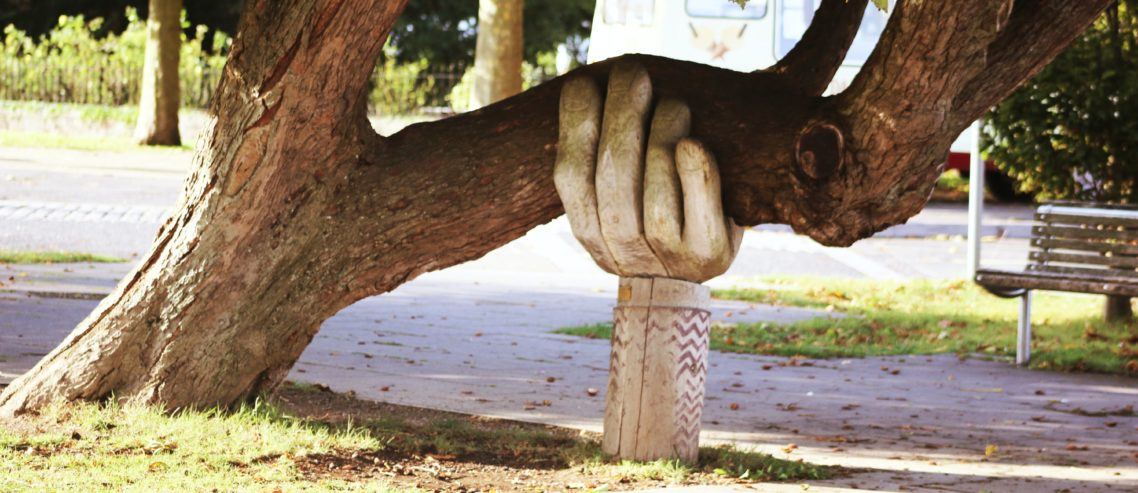
Supporting Others in Change
Change is a constant in our world and in ourselves. It is one thing to experience change ourselves, and yet another thing to walk with others during their season of change. Consider the relationships in your life right now. How many of your close family or friends are in the
Comments
Leave a Comment