
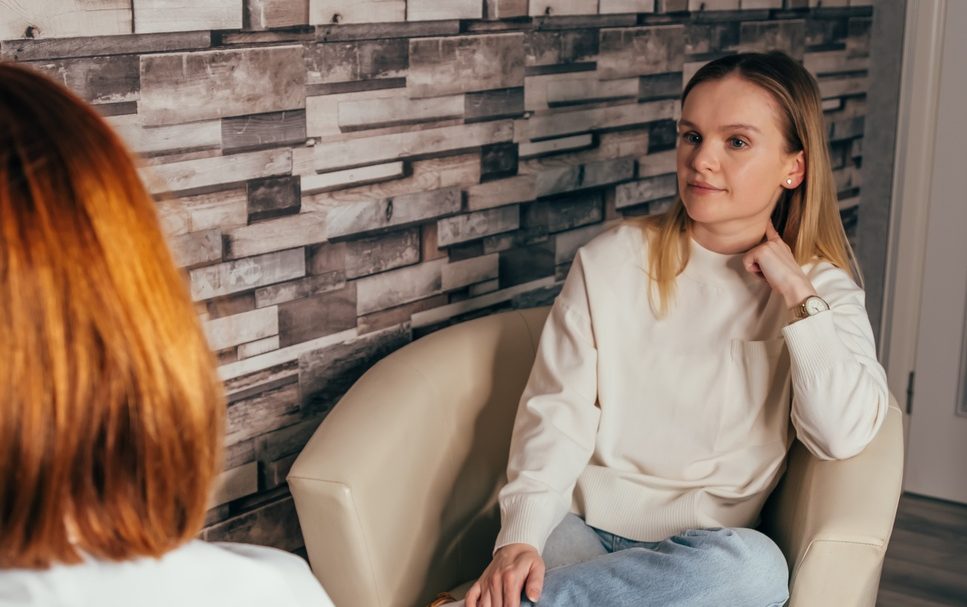
Step into the world of mental health professionals as they provide insight into the day-to-day responsibilities of their roles. In this video, the counselors open up about their daily routines at ACCFS. These accounts offer a window into the multifaceted work happening at ACCFS. Each one offers a perspective on topics ranging from client interactions, to teaching, to webinars, to administrative tasks.
View Full Transcript
Kathy Knochel
So as a clinical counselor, a typical day is primarily planned out for me several days in advance. I typically know, anything can happen in the course of a day, but I typically know what my schedule looks like and what to expect for that day. A typical day is just primarily having scheduled counseling sessions.
It depends on the day. Some days I might have four sessions, some I might have six, just kind of depending on what the schedule looks like that day. And so, counseling sessions are usually about an hour long. And then outside of that, typical things that I experience in the course of a day, or the course of a week would be ongoing supervisions both with my supervisor and then with other counselors.
There are several staff meetings that can come up and then also there is really an importance in having continuing education. And so, some days I have maybe a planned training or I do just some continuing education on my own.
Ted Witzig
My day is split a couple different ways. I’m a clinical psychologist. I also happen to have an administrative role here called clinical director, which means that part of my job is to oversee all the counseling that gets done here. What that means is I provide some of the supervision for the other staff. I make sure that the work that we do is up to all the current standards, that we’re making sure that our systems, because of how important confidentiality is and those kinds of things, that we have the processes and systems in place to make sure that stays that way.
So, my day goes back and forth in those roles. I might start out in the morning having a meeting with the department heads, talking about what’s going on in the agency. And then work with a young mother dealing with depression. And then working with a ministry couple who is adjusting to a new role in ministry and trying to figure out how that works with their family and marriage.
Then we may end up doing a lot of work that interfaces with trauma and post-traumatic distress. And so, maybe I’m working with somebody that we’re really crunching through some hard things and so we may have a two hour session where we really work on doing some very specific, deep work to try to help a person get through that.
Then I might work with somebody trying to overcome some kind of behavior that violates their values. So it might be somebody dealing with pornography and struggling with a sin and also with addiction. But I would say that in general, the thing that I ended up seeing the most of throughout the day is something called obsessive-compulsive disorder and particularly a kind of obsessive-compulsive disorder that wraps around religious and moral matters. That’s called scrupulosity. And so, I end up working with a lot of scrupulosity because it really brings into focus both that clinical piece of the OCD along with how it interfaces with somebody’s faith and beliefs as well as their concept of God.
Brian Sutter
Typically, my day starts off with emails and kind of looking through the meetings that I have for the day and getting prepared for those. So that’s generally the first hour, emails and prepping. And then, through the rest of my day, about half of it tends to be counseling sessions that are roughly an hour each. And then paperwork, that’s one of the demises of the counseling work. But so that, and then phone calls, whether that’s following up with a contact person or somebody else who has a question or a connection to something.
Project work, so probably a quarter of my day is focused on, maybe not quite even that much, helping whether it’s writing an article for the website, or working on a presentation, or some other resource that maybe would be more on the teaching end of things. So, one of the other parts of my job that would fit really into the counseling work is what we here in the office would call a triage. And a triage is a 30-minute free phone call for anybody who would reach out to us. We would want at least to provide somebody with the opportunity to touch base with a counselor for that 30 minutes, talk through what’s going on. And really this is one of the things I really enjoy about my role here at ACCFS. I love the opportunity to be able to talk with anybody who reaches out whether they’re in the community or the church and say, okay, here’s a little bit about what’s going on. Here are maybe some ideas, here are some resources or here’s a counselor in your area and that’s a pretty unique thing that we do here in the office that I think is just a really neat part of the day and I get the opportunity. I might talk with someone in the morning on the west coast, and then later in the day I might speak to somebody on the east coast, or across the ocean. And so, on any given day I may have one to three of those kinds of phone calls depending on what the day brings.
Kaleb Beyer
A typical day for me now generally starts in the morning when I arrive to the office. I have time for emails. So, responding to either clients directly or support groups, time for case notes, paperwork. Then I move into seeing clients and my days at ACCFS vary. Some days are heavier with clients. My heaviest day with clients is I’ll have clients all day long with one free hour in addition to lunch. And that free hour is spent, again, with correspondence, maybe a phone call, maybe case notes, that sort of thing. The rest of the time is spent seeing clients in session. Generally, sessions are 50 minutes, give or take five to 10 minutes.
And so in between sessions there’s enough time to get up, go to the restroom, and if I’m really efficient, do the case notes. If not, maybe respond to some emails and then start into the next session with the next couple or client. Other days, again, this is probably more specific with ACCFS, we have project work and that involves doing research, writing a paper, preparing for a presentation, preparing for a podcast.
So, there’s some days that I’ll spend more time oriented around project work. In grad school, when we engaged in therapy, it was in person, in the office. So, to think of doing therapy over the phone or through the internet wasn’t even thought of. It was thought we needed to be in person to actually do what we think of as therapy.
So, when I came to ACCFS and that’s something that was a common occurrence to do remote therapy, whether through the phone or through a secure internet connection was a learning curve. Here it can vary anywhere from 50% to 70% of our clientele is remote. And so, as in working with couples, obviously, a requirement is that I’m able to see them. I wouldn’t be able to do remote counseling with a couple with just a phone because much of the communication happens through facial expressions, body language, and so it’s important to be able to see them.
Individual counseling sometimes can happen on a few minimal occasions through the phone. When I do remote work, I do generally ask that the couples be in the same room, so that I can see them together. I think there’s some value in them being with each other. It’s not always the case.
Sometimes I work with premarital couples that are in two different locations. And again, I think it’s a different approach. They’re in the premarital stage versus a highly distressed couple. And so, some of those factors in the context of the relationship impact how I might choose to go about seeing them remotely or in person, per se.



