

 in Women
Womanhood Podcast Episodes
Part 1: A Reflection of God’s Image
God created man in his own image. Male and female created he them. And God blessed them. Genesis 1. In this episode Matt Kaufmann leads Amber Miller in a conversation that highlights the blessing of gender. In particular, the female gender. God has placed unique characteristics of himself in women. In so doing, God has placed his likeness in the genders in such a way that each is necessary to illustrate himself the Composite One.
Part 2: Understanding Equality and Submission
Men and women are equal. Yes. But equality is far too narrow a term to say all that needs to be said concerning gender. In this episode, Amber Miller and Matt Kaufmann discuss the limitations of these terms and introduce a few more helpful ones.

Listen on Spotify – Listen on Apple Podcast
Further Information:
God’s Masterpiece Discussion Aids
This series of discussion aids is intended to build conversation around several core issues common to young women. They are designed to help individuals and small groups dispel myths from Satan by pointing to the truth of God’s Word. Each lesson is focused around key Scriptures, a few discussion questions, and a personal challenge to provide accountability.
Viewing Women From a Biblical Lens
In today’s society Christian women may feel pressure to fit a certain mold, yet when we look at Scripture, we see the ways God uniquely equips and uses women to fulfill His purposes. This article explores the diversity of women in the Bible and reminds us to avoid the extremes of elevation and repression as we look at women’s roles.
 For Women Only, Revised and Updated Edition: What You Need to Know About the Inner Lives of Men
Author: Shaunti Feldhahn
This 224-page book deals with what women need to know about the inner lives of men.
 Every Young Woman’s Battle: Guarding Your Mind, Heart, and Body in a Sex-Saturated World
Author: Shannon Ethridge
This 222-page book explores the temptations young woman face and provides scriptural directions on how to work with and through those temptations.
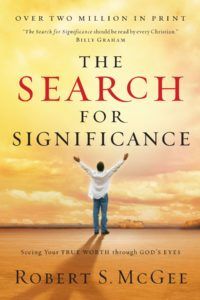 The Search for Significance
Author: Robert S. McGee
Publisher: W Publishing Group
This book is about developing Christ-centered self-worth. It is good for individuals dealing with low self-worth, fear of failure, unhealthy people pleasing, and feelings of inferiority. There is a set of CDs also available.
Transcript:
Hello and welcome everyone to Breaking Bread, the podcast brought to you by Apostolic Christian Counseling and Family Services. I’m Matt Kaufmann, and I’m delighted to have Amber Miller with me here in the studio. Welcome, Amber. Thanks. It’s good to be here, Matt. I’m excited about today. Well, Amber needs no introduction, but she is a clinician here at ACCFS.
And as you might guess, a large proportion of her clientele would be women, and we’re glad to have her here to step into that space and to offer the help that women need and the unique need that they have. So, you bring a wonderful perspective, Amber and a perspective that can be very frequently and often missed.
So, today’s topic is going to give you an opportunity to speak to some of that. Our topic is Womanhood. Yeah, it’s it is an exciting topic to me. Like you said, Matt, I’ve had the opportunity to have hundreds of conversations with different women from different backgrounds, and the one thing that I know is that this is not a clean-cut subject, and there are lots of strong emotions around what it means to be female?
What does that mean biblically? Where are we going? You know, all of these different things. What does this mean in church? Lots of different ways that we could go on this topic. Yeah. Our culture and our times really bring this issue to the forefront, gender, sexuality. What is male? What is female? You can’t really understand God’s design for women until you understand some of those other issues. And like you already highlighted gender, what is God’s creation and all of this. And so, I think we’re going to have to go back to the beginning and really understand some of those foundational pieces.
And as we set this topic up, let’s just be clear about a few concepts that help us as we listen to this. And that is for some of our listeners, Amber, this is not even on their radar. Right. The concept of talking about gender, this is all very basic and cut and dried. And what a neat thing. Yeah. Really. Right. I’m so thankful for that. The concept of femininity and what does that mean and how that intersects church is all settled in certain minds, but for others, it’s perplexing and it’s difficult.
And there’s a heart to get it right. I think that’s what it boils down to, too, is that I’m not meeting women who are saying, how can I push this issue? How can I do this? I’m meeting women who are struggling and having this tension that are like, what’s God’s design? What is my role? What should this look like? How do I use my gifts? What’s appropriate? And so those are the questions that they’re asking more than how can I take charge and lead us into the 21st century.
That’s not the spirit that I’m getting. Yeah. So Amber, you’ve mentioned a few times God’s design. And so certainly that must be a place where we need to begin. And so, take us in Scripture to a good starting point as we discuss gender. Thank you. So, I think we have to go all the way back to the beginning.
Genesis 1 is where I start a lot of times. And I think about like how it says that God created man in his image and in the image of God created he them male and female created he them. And so just to even be able to acknowledge from the beginning that God had a design and a plan and a purpose in creating male and female different. Yeah. And in verse 28, so the next verse after what you just said, he goes on and says, and God blessed them. Isn’t that neat? God blessed gender. And I think that is phenomenal. And this is all pre-sin. This is all pre fall concept here. Gender comes onto the scene by God’s design and creation as part of the very good creation that he made, and he blessed them.
I love that piece you said because it’s true, this is uncorrupted. This is God’s plan uncorrupted. I had male and female, and I think we get lost in the weeds so much anymore because this is life after the fall. And so, we do start to have these questions and wonder, what does this mean or why this or why that?
And I think that distinction is important. We see this lens of gender through some corruption, don’t we? Yeah. And very often we are reacting at reactions which aren’t always real, it puts us in a really good spot. Right. Does that make sense? Yes, it totally does. I think of how Christians have reacted to feminism.
There are some truths to feminism. Which is a dangerous thing to say, but I feel like it’s been taken to extremes and there are some pieces that, like anything, truth can get interwoven with lies and then that’s where it gets so messy. Feminism has reacted to accurate observations of gender misuse.
Right. Now, they have taken solutions to maybe some inappropriate issues. But there again, we react to reactions. Yeah. And it’s so important that maybe we don’t react to reactions, but we react to or are conformed by truth. Right. And anytime that you have a reaction to something else, what happens is you end up getting people that are marginalized.
You end up going to an extreme. An area where you could see that would be trying to, again, support women who stay at home, which is a good thing and a noble thing. But yet, I know many women who have felt marginalized then because, due to circumstance, they work outside of the home. Due to their gifting, they feel God has called them to do something different. When we make very sweeping statements, it ends up hurting those we don’t intend to.
Yeah. If we’re only knee jerk reactions to certain platforms that we want to distance ourselves from, we can get into unhealthy situations. Right. And so, I mean, that really is the heart that we both have today. I would say Matt, is to let our listeners know that we just want to walk through this with wisdom and to guard against maybe our own assumptions and beliefs in this area, because I think it’s very easy to get sideways.
Well, I’m excited to do that. So, you’ve quoted there in Genesis where gender was created. So, God divinely created gender and in his likeness. God made it in his likeness, the God likeness. What do we get out of God likeness?
And how does that change our view of people knowing that we are in his likeness. You know, this one is so unique because I see this with women. I see that women do not fully understand and appreciate that they are made in God’s likeness. And I see time and time again, women that struggle with self-worth and what their value is
And I also see this edge of competition and comparison, and that also is just so ingrained it feels like, in females. And so, it’s interesting to go back and I feel like if we fully understood that we have been created by God in his likeness, that would certainly change our way of thinking along the way. How we view ourselves, and like I said, with the comparison piece, how we view others.
If we’re looking at our brothers and sisters through a lens of love, through a lens of they are God’s creation, God made them, they are in his image, it’s definitely going to change the way we look at race. It’s going to change the way we look at gender.
It’s going to change the way we look at so many different pieces, status, you name it. You know, I love in James chapter three, he talks about being careful with the tongue. That weapon of mass destruction that we have in our mouth, the tongue and how we bless God and at the same time we curse men, but then he says, we curse men who have been made after the similitude of God.
So, I think James is hitting on that point that you just did, Amber, and saying, whoa, we need to be careful when we are addressing a God image bearer. That concept brings us into alignment on how we ought to view each other.
I love that. I think that was well said. And it is true that can be a foundational piece that we should all start with. You know, I think about how we said in Genesis 1, it says male and female. I think there are a couple characteristics that are unique to women that really highlights God.
What you’re suggesting is that women characterize certain characteristics of God more in force than perhaps the male counterpart. Is that what I’m hearing? And so, both genders are necessary or required for God’s image to be in his created humankind. It’s true. And so, when we think about that, that’s not to say that men are less than because they don’t have this, or women are less than because they’re maybe more like that.
But that when you have both genders together, they perfectly illustrate God’s being. And so, one of the ways that I think women really illustrate this would be in the sense that they are a helper. You read that again in Genesis, where Eve was created as a helpmate to Adam. You know, God could have created another man, but he didn’t.
And there are a number of reasons for that, but he could have. And so just to be able to recognize that there is a uniqueness there, and there’s a reason that he created woman to be a helper. So, you’ve just placed your finger on one or two possible characteristics that you’re suggesting are more in force in women, and that is this helper quality.
And I love that because it is actually such a God word. When we track that name through the Scriptures and find it bubble up in Psalms where David cries out about God being a helper. We see that’s reserved for God himself. And so, I completely track with you that this is a part of God that he’s placed in women.
So, what does that look like? Woman more as helper. So, you see that very clearly, I would say in the marriage relationship where both genders are working side by side for each other. And you see that and just the nurturing I feel that mothers can give. But I also don’t want to exclude those who are single because I think we also see this in the New Testament church.
We see this in examples like Mary and Martha. Where Christ visited their home and they cared for him and opened up their home in a very special way, in a meaningful way where they were helpers to Christ and his ministry. And so, I think there are a lot of opportunity for women. Even if you’re not married, to be able to illustrate this beautifully and to be a helper to those around you.
And I think that’s fantastic. And even with those examples, and we could go on with more names of those who surrounded Christ. He had women who were helpers in his ministry, certainly were present. And you see that helper quality coming out not only in marriage, but also in the larger sense of the church.
One passage that’s very interesting to me is in Luke 8. And in this passage, it talks about how Jesus was traveling from city to city with the 12 and certain women were with him. It actually says that in Luke 8. And just that idea that women were traveling right alongside Jesus as he was going around healing people and ministering to others.
It’s very exciting. And he actually names Mary Magdalene and Joanna by name and just how out of the box that had to be at that time. And so, helper in this sense is not meant to be derogatory. It’s meant to be exciting that you can be right alongside Christ and just doing his work.
That’s Philippians chapter 4. Paul writes, and I entreat thee also, true yoke fellow, help those women which labor with me in the gospel. With Clement also, and with other my fellow laborers, whose names are in the book of life. Isn’t that interesting? It is. He spoke exactly to that. These women are helpers in the ministry.
And I love that when you look at how Christ lived his life, this whole idea of gender also comes into clarity. In so many ways, Christ just was so counter cultural into this idea where women were walking alongside of him. They were learning, being used in so many unique ways. And so as Christian women, today living in New Testament times, I believe we should be very encouraged by that.
Can I put my finger on something because you mentioned Christ was countercultural and I believe he was, but he was not primarily countercultural. He was pro truth and that placed him counter to culture. Does that make sense? Yes, that’s a great thing. That distinction is important. Yeah, because sometimes we can be countercultural and not pro truth. And so, that’s what we learn of Christ as we watch him walk and do things and say things and surround himself with unlikely people simply because he understood gender design and he walked according to the truth of it.
And where it was counter to culture, he walked counter cultural. And where it wasn’t counter to culture, he didn’t. No, that’s a great point, Matt. It is great. And I think that’s why we have to go back to Scripture. We can’t look at what culture is doing. And I think a lot of times the church can react to the culture of the present day to form their opinion. What does the Bible say about this topic? Where do we rest? And that has to be the place we come back to.
My interest is piqued with helper. Okay. What is another characteristic that we see out of women where God has placed his likeness in force in the gender of female, perhaps more than male?
So another one that comes to mind would be just being a life giver. Certainly, you think of that in women’s ability to incubate life and just to be able to nurture and raise children. Which is what Eve means, I think. Her name is Eve, mother of all living, right? I think so. I think Adam puts this concept together as well saying, this is a divine, unique difference.
Yeah, and so there is that physical component where women’s bodies have been designed to be able to do that. And I would also say that there’s an emotional component along with women’s design where in so many circumstances and situations they are able to minister and to meet emotional needs in such a special way.
You know, I think of different women in my life who have not been my biological mother but have stepped in in so many ways and supported me, whether that is helping to meet physical needs, emotional needs, or spiritual growth just over the years. And I feel like that’s a very life-giving characteristic where they’re meeting those different needs.
Oh, I completely agree that the female gender is important and has that wonderful perception of what it means to give life and to inspire life and to encourage life. And I’ve got mothers in faith who come to my mind as well, who have done that to me, who have engaged me in conversation, who have taught me in the youngest grades.
I still remember. And when I meet them, it’s a special meeting. Because I am in a sense a spiritual child. Does that make sense? It does. And I think that’s tremendous. And you’ve already brought up the point of those who surrounded Christ, but we see life giving among the women followers of Christ and the women in the New Testament as well.
Why don’t you speak to a few of those? Yeah. You see that in Acts, certainly with Priscilla. And you see that with Lydia, as well, women who were nurturing new believers and were walking alongside and doing some of this work. I guess another point where I really love the use of women in the gospel is in the resurrection story and the fact that they were just going about their day.
I think of the women that were going to the tomb, and they ended up being the first ones to witness that Christ was risen and they were entrusted with a very special message to deliver that back to the other believers to be the very first evangelists to share the good news was such an unlikely situation where Christ shared that first to women. Now let’s back up though, because I am just as equally blessed and mystified at the same time that at the cross, there were women there. Those women followers were present at the cross. I think we have reason to believe John was at the cross, but by and large, the other eleven were not.
Right? Don’t you think that speaks a little bit to life giving? Yeah. Right? And they’re in tune to the needs of Christ. And so much, we see that in motherhood for sure, that moms are willing to withstand and undergo great harm and put their lives at great risk.
And we see that there, something that’s coming to mind too as we’re talking about this, Matt, it’s just how these are very broad characteristics that we’re seeing across many different women. And I love that because I think one of the areas where we fall today is that we start to stereotype and we start to say, well, women should be this, men should do this.
And you see how the characteristics of God can play out in both genders in so many different ways and be used across life situations stages of life, a lot of different areas. I think that’s so exciting to see God’s wisdom and that in humankind we carry and bear his likeness. And he has distributed that among the genders and given them uniqueness.
Okay. Now, that’s not to say though, that a male doesn’t have some of those God-like qualities that he is entrusted to women. And women don’t have some of those God-like qualities that he’s stewarded in men. Correct. Does that make sense? Correct. And I think that’s an important point. It is.
I mean, what kind of man would we be if we were all men? Does that make sense? And didn’t have any of those helping, life giving relational kinds of qualities. You know, so there’s some health in that. Definitely. It’s a good balance to be able to have that.
Friends, thanks for being along today. We hope this episode was glorifying to God and helpful to you. And Amber, thanks for being a voice in this important space regarding gender. We’ve benefited from your experiences. And you’ve helped us see that God’s design in gender is very, very good. And he has indeed blessed it.
Transcript:
Welcome to Breaking Bread. This is Matt Kaufman, your host.
I think again, abuse statistics show it is very clean cut that women are more preyed upon. And so, there’s a reality there that they tend to be just the gender that is just more despised almost and more used. Welcome back friends to Breaking Bread. Amber Miller is back with me today to continue discussion on gender identity.
Amber, if gender is a reflection of God, then to understand gender, we should probably look at the preimage, God. Does that make sense? Yeah. I mean, if I’m looking in a mirror, and if I want to change the image in the mirror, then I really need to act on my own preimage. Right. That’s the only way to do it.
So, we look at God, how does that help us with gender? So again, like going back to the start, Matt, when we think about God himself, we have to also think about how woman was designed, and she was taken out of man. And there is a oneness there that was set up from the very beginning.
It’s so fascinating to me. And the truth of it is beyond my grasp, but to get a sense of what God was doing when he laid Adam down and took a rib from his side. So, he made Adam incomplete, formed a woman, and then said, for this reason, they should come together and be one flesh, right? He deliberately made us so that we would fit back and complement one another, a complementary view of gender.
That to me just means, Matt, that there is a divine distinction between men and women. There is a sense of being equal in value. I’ll say it that way, but not equal in design necessarily. Okay. So, you just dropped the equal word which surfaces in this discussion. Equal rights.
Equality. That word just falls short, though, in this whole discussion, doesn’t it? It does. It doesn’t do it justice. So, Matt, you’re a math guy here. Let’s do a little math. You know, X equals Y. And that is a concept that I think the world would use right now related to gender and that men and women are equal, that they can be interchangeable, whether that’s in a marriage, whether that’s in the workforce, whatever that may be.
Let me put my finger on what profound notion that you just said, because you’re absolutely right. If X equals Y, then substitution is possible. Everywhere that X occurs, you can replace it with Y. That’s what equality means. But that’s not what we have with gender, is it? Right. We wouldn’t say, necessarily, that you can swap male and female wherever you have the one, the other works.
That’s not what we see in God’s design. So, this concept of equality, that word is far too shallow for gender discussion. What’s a better term then? Equal doesn’t do it justice. I think we have to remember that it’s God’s design and it’s very distinct and that gender is very distinct in nature. Not equal, but distinct.
So, there is a divine distinction among the genders. And you mentioned equal in value, and we completely agree with it, but we fall into some ditches when the concept of equality is our main vocabulary here. And here’s another one. If we want to continue to go down the math road, if not equal, then you’re only left with two other options.
That’s greater than or less than. Right. There’s some divine distinction between the genders. So, let’s go down that road of less than or greater than because that’s real. It’s very real. And a lot of times I will see women wrestling on both sides of that spectrum where maybe they’ve been in college, or they’ve been really pushed that women can do anything.
And so, there’s a sense that starts to evolve into this reality. the sense of reality that women are greater than men. And again, I think we see that as a reaction to what has historically been more of the case where women are devalued. And I think again, abuse statistics, I mean, it’s very clean cut that women are more preyed upon.
And so, there’s a reality there that they tend to be the gender that is just more despised almost and more used. And so, that has brought about the sense of inferiority, the sense of less than and women are to be trampled on. I mean, in some cultures, I believe that would be the case around the world.
And so, then you see this pattern pull to the other side of the spectrum that no, women can do more, women are better. And again, it is totally missing the whole point that the Bible set up. You know, as you mentioned, getting to talk through those statistics and being preyed upon, I’m going to just throw this out there. Satan attacked Eve there in the garden.
Do you suppose that Satan hated Eve, hated her gender, hated God’s creation, hated the characteristics God ordained the woman to have. Does that make sense? Do you think that he loathed femininity? And here’s my next question, and then I’ll let you talk. Do you think we, I’m talking about people, humankind, struggle with that same hatred for femininity?
I do believe that Satan attacked God’s design and he wanted to see it destroyed. And I also believe that there’s a part where Satan couldn’t understand it. He has no complement. He doesn’t understand the beauty of that design and I think it’s so special. It speaks to a part of God that he could never be. Maybe that was one of the reasons why. Again, I’m speculating one of the reasons why he attacked God’s design. Certainly, the oneness that God has put into his creation would be hated by Satan. And so, I want you to speak now to the oneness of God. Do we see a complement in the Trinity?
Again, it’s a mystery. I think human minds can’t really understand all the pieces. And again, I think probably one of the reasons we struggle with gender is because we’ve tried to boil it down into what our human minds can understand. Again, that’s where we get off onto tangents like equal or greater than and less than.
And when you look at God in the Trinity, there is a beautiful oneness there between Father, Son, and Holy Spirit. And there’s a very special submission that I also see. So, I’m going to unpack a little bit here and make a few observations, okay? And then let’s talk about that submission, because you dropped a very heavy word that needs quite a lot of support behind it.
But that is fascinating. There are beautiful roles in the Trinity, aren’t there? When we talk about and think about the Trinity, we don’t just automatically go to some sort of hierarchy. What we go to is beautiful distinction and oneness. That’s what the Trinity looks like. So, we should also have similar perspectives when we think about gender.
Are we going directly to hierarchy? You know what I’m saying? Totally. Then we probably are off on the wrong foot. Yeah. We should be thinking about a wonderful, complementary, unique, and divine design. And purpose. Okay. So, submission then has something to do with that. Oh, submission. And so sad to me because submission is like such a dirty word anymore and I think it’s been so torn down.
But the reality is that we have so many verses that speak to submission, so it’s an important concept. No question. But one of the really sad things to me, Matt, is how it is misunderstood. I love what you just said there about how that works together. And we see that in the Trinity. But so often I see maybe in marriages, or I see in situations where the verses have been taken out of context or not cushioned by the whole chapter or the book that they’re in.
And so, there is a submission that I believe speaks to godly order where women are called to submit to men. And, because there’s always an “and” that sometimes gets left out, and men are to honor women and to love them. And you know, again, when you look at the preimage of God himself and the Trinity, all of that looks really good.
In fact, submission itself is so glorified. Right? But when you separate and take submission off on its own, yeah, it tastes bitter and it’s misused and by it, men have beat their wives. Okay. And by it, women have usurped authority over the role of their husband, right? Okay. We could fill a hundred podcasts with the havoc that has resulted, but let’s go back to the preimage of God.
Where would we be if Christ didn’t say in the garden, not my will, but thine? Okay. Isn’t that amazing? It’s powerful. We wouldn’t be saved. There would be no gospel. So integrated, so important. And we would say Jesus was a hero in that moment. Isn’t that amazing? Where my mind goes is that submission and viewing that as a woman, viewing that in the sense that I should submit because Christ submitted, that feels so much better to me. Again, this could be right or wrong, but it feels so much better, and it gives it so much more purpose than submitting because that man over there told me to.
Right, it’s my duty. Yeah. And let me add one more important quality. Not only because Christ did, but because of the power of God. The power in Christ’s submission was salvation available to all mankind. I wonder sometimes if that’s why Satan dogs submission. I wonder if he has so maligned this term because of its inherent beauty, and power.
He sees that it was very much a linchpin in the salvation of all mankind, very much a part of the Trinity. Because when you submit well, and when you mutually respect one another, that can be a huge testimony and a very powerful witness to those who are around you, because it is so absent from any human nature that we have, so absent from that.
And so, when we can do that well, we can be a huge light and testimony to those around us. To your point exactly in John 17, when Jesus in high priestly prayer, says, by this oneness, the world will know. I paraphrased, but he’s talking about oneness and the oneness that he has with the father that he would want extended to us, the church.
And he said that this oneness is going to be how the world knows. Okay, so now we see again why it’s plausible that Satan is dogging this interaction of oneness. Right? There’s a lot at stake here, but we need to understand submission well. I really liked what you said about order. I think order is a good way to understand submission.
See, we immediately go to superior and inferior, but we’ve already made a strong case, I believe, that equality in mathematics is just not a good metaphor. Math doesn’t work out. So, we have to distance ourselves from that thinking. But the concept of order, I think, is a special thing.
It’s true. And you see that not just in male female relationships, but you see where Scripture calls that out between masters and servants, children and parents. There are other pieces, too, that speak to a divine order that God had established in place. And Ephesians 5 says, to submit ye one to another.
So, it is certainly husbands submitting to their wives, just in the same way wives submitting to their husbands, understanding order, behaving according to order, right? I love that God ordained order. But that can get so sideways when we start to pull out those verses and just use one instead of that whole idea of membership and look at that as a whole concept instead of just pulling this out and using this as ammunition against the opposite gender.
Amber, I think there’s a critical point to make. In Eve’s temptation and subsequent sin, Satan came to her and said, no, you can eat it. You’ll be like God. God doesn’t want you to have this because all of these reasons.
He really had her answer two questions. And the questions were, Eve, is God right? And is God good? And she answered both of those by her actions. No. God is not right in keeping this from me, and he’s not completely good. And I have come to see in my own life and heart that those two questions lie at the center of my faith and in the center of my behavior.
I would agree with you there. And I think about all the different voices right now that we hear anywhere we go. Those voices are raising those same questions today. Is God right? Is God good? And those are the questions that we really have to come to terms with when we deal with this topic and when we want to live out godly manhood or godly womanhood.
Amber, that’s a great way to conclude this conversation on gender. Thank you. And friends, this broadcast comes to you with love and prayers from us. A lot has been left unsaid, and I look forward to getting Amber back into the studio to provide more insights into gender, and in particular, the female gender.
Until then, God bless you, each one.
Additional Articles

Women: Stewarding our Body Image
For most females, the discussion of body image is not necessarily a pleasant one. Culture seems to scream at us to change, conform, lose, or try something and the ongoing messaging of “if-only” is very real. The magazines and billboards of yesteryear have now given rise to the social threads

Know Your Body: Hormones & Mental Health Podcast Episode
The thyroid gland is the master gland of the body. From this command center, hormones are dispatched. Those hormones send marching orders for our bodies to follow. The marching orders orbit closely to those matters that preserve and propagate life. While this bustle of activity happens beneath the boundary of

Women: Created in God’s Image
“And God said, Let us make man in our image, after our likeness: and let them have dominion over the fish of the sea, and over the fowl of the air, and over the cattle, and over all the earth, and over every creeping thing that creepeth upon the earth.
Comments
Leave a Comment