
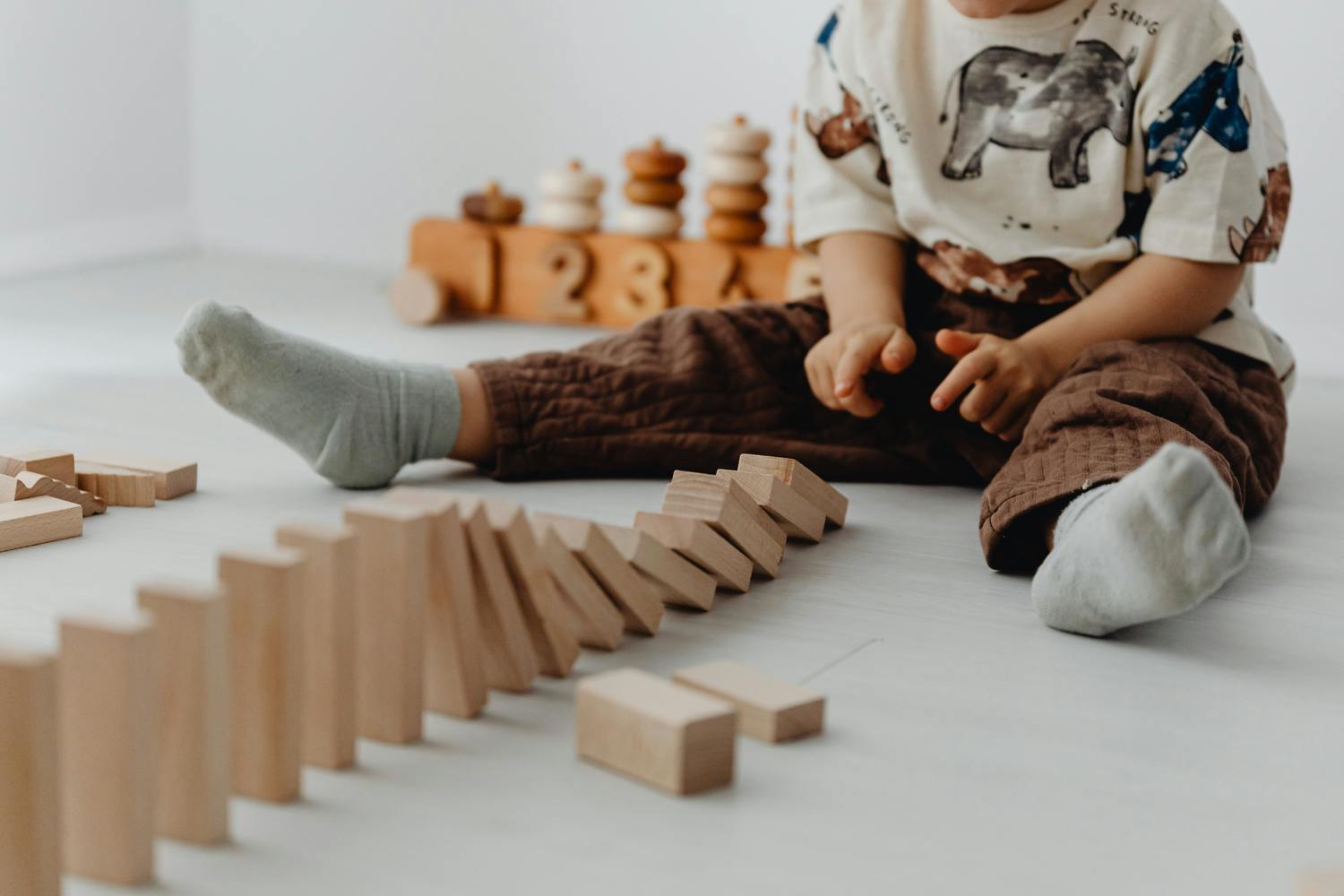
Play lies at the center of life for a child, and it should. In this episode of Breaking Bread, Amy Mammadov, a speech language pathologist, along with Brian Sutter, shine light on this important aspect of human growth and development. Additionally, parents should encourage, teach, evaluate and share in the enjoyment of play with our children.
View Full Transcript
You know, I always say, well, language is built on the foundation of play and social interaction. Welcome, everyone, to Breaking Bread, the podcast brought to you by Apostolic Christian Counseling and Family Services. Excellent to have everyone along. Glad to have here in the studio Brian Sutter and Amy Mamadov.
Amy is a new voice here. Brian’s an old hat, so we’ll just move over him. Everybody knows him. Amy, introduce yourself and tell us a little bit about yourself. I’ll set up the topic. Okay. Sounds good. I’m Amy Mamadov. I’m a speech language pathologist working in Bloomington, Illinois, probably more commonly known as a speech therapist.
That’s a little more accessible. People have their memories of, oh, you know, I saw the speech therapist in third grade when I worked on my Rs or my classmate did. It’s probably the context we’re most commonly known as, but there’s a lot more that we work on with language and communication. So receptive language, how well a child is understanding.
What’s being said to them and then expressively how well they’re able to communicate their wants and needs. I work in Bloomington. I have a small private practice and we offer individual speech and language therapy and then also a social skills group for preschool kids. So, you work professionally with children.
I do. But you have some of your own. I do. I have two daughters. Introduce your family. Yeah. So Tophig is from Azerbaijan, which, you know, it’s not very well known, but it’s a very small country, and by the Caspian Seas. And he came to the U. S. to study his master’s degree at Illinois State University, which is also in Bloomington.
That’s kind of where we met. And then through some friendships with brothers in our church, started coming to our church, became baptized and a believer in Jesus. And we got married coming up on eight years. And we have two girls, Liliana and Josie, that are going into second grade and going into four-year-old preschool.
I know Amy from a couple of different spheres. One is a church sphere as Amy and Tophig and their children attend our church, but I also know Amy for her professional work because my five-year-old Renny gets services from Amy. So, let me set this up a little bit just in the sense that Rebecca was taking Ren to her therapy or speech therapy, right?
And she started raving about it like after the first day, it’s like, you have got to take Ren to therapy sometime. Okay. Well, one day I did carve out some time and I went, and Amy, just to see you interact with Wren. really taught me a lot, okay, about interacting with children, but also even at a higher level about how to view children and how there was very clearly, Amy, you possessed a deep respect and regard for the child.
Okay. So let me set up a few things and qualify a few things today. One, what I mean by a child. Okay. When we talk about children here, I’ve got a 20-year-old child and that’s not who I’m talking about right now. So, I’m going to say like two years to nine or 10 years.
Okay. Is that who you work with? And I think that’s a sweet age, that’s the human being we’re talking about. Brian, can you relate? Yeah, I can connect. Two to nine. Where are your children at right now? So yeah, I’ve got, my kids are 12 to eight. So, some of them have moved through that and some of them are in the middle or towards the end.
So yeah. And then just think of nieces and nephews and different ones that fall in that category. And it’s a sweet, sweet age. So, here’s my thesis. Ready for the thesis? Here’s my thesis. We all need children in our life in that age band. Okay. Now, some of us have our own children, but it doesn’t have to be our own children, right?
We have nieces and nephews and we’re fortunate to be a part of a church that puts us in proximity of these children. Have you had my experience though, that when you go to a nursing home, whether it be at Christmas or whatnot, the children win the show between the ages of three and nine, they could care less really about the older folks, the adults. And so, here’s been my growing aha as a father with a tag along, is I am coming to see that Rennie actually blesses me as much or more than I can bless her. And that’s a different posture I’ve had with any of my other children to my shame. I have assumed myself the one to impart and for them to benefit from me.
And rather, I’m now finding that I have a ton to benefit from her. Does that make sense? And Amy, as I watched you interact with children, I get a sense it’s a little bit like, no duh for you. A little bit. So, I’d love to pontificate a little bit in this podcast about children, how they’re viewed in the eyes of God.
How can we have a better view of children? What do children teach us as adults? And why is it important for adults to have children in their lives? Does that make sense? Oh yeah, it makes a lot of sense. That’s great. That’s a great topic to think about to slow down and, and just consider what can we learn there and you know, Amy, what I observed you do with Ren is play with her.
A lot of what you do is play. Yes. And in fact, most of what I do is play. Yeah. So, she’s got a full-time job that’s play. Yeah. I do tell the kids I work with, I’m a very lucky grownup because I get to play all day long What role does play have in a child’s life?
Well, I mean, learning for one thing, I think it’s the basis of all learning for kids. In a lot of ways we talk about, we’re not really going to go into the language component, but when I tell parents, especially of a young toddler who isn’t really doing much talking at all, you know, I always say, well, language is built on the foundation of play and social interaction.
We learn by experimenting with our environment, observing our environment, you know, whether that’s for an infant and mouthing it with our mouths or banging it together. And then eventually, you know, all of a sudden, we’re building Lego towers and doing more advanced things. And then also watching mom sweep the floor and watching dad go to work and playing with other friends and all that social interaction is how we learn about our world.
So, for kids who maybe aren’t. Speaking in the way that we expect them to, then sometimes I have to go back and teach those skills first. And so, especially with my work in that youngest age group, a lot of what I’m doing is teaching play so that they have that access to have new experiences and learn new skills.
Brian, I imagine as you work with people, you’ve got your own children, but also working with people, the importance of play. Did you say experimentation, or this ability? And I think I’ve heard you speak to the importance of kids to maybe put themselves out there and to take a risk and those types of things.
What do you see in terms of the climate of play among young people and what can we learn? Yeah, that’s a great question. I think it’s one of those places where, you know, depending even on you as an adult, what your experience has been like and how you view the world or how you view relationships can really shift what you think about play? And, if you see this as a ray, we have to keep going. I mean, I think even just in our cultural situation, sometimes we’re so nervous about making sure everything’s safe that we can restrict play or play has moved away from doing it with other people into online settings.
Yeah. And then the impact, I’m sure. I’d be curious on your thoughts there, I mean, what you’ve seen or if you’ve noticed that, but you can see how if you’re not actually doing the things with your hands and a social relationship, how that’s really going to limit what play looks like and how that growth might go.
What is your perspective on play in 2024 with all of our devices? I would say that there are times where I’ll go into a home or kids come to me in my office, usually the youngest kids, I’m in the home with them and parents will say, well, look at all those toys that they have.
They just don’t play. They’re not interested. And I usually take that as cues. They don’t know how to play. And so, we need to get down on the floor and show them how to enjoy toys or even people. I even have one co-worker who’s really good about going into homes with a lot of like low socioeconomic where toys aren’t readily available, but okay, let’s roll a can of corn back and forth.
There’s social interaction. Mom didn’t have to go out and buy anything fancy. Let’s stack the cans. Let’s roll them back and forth. And I would say if kids were not playing as expected. A couple things, I would say, number one, let’s try a technology detox because a lot of times they’re used to that fast-paced instant gratification.
You know, I’m on the app and when I touch the bush, I’m at the farm scene and I touch the bush, the sheep jumps out. And I go to a real farm and the sheep doesn’t do that. You know, they’re not jumping out of bushes to entertain me. And so that feels boring. It isn’t as fast paced as we’re used to.
And so that can be one great thing, turn off the screens, even take batteries out of toys, try to have them make the sounds of the firetruck rather than the firetruck making the sounds. Yeah. So, Amy, we need to teach our kids how to play. I think that’s a really powerful statement, right?
And that’s exactly what I observed. I observed you playing with Ren in a way that I had not played with Ren and didn’t really know how to. So, give us a little insight, like what are you thinking about when you are down on the floor with a child? Yeah. So, I would say that’s a skill that’s come over time.
You know, I think as adults, we lose that ability to play. It fades. We forget what it’s like to be down on the floor and doing things, and you know, I even see that with the graduate students that I’ll accept that come with me for an internship is we’ll go out and they have this big lesson plan in their mind and I’m like, we’re working with a two-year-old.
Have you ever tried to get a two-year-old to do what you want for an hour? Like this is not going to happen. You go in geared with strategies and loosely held goals. And then whatever they’re interested in, you infuse it. So, if they’re interested in the play kitchen, then we’re going to work on eat, hot, cold, all those kinds of vocabulary that I can bring into our pretend play.
We’re pretending to eat and cut, or they’re interested in jumping off the couch. Then we’re going to do ready, set, go. We do big jumps, little jumps, you know, all those things. So, and actually it’s amazing how those graduate students will say, oh, I kind of forgot how to do this. Like it’s coming back to me.
Over the semester, you see that improve in them. If they get more flexible, they get more playful, they get more relaxed, they get more creative and they’re learning that from the kids, from that practice. And also, you see this relief of like, oh, I don’t have to have this huge lesson plan. I just need to have shared enjoyment.
And a general idea of what is typical development and where is this child at so I can take them to the next level. Shared enjoyment. That’s huge. Well, let’s just pause with shared enjoyment. I think that’s huge, right? For parents, there are easy ways for me to distract my child and in fact separate them from myself in play.
And there’s certainly time for that. Play with your brother’s sister. Play with the neighbors. Go play with the dog. Learn some independent skills. Yeah. But shared enjoyment. It’s a really powerful concept, right? Well, even if you think of God creating us as relational beings. And that we’re going to feed off of each other.
And you want reciprocal interaction where they can see, oh, I have an impact on them, and then you can have an impact. And all of a sudden when their face lights up, your face lights up and how that can fuel, like, oh, okay, excitement. And then they go into the next thing. And if we can do that as adults, we’ve got so many pressures or expectations that we keep everything pretty subdued, but kids, if we can get into that space with them and have fun with them and let them light up and let them impact us how fun that is.
And we’re really bringing to life a lot of what’s going on inside of them and then they’re free to develop their creativity and explore and all of these things that open up the world to them. And so many teachable moments come through that. I mean, even just recently, I was thinking on the way over here, I was playing a board game with my oldest, the game of Life.
If you remember that, you spin the wheel, you drive your little van around and it’s the nineties version. So, it’s an old school station wagon type looking van. And she landed on a square and it was a baby girl. And she was like, I wanted a baby boy, and I almost thought, you know, the rules are you get a baby girl, and I’m like the point here is that shared enjoyment, like if that’s the goal of this game, I mean, and you can’t go into games with a goal in mind.
Like, maybe you need to learn to lose graciously, those kinds of things. And I was like, this was just for shared enjoyment. So yeah, pick out a baby boy. It doesn’t change the game. Now. Be flexible on rules where you’re consistently winning and we’re getting into cheating, you know, then I’m going to address it.
But for this sense, it was like, okay, pick that. And then I could say, isn’t it so exciting to be a mom? I’m so glad that you see that as a positive thing. You know, I could get into that conversation. I love being a mom to you too. Aren’t you excited that you got to pick out your little baby. And one of the things that makes me think of, for me, is just like, I encourage parents every once in a while, to just let your child lead.
We typically are just not very good at that. We don’t even realize it, but we’re just always instructing. Always, and certainly there’s a place for that, but sometimes it’s like, let them tell you what they’re interested in, or let them kind of move us over into this place. Get to know them, and there’s such beauty and power in that, but a lot of times we’re not comfortable with that.
Yeah, and that actually is another big key component to the therapy that I do. We call it child led play. Oh, cool. You know, like literally you pick what you’re going to do, and because also kids will learn through the things that they’re interested in. You know, I can pull out all these things that they’re not excited about, or these flashcards, and they’re sitting there, either they’re avoiding me, or, they’re sitting there kind of tolerating it, but if I pick out something that really sparks their interest and sparks their minds, then their learning just goes through the roof, you know, and they’re going to practice it again when I walk away.
That’s why I always tell parents, I like to practice the toys that you have in your home because if I’m the Mary Poppins that comes in with all these fun things that then disappear, sometimes the practice goes with it too, but, you know, you’re equipped in your home to do very simple things that can. Is there research on the connection moms and dads are having with their child?
I would imagine there’s health in the relationship. I know there is a significant amount of research on shared book reading, you know, pulling a child into your lap and sharing a story. There’s a lot of hormones that are being released that are bonding hormones. And so sometimes that’s a goal. You know, you have a parent who really wants to do book sharing because that was important part of their childhood and so sometimes the book becomes, I’m like, how can I make this attractive? So instead of a book, it becomes a ramp for a car. Slowly show that child that this is an attractive object. And then we slowly turn it over and lift one flap and say, Oh, look, there’s a puppy under there. And then it goes back to a ramp.
And then the next time we flip to and slowly kind of desensitize in this idea that’s boring. I don’t want to do that. I want to be on the move. Or if a child who needs movement, maybe we do it in a rocking chair. How can we adapt this to meet this child’s particular needs for movement or for attention span?
Or maybe we only talk about one picture on the page and then we turn. Or maybe they just enjoy turning the pages, but we’re just having a positive experience. that can slowly be extended into more mature skills. Same thing with puzzles. I love puzzles because I feel like that’s a great way for you to teach an inner monologue to a child.
Like, how do we talk to ourselves in our mind? So, the puzzle, I’m narrating what a child’s doing. I’m like, oh, it doesn’t fit. Try again. Keep turning. Oh, this is tricky. Maybe over here. Look, it matches. And you start to think, this is how I talk to myself. Like, am I saying, I can keep doing this.
Keep trying. I can do all things through Christ. Am I feeding that to myself as I try things? Or do I have this negative, like, this isn’t working. I’m going to quit. And I think you can teach that inner monologue to a child. How do you talk to yourself? To solve your problems through puzzles and just narrating what they’re doing while they’re doing it giving what you think might be good on their head and you’re verbalizing it so that you’re hearing it and they start to pick that up in puzzles, it can be a hard skill.
So, maybe you do a little backwards chaining. So maybe it’s a nine-piece puzzle. You do all eight. They just do one. The next time they do three, you slowly break it down to a level they can be successful at and then slowly challenge them. And it seems like too, as they go, if they start to develop that skill of just knowing their inner dialogue, then later when they’re doing, and they’ve got different army people or dolls and things like that, you’re like what is this one thinking?
And then you start to see them be able to think about other people’s minds and what they might be thinking. And then they start to play out the things that are going on in their world sometimes. And it gives you a lot of insight. And again, they’re starting to build all of these skills.
Whereas, if they’re just sitting behind a screen, like the creativity and developing all that sort of stuff doesn’t happen and if we can see it through that lens, it just gives a lot of opportunity and even just like how do we meet them and join them in the things and invite them to join us in our things can just be really mutually beneficial.
Am I right that there’s research out there about the depravity of play among children? Yeah, I would say the screens in electronic play, it’s preprogrammed play, is what it is. So, kids are playing in order to complete the program that’s already been picked for them. How do I beat this boss?
How do I, even like a lot of toys that aren’t necessarily video game type toys, but need batteries, anything that has preprogrammed play. It’s the adult. Like you said, we’re not child led anymore. Or it’s. It’s like the adult has set it up and can the kid figure out what they’re supposed to figure out rather than here’s this blank slate.
And we’ve all seen that where you get your kid a toy for Christmas and they play with the box, and like that blank slate just opens that world for creativity. And so, I think, across the world, we are seeing a greater need to recapture that. And I think another thing that’s interesting is when you look globally, kind of shifting topics a little bit, but how much play is innate to us and how much God really put that in us.
I saw a talk by a professor at Lincoln Christian University once, and he had grown up as a missionary’s kid in some country in Africa, and he brought a toy that he had made when he was a kid. That became one of his interests were toys that kids create around the world out of objects that they have.
And so, he had this small collection of things made. Some of them are rudimentary, tire pieces and wire and things like that. And then some were more advanced based on what the child had available to him. But it’s just interesting how that need was always there, globally.
Yeah, that’s just part of who we are. And it can look different in different places. But that’s one of the things that’s really fun too. When you get kids together and if they know how to play and you just give them some space, they’re amazing at how good they are at making friends and interacting and we ask, what were their names?
No idea. Yeah. But I had a ball. Yeah. You know what I mean? We were best friends. Exactly. We were best friends for that hour. And then you were like the nursing home in different places where they’re just able to come in and make do. But I think too, the relational piece of that, when they have had opportunity to interact with somebody relationally, how much that just grows their ability to read body language and tone and all of those sorts of things.
And when they can participate in that world. It just opens so many doors, whereas there’s a void of interaction or a void of play. So many things, whether it’s creativity or interacting with another person gets shut down and then your world gets pretty small and it’s hard to move from there.
Amy Mamadov and Brian Sutter on Child Play. Thanks both of you. And to our listeners, I hope you’ve been inspired as I have. Inspired to encourage play among our children. Instructed to help. Teach play where it is not occurring, to share in the enjoyment of play with our children, and then to evaluate child play on whether it is child led or if it’s adult led.
This has been very enriching, and I think a fun space to think about. And when we return, both Amy and Brian are going to help us see the beauty of children that we as adults would do well to learn from. And we might just see why God calls us to be childlike.
Show Notes:
Encourage Play:
- Play is critical in the development of language, thought and human relations.
Teach Play:
- The norms and technology of the day have stunted play. Some children need to be taught how to play.
Evaluate Play:
- Not all play is equal. Many toys and forms of amusement today are adult directed play. Child directed play, on the other hand, provides rich areas of growth and potential.
Utilize Play:
- Playing with your child gives you insights into where they are developmentally and provides an opportunity to model healthy reasoning.
Share in the enjoyment of play:
- Shared enjoyment is key. If play is anything at all, it is fun. Parents are encouraged to connect with their children at the level of shared fun.