

Six Keys to Better Brain Health Podcast Episode
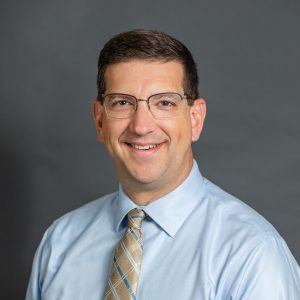
Just as there are aspects of our physical health we can improve, there are ways we can improve our brain health. Many of these are quite simple and attainable. In this episode of Breaking Bread, Ted Witzig Jr. proposes six ways we achieve better brain health.
Show notes:
Brain Facts:
- The brain weighs about 3 pounds.
- It has 86 billion neurons.
- It is made up of 60% fat.
- It is not fully formed until about age 25.
- It has structure with hemispheres and lobes.
- It is chemical.
- It is electrical.
- It is vascular.
- We do nothing apart from our brain, yet we are more than our brain.
Resource link: 11 Fun Facts About Your Brain | Northwestern Medicine
Six keys to better brain health:
- Physical Exercise:
- 150 minutes of moderate-intensity or 75 minutes of vigorous-intensity aerobic activity each week.
- Muscle-strengthening activities on 2 or more days each week.
- Food & Nutrition:
- Mediterranean and MIND diets are brain and heart healthy.
- Olive oil, nuts, salmon, leafy greens, vegetables, etc.
- Cut out alcohol and smoking.
- Mediterranean and MIND diets are brain and heart healthy.
- Medical Health:
- Engage in regular, proactive check-ups/physicals with your healthcare provider.
- Learn the medical history of your extended family.
- Know your numbers.
- Blood pressure
- Blood sugar
- Cholesterol
- Weight
- Sleep & Relaxation:
- Sleep between 7-9 hours per night.
- Deal with common sleep conditions such as insomnia and sleep apnea.
- Mental Fitness:
- Keep it logically sharp with activities such as crossword puzzles and Sudoku’s.
- Keep it artistically sharp with activities such as music and creativity.
- Be a lifelong learner.
- Social Interaction:
- Stay connected with other people in relationships.
Transcript:
We want to see that by being a good steward of our body, which is also being a good steward of our brain, that the goal is to live fruitful lives for the Lord. Welcome everyone to Breaking Bread, the podcast brought to you by Apostolic Christian Counseling and Family Services. Excellent, as always, to have you along.
My name is Matt Kaufman and with me is Ted Witzig. Welcome, Ted. Hi Matt. Great to have you here. Oh, it’s good to be here. Our topic today is improving brain health. Yes. This idea that I could do something about the health of the brain is welcome. I agree, Matt. One of the things that’s most interesting about thinking about a topic like this is that it is so much a part of who we are.
So, when somebody struggles with their kidney, we don’t identify with our kidney. You know, like, I am not my kidney, that’s my kidney, okay, but it’s fascinating because as people have problems with concentration or experience depression or have brain fog or something like that, they will oftentimes associate it with themselves.
They’ll take that personally. Yeah. And then the mysterious, majestic coming together that God made us as body, soul, and spirit our body, our physical body and our emotional self and our spiritual self somehow come together. And the fascinating thing is that we align that most closely with our brain. Or sometimes they’ll say your heart, but even when somebody says their heart, they don’t think about the organ. So, it’s very interesting how much the brain is, on one hand, aligned with who we are, and on the other hand, we don’t think about its maintenance a lot.
Yeah, we could probably philosophize about this. It’s kind of like it is thinking about itself. It’s a little strange, right? And there’s metrics with the heart, for example. Sure. You go in and you can get EKG or whatever. Is that what it’s called? Yep. Okay. Got that right. And do some actual numbers.
Sure. Like, oh, these are your numbers. This is your blood count. This is your cholesterol. You can do that with breathing and all that. So, there are metrics for these other organs. And I’m wondering if that’s part of my hiccup. Yeah, sure. Is there aren’t the metrics that I can run my brain through.
And then it’s like, oh, these things are wrong. Yeah. And I think not only that, Matt, but it is a coming together of multiple systems of the body. It’s true of other organ systems, but if you think about it, the brain has structure, it’s about three pounds, it’s made about 60 percent of fat, it’s got two hemispheres.
So, there’s a structure to it that has different components. Then there are the neurochemicals, we call them neurotransmitters, dopamine, serotonin, norepinephrine, acetylcholine, all these different things. And then there’s an electrical system. The brain is electric. And the communication in the brain is going through electricity. And then on top of that, there are all these blood vessels and the transfer of oxygen and taking fuel into the brain and waste out of the brain. That’s vascular. Yes. So as, as we’re talking about this, all these systems are happening.
And then, here’s the interesting part, it affects other systems and other systems affect it. So, when we talk about the brain also, I should say that we’re really talking about the brain and the spinal cord because it is connected out then down into the chest and abdomen and out into the peripheral nervous system.
That is just really fascinating. Speak to this. Discovery is being made all the time as it concerns neurology. Am I right about that? Absolutely. I mean, give us a little tenure of your time as a psychologist. Absolutely. When I started in, in this field, everybody knew you were born with all the brain cells you would ever have and you would never make another one.
Everybody knew that. That was established fact. And today, we absolutely know that’s not fact at all. It is neurogenesis, new brain cells being made, and neuroplasticity, the brain shifting and growing and changing over time. is the accepted model. And I think another thing that’s really changed is that there was no way that we could change trajectories.
So, what I mean by this is, people are getting older. In fact, just this week, a study came out that said the rate of dementia in the United States was going to essentially double over the next number of years. Let me make sure I got that right. Yeah, the US dementia cases are supposed to double in the next 40 years.
That was a study that just came out this past week. That’s staggering. Here’s an interesting thing about that. Okay, part of the reason that is happening is not because of what’s happening in old age, okay? It’s about what’s happening in middle age and younger age. And so, what happens is this, we would be amiss if we thought like this, everybody just gets old and gets dementia. And that’s just what happens.
There’s no question our brains change over time. There’s some cognitive decline over time and things like that. And there are some genetics. Is that true? There are genetic pieces. And that’s another piece we should bring into this whole factor. But here’s an interesting part to that. While we can’t control all things, the fact is that if I live for 50 years eating Cheetos and drinking Red Bull, and that’s my main diet. It’s not going to be a good outcome, okay? Now, again, we’re all going to know somebody who ate Cheetos and drank Red Bull for 50 years and lived to be 103.
They’re an anomaly. We’re also going to know somebody who took really good care of themselves and got a serious disease and died young. And they’re an anomaly. Yes. And so, the thing about it is the goal here is to think about why we would care. And first of all, we want to acknowledge that the brain is part of God’s creation of us, that we’re fearfully and wonderfully made.
The second thing is that we are stewards of our bodies and being stewards of our bodies is what helps us to go and do and be the people that God created us in this world. We want to see that by being a good steward of our body, which is also being a good steward of our brain, that the goal is to live fruitful lives for the Lord.
That doesn’t mean that somebody who has a condition that limits them can’t live a fruitful life for the Lord. We all have something; we’re all dealing with something. So, my goal is to say, what is it we can do that puts us in the best space we can be across our lifespan to serve the Lord and bless others?
That’s ultimately what this is about. It’s not just a podcast. I’d like you to share some ways to build health and I know that’s your intention. That’s really brain health. I appreciate you making that comment. The commentary about the anomalies, as an armchair statistician, I can appreciate stats on the masses.
Yeah. When the population gets an hour more sleep, we see a marked difference in the population. Now individual to individual, we are able to see, so the things you’re going to share here today are really research based, and they find themselves as verified in the large data. Yes. And that’s where we can learn from and then everybody’s got to figure out how to apply it in their lives.
It’s not going to look the same. In your life, if you’re listening to this at 25, at 50, at 75, at 100, it’s going to look different and that’s okay. But what we want to do is be able to say, how can I live into this in some small way? And really the key is it’s not about living some perfect life where you never have birthday cake, okay?
I’m not advocating that everybody has to learn how to run a 26.2-mile marathon. And go without sugar. It’s not that, okay? So, Matt, I think that as I’ve broken it down, as I think about it, there are different core areas that are going to be ones that, and I’ll say this, most of our listeners are going to go, oh, that’s what the doctor tells me I’m supposed to do.
Well, there’s a reason they do. Let’s start with one. All right. So, the first is physical exercise, and physical exercise does several things for our brains. And it does it through different channels. And so, first of all, one of the major things about physical exercise is its effect on the heart and blood pressure.
One of the things we know is it affects mood, it affects the brain’s activity level, and even our ability to learn. So, when we’re thinking about this, the main recommendation right now for adults is about 150 minutes of moderate intensity activity. So that’s per what? Per week. Okay. So that’s about five days a week of a half an hour.
That’s not too much. Or 75 minutes of high intensity exercise per week, plus two days of some kind of strengthening exercises that are going to move the different body systems. Like your abs, legs, arms, those things. So, we’re maintaining muscle tone. Yeah. Okay. So, if you think about it, it’s really about trying to do something most days of the week that is manageable, okay.
Now, I want to encourage listeners to think about it this way. I really encourage you to think about two for ones and three for ones. And what I mean by that is this. One of the things we’re going to talk about later is social connectedness. But see, when you walk for half an hour with a friend, okay, now you’ve got social connectedness.
And if you encourage one another spiritually, okay, yeah, you see what happens? You’re compounding the difference. That’s right. All right. Let’s even connect the dots. Our exercise affects mood. It affects even our ability to learn. Why? Because that’s seeded in the brain and since it’s vascular, you’re pushing blood through there. You’re getting oxygen freely there. Like you are feeding that organism. That is correct. Anything that you do good for the brain is going to be good for your heart and anything you do good for your heart will be good for the brain. And the other thing that exercise does is it helps us as we’re trying to manage things in our bodies like stress. It’s a stress reducer and an inflammation reducer and that’s a big deal in a very chronically stressed society.
Alright, so Ted, I’ll give a personal example of this. It was a year ago and actually it was a weak moment for me, but my wife asked me, Matt, will you start to run with me. She needed a little motivation. She’s like, okay, maybe if he can help me and all of that. And I don’t know if it happened to be the music that was playing in the background that provoked me to say yes to that question. But I did and I’m not a good runner, but there has been some consistency.
And you know what, Ted, it has helped me think more clearly. And in fact, I would even go further, I have spiritually broken through and have been able to forgive a certain matter that’s been hard for me. And it’s not because I was running. Yeah. You know, that’s not where it was at, but there was good devotion time while running and I found my thoughts starting to be collected with the rhythm of my heartbeat and the pounding of my feet.
Does that make sense? It does. Like there was some alignment going on that let loose to connect with God in a way that I’m super thankful for. Yeah. I think one of the things that you’re talking about there, Matt, is that there is a cascade effect on these kinds of things. And so, the cascade effect of running puts your mind and body in a certain rhythm, and you had time to think and all those things and time with God and compounding.
And I think the key is Matt, that we would never say like with diet, that eating one day of birthday cake is going to throw everything off, or missing a day of running, or even running one day. But it’s the patterns that are established, and I think people are fearful sometimes that if they don’t think they can commit forever, then they don’t want to start.
Yeah. Or they’re worried that nothing will matter or whatever. And I think that we just have to figure out how we steward ourselves today and this week. And what does it look like for me? And you know what? My dad had polio when he was four years old and he’s in his mid-seventies. He’s not going to be a runner.
And it’s okay. He doesn’t have to be. He has to work with his physician to figure out what his routine is. And so, we’re not putting any guilt on people. In fact, I think the thing is to say at your age or whatever, then the question is, how do you lean in? And you know, for some people that’s going to be chair exercises that they sit in.
Yeah. You know, I think another thing, Matt, if we can go to the next one is our diet and nutrition. And there are two things about this that I want to say. First of all, people have different diets for different reasons and that’s understandable and we’re going to say again that goes back to everybody. But the typical American diet is highly processed and there’s been research recently about ultra processed foods and things of that nature.
There’s no question, an ultra-processed diet and dementia risk are linked. Okay, so the thing about it is I’m not saying you can’t eat some potato chips. Yeah, but I am saying that we have to figure out how we lean into big things like research on the healthy brain. For myself, even after I had a small stroke and had some migraines the neurologists told me to follow a Mediterranean diet. And there’s another diet called the Mind Diet that’s very similar. And these focus on the things that you would anticipate, olive oil, salmon, nuts, leafy green vegetables.
There is the word vegetables. I thought it might be coming. Yeah, and you know what? The thing about it and the point is that the question isn’t one meal, the question is about nutrition over time. Yeah, a lifestyle over time. And that’s where I think it’s not a question in our society about whether there’s going to be a range of foods available. We’re going to get all kinds of things at potlucks and whatever.
But I think one of the things to remember is that the brain is very responsive to the amounts of things that we put into it. And for different people, it’s going to be different, but I will tell you this, that if you think about it, even though your brain isn’t moving like your muscles move, it still brain consumes a ton of energy.
Okay? It is constantly processing and moving and things of that nature. And when it is powered effectively, it does a better job. And you know what, I think for a long time we’ve connected diet with physical, right? I think it’s because it’s measurable. We can step on the scale, and we can measure the effect of diet. But I think the freshness here is to recognize that our brain is also a beneficiary of our diet. We are what we eat, as some have said. That’s correct. And to see that link there, which often is a little bit off our radar.
Yeah. We measure other things that are important to measure. Sure. And I think the thing to remember, Matt, is this is where parents can influence their children. And again, I am going to be the last to tell you that you should be an ogre about this. Very soon Donna and I are planning to become grandparents. We have a grandchild coming soon and I am planning on spoiling that little one. So, the thing about it is teaching. It is about lifestyle over time. The other thing that I want to say, Matt, is where the exercise and the nutrition can be more measurable.
Okay. Then the third area is about monitoring your medical risks. There are multiple areas that everybody should know. Okay. And the younger we are, the more we don’t think about these things, but over time, they become more and more important, but I will say that what we’re finding is that these are happening more and more in the young. So, things like your blood sugar level and A1C. Because problems with blood sugar are related to diabetes, number one, but then the downstream effects of diabetes affect all of our body systems and our brain.
So, you’re going to be able to detect real quickly what group I’m in. Yeah. Is that something that you go to the doctor and find out? Yeah. And do you do that once a year? And update that number? Or is that something you take at home? Yeah. So, when you go to your healthcare professional and have a blood test. That’s the annual physical kind of a thing. And so, the things that they’re oftentimes testing are your blood glucose level and there are different tests which are up to your healthcare practitioner.
Another one is cholesterol. Okay. There’s no question that even though the body of the brain is made out of 60 percent fat, the fact is you can clog those arteries and create strokes with the wrong kinds of fat. There’s good and bad fats and that kind of thing. So, cholesterol is another one. Okay. Another number that we want to keep on is our weight.
Okay. And again, I’m not trying to tell you what you have to be and there’s different body styles and all those things, but we do know that keeping our weight in a certain range and ranges is going to be healthier versus unhealthier over time. The last one you’re not going to have on your radar, Matt, and that’s your hearing.
What, your hearing, seriously? There is a connection between dementia and hearing loss. Really? Yes. And for whatever reason the hearing loss is. Like if it’s running loud equipment, or is that irrespective of reason? Yeah, so hearing loss, and again, this is one of those things that I find as people get into middle age and they start to notice things and they’re self-conscious about, wow, I need hearing aids, but I don’t want them and different things like that. I’m going to tell you from a brain health perspective, you want to hear.
Okay. Is it because you’re getting stimuli, you’re able to be more present? And you’re taking in more stimuli at any given time, so your brain has got to be active in all of that sorting. And it has to do with the brain trying to figure all this out, but the parts of the brain that process memory are oftentimes involved in language and other things.
I will tell you the last number you need to know is your blood pressure. Okay, blood pressure that’s out of a healthy range is not good for your brain. Again, we’re talking about particularly stroke risk, but we’re talking about just your brain health in general. So those numbers are easily accessible. Your weight, your blood sugar, your cholesterol and blood pressure, easily accessible. People generally don’t get a hearing test until they notice some kind of an issue. But the fact is, the research is pretty clear on that one.
The next thing that we really need to think about, Matt, is sleep. It has been a status symbol for years and years to be so busy that you don’t need to sleep. Or just run on caffeine and whatever. And I would just say this, that again, the research is also clear that sleep is necessary for a healthy functioning brain. And I think the status symbol we should aim for is to have good sleep and what research shows is that getting sleep, this is at the population level again but getting less than six hours of sleep on a regular basis or more than nine hours of sleep on a regular basis is unhelpful and unhealthy for brain health. Now we’re all going to have nights we don’t get enough but you had a less than and a greater than. That’s correct. So more than nine. That’s correct. It’s too much over the population, really. What it oftentimes signals is somebody isn’t active or somebody is depressed or other things. What’s research say on what’s happening during sleep?
There are several really key things that are happening during sleep that we have to understand. Number one, memory consolidation happens during sleep. Okay, it is where your brain is filing and sorting. It is going through the different memories and trying to make sense of it. It is pruning. Your brain is actually going through many different kinds of activity during sleep.
That’s why super interrupted sleep and things of that nature can really get in the way of things for people. And I would also say this, we’re going to have times of disruptive sleep. Those things happen. But when people have things like insomnia that goes on for a long time, and it’s untreated, or they have sleep apnea and things of that nature, or they’re just not taking time for sleep.
The other thing I wanted to say about sleep is that the brain has to also be able to clean itself and it produces things. Exercise and sleep seem to help with this. It is doing its process of bringing in the good, getting out the extras. Is there much on quality? So, let’s say, how about a nap? Is a nap a good idea even though, depending on how long it is, you might not reserve enough time to get into deep REM sleep, for example. That’s a really good question. I think it varies by person, and it also varies by the length of the nap and it varies by the time of the day.
And so, the point is, if you take a two-hour nap late in the day, you’re going to start robbing your sleep at night and throw off your sleep cycle. Again, some people are just like, hey, they need that power nap, and it really helps them. And I’m not here to say that it doesn’t. I would also say, though, that what we’re aiming for is to be able to get quality sleep. It doesn’t help you to try to make yourself sleep. But I will tell you this, there are a lot of tools and resources to help us sleep. And it’s one of those areas that people are kind of like, yeah, I just don’t sleep well. And that’s really frustrating and it’s hard. But here’s one of the things we do. We go to our screens, okay? And so, then people are on their screens at night and things of that nature. And this is creating a whole cycle of unhelpful sleep and rest.
It’s interesting, Matt, that God made our body to rest. He built us to live inside of rhythms. He built work and rest, day and night, all those things. And I will also tell you an interesting thing, and you know this already, in the Hebrew way of thinking, the day started at sundown. Sleep and rest remembering that God is in control of the world.
Yeah. There’s something really fascinating that every human on earth goes comatose, as close to death as you can come by all measurements, but we all need to. Absolutely. No matter how powerful or what decisions you have to make, it has to wait until the next day. That is correct. Rest in general though, to be able to quiet our minds is a really important part of this as busy as we are, as attached to screens as we are. And I’m glad Donna’s not in the room with me here because she would be saying, hey, why don’t you try that at home?
But to respect that our brains are always on the job. That is correct. And doing and working hard, as you mentioned, burning calories and a ton of energy. And so, it’s not that hard of a leap to say, yeah, it’s tired. Yeah. And here’s the other part, Matt, and this is hard for us to believe, those breaks in mental energy to pause, to reset, to recover. to quiet, actually improve our ability to function well.
We’re able to re center ourselves on Jesus, or his presence, and it’s one of those things as a spiritual discipline, to think about being present with God and God is present with us, it’s essential, but it goes out the window pretty fast. It’s a centering moment. Yeah. Great. I think we’ve mentioned five, is that true?
So, we’ve mentioned four, we’re on to five right now, and that’s mental fitness. So, one of the things that we want to do over time is keep our brains learning. We want our brains to interact with the world. And there are lots of different ways to do this. And we think about it when we were young. We’re trying to get the kids minds learning all these different things. But it’s important to remember that the concept of being a lifelong learner is really healthy for your brain. Now, that can take the form of simple things like doing Sudoku puzzles, right?
That’s a classic example, crosswords, Sudokus, and things like that. But it can also be a mix of things like going to a museum and learning, playing an instrument, learning a language, these kinds of things are challenging the brain. So, here’s the thing I want you to do.
So, variety might be helpful? So, research shows that variety is helpful. Okay. It doesn’t mean that you have to become an expert in all these things, but I will tell you that we become more passive as learners over time, or we can. And the other thing is we’ve got this mindset sometimes that old dogs can’t learn new tricks.
I would say it this way. I would encourage everybody to be a lifelong learner. Okay. And in doing so, it doesn’t mean you have to be a lifelong expert. Learn, be curious, ask questions. So now what I hear from this too, and maybe hearkening to the left and the right hemisphere, which we understand to have differences. But as I listen, I’m like, okay, Matt, step into some logic and step into some art, is that a healthy thing?
That’s the variety we’re talking about. But sometimes it is doing things that require memory tasks, that require planning, that require right and left side. It is about wholeness, and it also harkens back to your introduction as we talked about the, the complexity of this, what’d you say, three-pound organ.
Yeah, with its I don’t know what the number is of cells and connections and that type of thing. Billions and billions. Yeah, and then just to look at it mathematically, the permutations, connections, and routes make every brain infinitely unique.
Absolutely. And really what you’re saying is practice that uniqueness. Yeah. Really light it up. Yep. That is correct because if you think about it, the more connections we have in our brains. Yeah. Good.
Last piece. Number six that I want to say is about social interaction and social connectedness. We’re created to be social. The fascinating thing is most of these things that we’ve been talking about really have to do with what’s going on inside of us. Yeah. Our blood pressure, what we take into our body, all those things. This is about what happens outside of us. And this is about having connections with other people. And there are a couple reasons why this is the case. First of all, research shows that loneliness is a plague in our society and around the world. Loneliness is at the highest level. The research on this actually shows that chronic loneliness has the health impact of smoking 15 cigarettes a day.
Wow. Okay? When you look at, again, the outcome, and everybody’s like, oh, yeah, it would be better. The fact is that as people age, the loneliness factor goes up, but loneliness is plaguing the young as well. So, this is where churches and families and things like that can really be helpful.
But over the course of time, the outcome for the lonely, they tend to be more sedentary, pulled back, and all those different things. This does not mean that everybody has to be an extrovert, okay? But here’s the thing, when we’re connected, we have a sense of warmth and attachment. We’re also more likely to have support when we struggle. Or to offer support. That goes both directions. And the fascinating thing is that, again, this is one of those areas that when you look at social connectedness versus isolation and the outcome over years and years isn’t even close, Matt. It’s not even close. The beauty of this is we can help one another in these areas.
And it just means that as we encourage one another to live our lives in a way that stewards ourselves well and is a blessing to others, the social support aspect is just part of the mutual benefit that we have. I really like that. And there are so many reasons for that benefit.
I’m just going to narrow in on this neurological one, which makes sense to me. That if we’re in and of ourselves, we have our own world. This is complex. But as soon as you engage with another world, another person, the complexity just compounds and then add another person in the room, and you see the brain has got to flex.
It’s got to work. It’s got to light up. It’s got to run different routes. The more people or whatever so I can see just purely from the organ standpoint why that’s the case. Yeah. And just think about then when we’re together, Matt, and we recall memories together. Okay. Yeah. So, you feed off of one another. We feed off of one another. It’s like another pair of ears, another nose, another mouth, another set of eyes, right? It is. And it’s helping in that way. One of the things that I would encourage our listeners is that you don’t have to become an expert in the brain and all these different things.
But I do encourage everybody to think about some practical things that they can do to help in these areas. And so, one of the things that I really like and I’m going to recommend is that you can get a brain care score from the McCance Center for Brain Health at Massachusetts General. We can put a link to it in the show notes. They have a 20-item questionnaire that you can take right online and it’s going to ask you where you’re at with some of these numbers and your social connectedness and a number of these things. And when it does, it’ll give you ranges and then allow you to see where you can grow.
Okay, or for example, my blood pressure, cholesterol, and weight are higher than they ought to be and I’m sedentary and alone. Okay, what are the steps that I need to start taking? And again, we’re talking about lifestyle, but the other thing is, I really think too, that we want to promote in and amongst ourselves a kind of living that puts us in a place to be able to serve and do it with joy. I really like that. I appreciate this, Ted. Very practical. And as I think about it, and what I really like about it, Ted, is some of these things are really within reach. If I can get out every day, if I can move, if I can connect with people, if I can eat something healthy, be healthy, get good sleep at night, actually this package looks pretty good. Yep. I think, Matt, that all of these things are in that category of, to some degree, people will be saying, Ted, I already knew everything that you said.
Yeah. And so, there’s a big difference, Matt, between knowing and doing. And all we have to do, though, is take that and put it into some action. Just whatever the next steps are for you. Yeah. God has wonderfully created each of us, and I think that’s been highlighted here, Ted.
Yeah. In our brain. I think it’s easy to get on board to say, yes, I want the healthiest brain possible. There you go. It makes a difference. So, thanks each one for being on. And we trust that this has been helpful for you and perhaps giving you some practical things to step into to have a healthy brain that God has given you.
Thanks, each one. Bye.
Listen on Spotify – Listen on Apple Podcast
For Further Information
Six Keys to Improving Your Brain Health Webinar [ACCFS]
In this webinar recording, we look at six ways we can all improve our overall brain health.
Brain Care Score (McCance Center for Brain Health)
Six Pillars of Brain Health (Global Council on Brain Health)
Brain Basics: Know Your Brain (National Institute of Neurological Disorders and Stroke)
Additional Articles

Beyond Symptom Reduction Podcast Episode
Nothing motivates treatment quite like pain. We want it to stop. Too often, when the pain has past, we are not motivated to continue the important work of personal growth that lies beneath the pain. In this episode of Breaking Bread, Ted Witzig Jr explains the hope that lies beyond

Mental Health and the Church: The AC Story Podcast Episode
ACCFS is a mental health service that supports the Apostolic Christian Church. This unique connection between church and mental health agency has a storied history. To tell it, Ron Messner and Ted Witzig Jr are interviewed by Matt Kaufmann on this episode of Breaking Bread.

Six Keys to Improving your Brain Health Webinar
Just as there are always aspects of our physical health we can improve, there are ways we can all improve our brain health. Many of these are quite simple and attainable. In this webinar recording, we look at six ways we can all improve our overall brain health.
Comments
Leave a Comment