
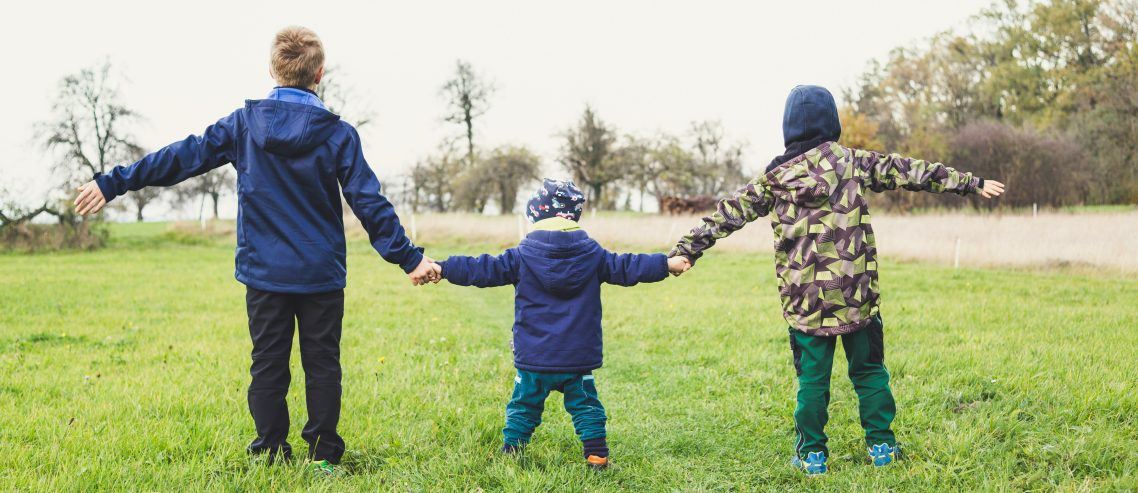

3 Habits for Our Kids
Parenting has its eye towards producing future adults. One powerful adult forming tool is instilling good habits in our kids. A well parented habit can pay dividends in the long run by building the muscle memory to do what otherwise would not be natural. In this episode of Breaking Bread, Brian Sutter examples this by suggesting three habits that will produce very welcome attributes in our children as adults.
Show notes:
Healthy habits can help grow and mature our children. And yet, to do this, the habit needs to grow and mature with the child. Three examples are given.
Example 1: Goal: To produce thankful adults.
- Habit – Say, “Thank you.”
- Growing habit – Say, “Thank you for _________.”
- Maturing habit – Say, “Thank you for _________ that is a gift to me.”
Example 2: Goal: To produce a humble adults.
- Habit – Say, “I’m sorry.”
- Growing habit – Say, “I’m sorry I ________.”
- Maturing habit – Say, “I __________, how did that make you feel? I’m sorry.”
Example 3: Goal: To produce adults who are good listeners.
- Habit – Say, “Tell me what you think.”
- Growing habit – Say, “Tell me what you think, I have a lot to learn.”
- Maturing habit – Say, “Tell me what you think, I have a lot to learn and value your insights.”
Transcript:
If these kinds of things are what our kids are able to grow into, it gives them a great deal of freedom. There’s a great deal of freedom that comes by developing habits that are consistent with what the Lord says is right and good and true. Welcome to Breaking Bread, the podcast brought to you by Apostolic Christian Counseling and Family Services.
Excellent as always, to have you along. I have Brian Sutter with me, and we’re going to talk about habit formation in our children and highlight three habits in particular. Well, let’s start here, Brian, healthy habits. I think if you were to survey a bunch of people and say habit, good or bad? This is my own gut, but I think we have more of a container for, oh, habit’s not a good idea. Yeah. Bad. Right. But we need to turn that on its head for this particular presentation to make any sense. Right.
Sometimes when you think of habits, almost naturally you think of the bad habits that people get stuck in. And what we’re trying to say is, hey, there’s another side to the coin. And if we can identify that and tap into that, I think it can be really helpful. And it is a tool for parenting. You would go that far, right? Oh yeah, I think so. The things that we do repeatedly shape us and have an impact on us.
And as parents, we can have that lens on. And there are so many habits that you can pick. So, it’s like you’ve got to narrow your scope. But yeah, I think it can be very effective as a parent when we do a certain thing in rhythm. Right. Habits can form us into the type of person for whom doing that thing is natural.
Right. And that is really exciting. Oh, right. It is. I think it’s very exciting. Just prior to coming on, you were talking about your son playing baseball. That’s really what practice is, habit formation. Right. Being able to bring that bat around and hit a ball coming in that fast. Yes. And having that be a natural thing to do. Right. It comes by way of muscle memory. Yeah, exactly. It’s lots and lots of repetition when the stakes are really low. And then as the stakes get higher, you’re hoping it’s muscle memory that kicks in and that’s what carries you across the line. And that’s what we’re talking about in many aspects of life and certainly in this setting here as parents when the stakes are high.
I like that. And that actually gives us a bit of a vision in parenting. And thinking about when stakes are high because sometimes, in the harried, messy moments of child rearing, it’s hard to see beyond the moment. Right. And it’s about correcting the moment as opposed to no, this is preparation for a high stakes moment.
Exactly. Now tell a mother who’s having a 4-year-old meltdown to say, this isn’t the high stakes moment you’re talking about. Correct. Yes. But there are more high stakes moments coming. Right, exactly. To see it as an opportunity and even in that like those are really hard years. Those are really hard moments and that makes sense. But it also just makes me think of backing up and seeing perhaps the family as a microcosm or even just a place where we’d learned to live life. We do that together and we’re trying to train our kids to do life in community with others, in a way that’s consistent with what God’s designed and the family, in those day-to-day settings, is a great place to practice that.
What I hear in you saying that Brian is that we’re producing adults. That’s the long-term goal. And I think I miss that in parenting so often. It is about the moment and it’s about correcting things and sometimes if I really show my cards, it’s about my own self. Right. My own peace of mind. Yes. Okay. I’ve got to rule everybody because this sure will help me out. Yes. But what kinds of adults do I want my kids to become? Right. Yes.
So, we’ve advertised three habits. You mentioned there are far more that would be a benefit. So, where are we going to go with these three habits and with this vision of growing adults. So, these may hit home with you and they may not, and it’s okay if they don’t, but I think the principles still align. So, we’re talking here about the habits of becoming grateful. What kinds of habits would help facilitate that or become a humble adult? What kinds of habits would facilitate that or listening? Those would be the kinds of habits we’re hoping they’ll turn into.
Okay, what’s going to help us get there? What are some of the practical, small day-to-day things that are going to seem really small? And especially when they’re young, but that’s part of the maturing process. Okay. So, the three goals that we’re going to set forward here today are producing a grateful adult, producing a humble adult, and producing an adult who is a good listener. So, I want you to take those three and again there are a gazillion good ones out there. Right. I hope listeners will see optimism and hope in thinking about this. Yeah. Right. So, you might have a different set of three. Right.
But let’s go with these three. Yeah. Like being thankful, being humble, being a good listener are consistent with a God-fearing adult. And by the family as a means by which God often uses to help the Spirit bring spiritual life. And I think too, one of the things is if we move towards these, and this will probably be part of our discussion as we move forward, if these kinds of things are what our kids are able to grow into, it gives them a great deal of freedom.
There’s a great deal of freedom that comes by developing habits that are consistent with what the Lord says is right and good and true, and I think that’s exciting. Now, what that means, we may have to flesh out as we go forward, but I think there’s so much pressure to be so many things, but the freedom that says no, I can be grateful. I don’t have to have all things, which part of being grateful is that we recognize when somebody has given something to us. So, that’s really exciting too.
And a great lens for habits, because I think you could make a pretty good case that habits are constrictive, right? Habits are boundary oriented. And freedom isn’t necessarily a word that I would place with habit. But what you’ve just said there is they actually give way to a free life. Yes. Which I think is great. So, we’ve got three goals here, and we’re going to highlight some habits.
Brian, some of these habits are going to seem very simple, but present this first one, and let’s unpack it perhaps with some nuances that are going to be helpful. Yeah. Well, as we think about becoming a grateful adult. Where do we start? And I think what we’ve outlined here is just by simply learning how to say thank you. So, saying thank you is the habit. Yeah. Whether your child is just learning to put things in a verbal language like a 3-year-old or they’re 23. So how can we mature this habit from the young to the old? Yeah. Just to be able to start with the very simple, thank you, and that’s all that they can squeeze out.
That is a beautiful thing. But then as they move forward to be able to say. Thank you for something specific, which requires thinking. Where a habit eventually comes, where you’re not thinking anymore, it’s just autopilot and you just say, thank you. So, we want to develop the autopilot, but then also move back into autopilot, thank you, but what is it that I’m thankful for?
So, we’re training them to kick their mind back on and say, oh, actually I’m thankful for this specific thing, and that’s part of growth. And then as you’re moving forward, I’m thankful for this, it was such a blessing. And again, back to that freedom piece, I think what we’re saying here, thank you, requires this piece of not having all things. I don’t deserve everything. And therefore, I recognize when something has been given to me that I don’t deserve and I wouldn’t have had otherwise. And that’s a real blessing. Yeah. Well, I love that vision casting right there.
So, let’s just linger a bit on this person for whom they are grateful. It really is an orientation that person has with God and with other people, isn’t it, to say thank you for this specific thing. Because I see the grace in it is a person who really understands who they are in this world.
Yes. Isn’t that powerful? Oh, it’s so powerful. Starting with a simple habit of, thank you, but more than that, yes, a maturing of that. And I think it just allows you to be able to step back and know that I don’t have to provide all things for me and acknowledge that I don’t provide all things for me.
And, wow, look at all the things I’ve been blessed with, whether that’s from God in a specific situation with another human being. Wow. God’s put some really gracious people in my life. Or, this is not necessary, this is above and beyond. To have that sort of lens is refreshing. Yeah. Sometimes I think to see that juxtapositioned to its opposite is really helpful. Right. So, if we were maybe to take the opposite of a grateful person, we probably have an entitled person. A person who is entitled sees no reason to say please and has no reason to say thank you. Right. Because isn’t that what you were supposed to do for me? Yeah. When you say it that way, you realize, oh my word, I should be saying please and thank you. Oh, right. But it’s insidious, right? It is. Yeah. Which I think is exciting and maybe good just for us to keep on a radar that either direction can grow on itself.
And if we get into a place of entitlement or criticism, that’s an easy path to go down. And it will grow and mature as a sort of an adult that we don’t want to be, and I don’t think we want our kids to be, but it’s a natural thing and I really like that. And in the spirit of that, the type of adult that we want to be. Let’s go to the second one, Brian. Yeah. So here, if we think, okay, yeah, I would like my child to grow into a humble adult. What would maybe be one of the pathways there towards that? What we’re suggesting here is the habit would be to start to facilitate, I am sorry. The habit of recognizing, hey, I’ve messed up here and I am sorry.
And so here again, something that all of us have said. Parents, yeah, we’ve all instructed our kids to say, I’m sorry. But I think to place it in this larger growth, this larger vision of becoming a humble individual. Speak a little bit to the need for adults to be able to say, I’m sorry. Yeah. Because sometimes it becomes harder. Oh man. Yeah, and I think in a bigger picture sort of way. I think one of the things that we struggle with today, and I wonder if social media contributes to this. Being able to acknowledge wrongdoing or that we haven’t done something perfectly or right is so painful. And so, we grow up in a culture instead of being able to say, hey, I really blew it here, or I messed up, we go down the road of defense. Defending and figuring out who else to blame.
Yeah. We, we become really good lawyers, don’t we? That’s right. Yes. And we can split the fault in lots of creative ways. Yeah. Right. So, back to freedom. If as an adult, you are free to be able to say, hey. I blew it here. Or I didn’t do this. Right. Whether it was a mistake or you just straight out sinned or whatever it was, to be able to have the freedom to come to somebody and say, yeah, I am sorry. There’s so much freedom in that. Therefore, you don’t have to be perfect. That again, just like thank you, is pointing towards, I’m not big enough to do all of these things. In this case we need somebody outside of ourselves to be perfect because we can’t and we need to be able to acknowledge wrongdoing to restore relationship.
You know what I hear you’re saying there too, Brian, is that we need a real, honest understanding of ourselves as human beings. And that we’re going to fail, we’re going to be at fault. That is part of the world that we live in. So, having a skillset to cradle or carry our brokenness, this is one of them, right?
Right, to be able to own, acknowledge, and ask for forgiveness. Right. I’m sorry. Right. And I think too, even as you’re sharing that, one of the things that just strikes me is I hope parents are encouraged. Like we’re talking, again, you might be thinking, these are so basic. They are. But that’s what’s so exciting about them. Oh, habits are exactly, but they’re powerful. And so, you might be already doing this, and we want you to see the benefits and the life that comes from these, and the way that they can also be matured. Yeah. I really like that, and I want you to take this as well, what does this habit look like as it matures over the lifespan of a child?
Yeah. And what does it look like as they, as they age and mature. Yeah. And maybe just another comment there on habits is that sometimes, and I think this would be a good example, that habits start off as pretty legalistic and you just do it for the sake of doing it. And that’s why it is important for it to mature, but I think to start in this place of, nope, you need to go tell your brother sorry. Even though they don’t really even know what that means and they aren’t sorry A lot of times initially that’s where we have to start.
We certainly do. If that’s where they stay, we’ve got a problem. But being able, as they mature and they move on to be able to say, yeah, I’m sorry. And I’m sorry for specifically, what is it? And again, it turns their brain back on, and they need to be able to identify that. So, moving from a simple, I’m sorry, for a young child then matures into, I’m sorry. And then with some articulation, being able to articulate that failing that offense and you’re starting, even as you’re articulating that, you’re starting then to move from just the words into this is the specific thing that I recognize that I did this specific thing.
And how it would’ve impacted you as the other person. And, and that’s ultimately what I’m really sorry about. Okay. So that’s now taking it to the next, the, the kind of the final mature address of our failings is, I’m sorry for this specific thing. How did that make you feel? Really getting into the life of the offended. Which is a scary place to be. Right. We want to hope against all hope that we really didn’t hurt that person. And so, it’s kind of easy to pretend we didn’t. It’s a hard thing to do and again, it’s going to want to provoke that defense and go into, well, this is why I did it.
And there might be a place where some of that’s appropriate, but to be able to just own that we’ve created hurt and we’re really sorry for that. And thankfully there’s someone, Christ, who’s been big enough to be able to come and cleanse us from all of our wrongdoings, I think again, gives us the freedom to be able to do that thing.
But it is a vulnerable, scary thing and so therefore, I think too, as we think about developing these in our kids and maturing them. It’s going to be a couple steps forward and then a couple steps back, and then a couple steps forward and one step back. It’s going to be a slow process that feels frustrating.
But imagine our young people growing up having the muscle memory to recognize I need to make an apology and it’s about this specific thing and I wonder how that impacted this other person’s world. That’s a beautiful thought. Oh man. Yeah. That person’s ready for marriage. Yeah. Right. A lot of people don’t have those skills in marriage. Right. Or in the workplace. I was going to say. Yeah. Certainly not in the political world. Right. We, it’s like we are bankrupt of this very skill, or being a church member or any setting where you’re doing it with other people. If you can’t say sorry, that is going to be very difficult and a lot of us can’t. Mm-hmm. Yeah.
Let’s go to the third one. So, this third one we talked about becoming listening adults. So, share on that one. Yeah. What’s the habit then? The habit would be to begin with by being able to say, tell me what you think. It is such a great question that most of us don’t even necessarily have on our radar that I ought to ask that. So, this would maybe even be really inviting somebody to impact your world and your thoughts. That’s what you’re asking, right? Yes. Tell me what you think about a certain thing, and you might find out that what they think is different than what you think.
Or it’s a new topic that you haven’t given any thought to. And again, as we think about adults, if we have all of these insecurities and I’ve got to be right about everything. I’ve got to know everything. I’ve got to always be presenting like, okay, you want an answer, I’ve got it for you. And that’s a pretty risky place to be in, but it’s a natural place to go into. But if it’s more like, wait, actually, I don’t have to know. I may not know. I might need to change my mind. I’m interested in what other people think. Going back to your point about freedom, these things do widen our world, giving us more dexterity to live well. Yes. With people. Yes. And I think that the exciting thing about this one for me is if we can help our kids do this early. That’s the place to learn it because it’s easier. And it’d be interesting, even as a teacher, you like to ask questions. As a second grader, I mean, that’s a scary thing to do in a classroom, don’t get me wrong, but to do that versus like when you’re the senior in high school and you’ve never asked any questions at that point.
Nobody wants to expose that they don’t know. But if we can get them doing it early, it’s like, well, of course, I don’t know. That’s why I’m in this classroom. Yeah. I have found that students aren’t good at asking questions and if we don’t instill this habit young, they come to very different conclusions on how they acquire knowledge.
Yeah. Which I think is another good point. Even in our current world, it’s so easy to learn in private and so I’ll just wait until I’m home and I’ll look it up on my phone or Google. And it’s not that that’s terrible, but it takes out the relational piece. And I think that’s an important aspect that we can help our kids learn information in the home setting separate from humanity. That’s a conversation to have at another time. Yeah. But we’re definitely in the world right now of content separate from humanity, which is interesting. Alright, well let’s go and look at this as a maturing habit. Kind of like what you did with the last ones.
What does it look like to have a habit for the young child, and then what does it look like as it matures? Yeah, so I think early on we’re just trying to help build this framework in our kids that you don’t know everything, and that’s okay. And so, that’s where I think that question starts to frame that up.
So, tell me what you think. Tell me what you think is the pattern or the habit we would like our kids to have in their muscle memory. Right, exactly. And then part of maturing, which I think you’re starting to set the table for this is like, okay, tell me what you think. But then you’re adding this like, boy, I have so much to learn. And helping them embrace that. I think that’s such a gift to our kids that we would help them say, yeah, you’ve got a lot to learn. Because it’s interesting, every human at every stage of life, especially younger people, think they know a lot more than they do. And it’s one of the things that can be frustrating, I think, for younger people.
I’m meeting with this person who’s 40 years ahead of me, and they’re telling me they don’t know anything. Like, wait a second. I know more than they do. But no, they’ve actually come to this place of recognizing there is so much to learn, so much to know. And life is a lot more complicated than it looks like. This verbal prompt, I have a lot to learn really comes together well with tell me what you think. I have a lot to learn. Yeah. We might not believe that at the start. Right. But over time, I think you see it to be true. Yeah.
Well, and then like this last piece here, tell me what you think. I have a lot to learn and value your insights. I think that, again, is just moving us to this place of weight. Every person that I interact with; I have something that I could learn from them. It’s not just that I have a lot to learn, it’s that every person that I interact with has something that I could learn something from.
And if we can give our kids those sorts of eyes, like what a gift as they interact with other humans. And also, is a way to bless others and what a beautiful community to start to build. Well, it really adds to the second one that you mentioned. Tell me what you think.
I have a lot to learn really is understanding oneself well. To say, okay, I truly need this but mature now to this level where I value your insights is really turning oneself out to the world and valuing other people. Yeah. Right. So, we can see now the value of an adult who really embodies this idea of, tell me what you think. I have a lot to learn and I value your insights. Yeah. That’s going to go a long way in so many areas of my life. Right? Oh, man. Absolutely. Okay. Well, this has been really helpful, Brian. Again, these are just three possibilities. Right. And these have just been some basic goals of becoming grateful, humble, listening adults. These are three of many, right?
Right. As we land this plane, what are some of the takeaways from this conversation? Yeah, well, I think a couple of them would be to think about the kinds of adults you want your children or your child to be, and then from there to work backwards towards what would be a really simple starting point for helping move them towards having potential towards that kind of an adult. Be okay with starting really simple and small. That’s almost always the place to start with habit formation. Start with something small and basic that’s manageable. It’s going to feel like this is not enough.
That’s probably a good sign of a place to start. And if it goes smoothly and you’re like, wow, this is pretty easy, then to think about what’s the next step we could add to it and how can we mature that thing. There is some ability here to dial in and tool this thing to fit uniqueness.
Exactly. Which I think is really important and to keep in mind too, that we’re including, we talked about things that we say, or things that we do. Oh, you know, first thing in the morning or this is how we finish the day. Or these are things that we do for others. You know, there’s lots. So, get a marker board with your spouse and start marking it up with brainstorm ideas. Exactly. It’ll be a fun thing to do. Thanks a lot. Thanks everyone for being with us here today. Have a great day.
Listen on Spotify – Listen on Apple Podcast
For Further Information
Three Healthy Habits for our Children Webinar
As parents, it seems there is so much we desire to teach our children in the short time we have with them. How do we know where to start? This webinar looks at three important habits which, if encouraged in our children, can have long-reaching impacts.
Additional Articles

One Tip for Human Growth Podcast Episode
We all have room for growth. Yet sometimes our progress gets stalled, and we get discouraged. This discouragement might be because we are measuring the wrong thing. In this episode of Breaking Bread, Ted Witzig Jr. helps correct this mistake and teaches us to measure from the bottom-up.

Advent: Thy Kingdom Come
In ancient times, Jewish teachers traditionally had prayers unique to their school. The prayer encapsulated the world view of the rabbi. It unified the pupils and gave them identity. It was an extension of the teacher; in fact, the prayer itself taught the disciples what was important and what they
The Power of Thanksgiving Podcast Episode
The Thanksgiving holiday affords us the opportunity to engage in one of the healthiest human behaviors – the giving of thanks. Research suggests that thankful people are in some ways mentally, emotionally, and relationally healthier than their unthankful counterparts. In this episode of Breaking Bread, Arlan Miller and Matt Kaufmann
Comments
Leave a Comment