
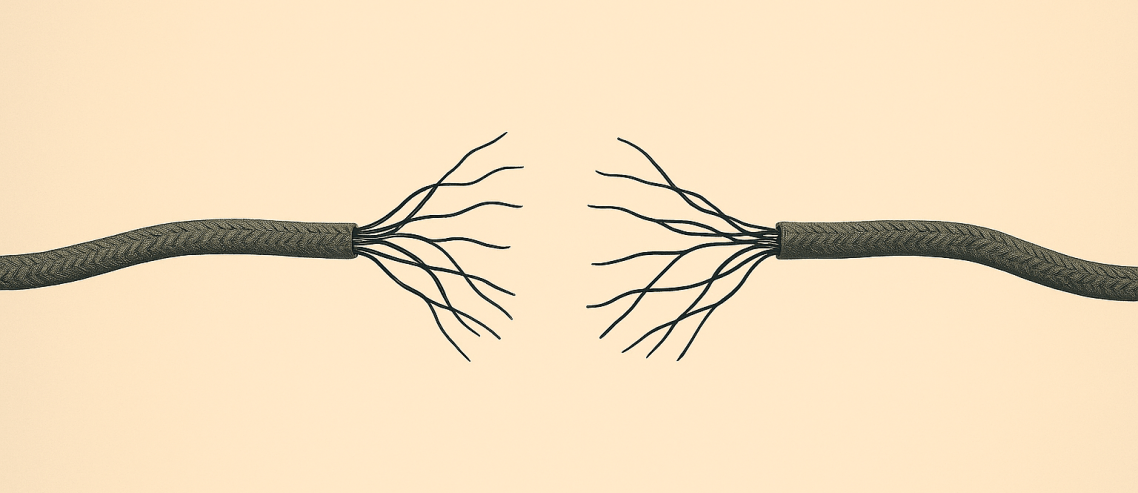

The Crisis of Connection Podcast Episode
In an era that boasts the most human connectiveness in the history of the world, we struggle with isolation and depression in epidemic proportions. Evidently not all human connections are equal. In this episode of Breaking Bread, Katie Miller and Isaac Funk take on this crisis for connection directly. Not only do they identify the problem but also provide a vision for hope.
Show notes:
What do we mean by human connection?
- Human connection at a minimum is intersecting with another human being in physical or thought space.
- Human connection at a maximum is deeply knowing and being known by another.
What is at stake with poor human connection?
- Isolation, depression and insecurity are some of the fees we pay for poor human connection.
- Often poor connection with people translates to a poor connection with God.
What are the elements of healthy human connection?
- Healthy human connection requires time and space with people. It requires giving of oneself. The setting requires dynamic communication back and forth in real time.
What are the elements that we are competing against for healthy human connection?
- Technology often promotes a shallow connectivity rather than deep community. It is engineered for the transfer of data rather than facilitating robust human fellowship. It is primarily designed for ease, speed and enjoyment, all three of which are not realistic expectations for deep human connection.
- Our western culture of individualism promotes self-reliance, putting people head-to-head in competition rather than shoulder-to-shoulder in shared need.
- The economics of money and promotion tend to assert themselves in our decision making over and above community and the need for human connection.
What vision of hope does healthy human connection have?
- As humans created in God’s image, we are designed for embodied human relationships. Relationships that linger in time and space, suffering long with others. Overcoming isolation and shame with reception.
- Connection with others plays on the basic elements of life: living together, eating together, sharing needs, living together with a family or living together as a church family.
- When we live well together with people, we are at an advantage to live well together with God.
Transcript:
If we truly are the most connected generation, gen Zs, millennials, et cetera, then the statistics of mental health should be different. The anxiety, the depression numbers are up, especially within some of those demographics that I just mentioned. It should be reversed. We should not have the isolation. I think what’s at stake is healthy relationships.
Welcome everyone to Breaking Bread, the podcast brought to you by Apostolic Christian Counseling and Family Services. Wonderful as always to have you along. Matt Kaufman is my name. Katie Miller and Isaac Funk are both with me today. Welcome. Good to be in the studio. Yeah. Glad to be here.
We live in a world that boasts connection, and we have a thousand meanings of what connection is, and yet at the same time a crisis of it and there’s more and more resource research coming out about that crisis. So anyway, I’m really interested to know where this conversation goes, and I have no idea.
So where should we go? Let’s start with what connection is. Yeah. What do we mean by connection? What is meant out there by what connection is? And then, let’s start to plow some of the crisis part, and I hope we get to some solutions. Yeah, when you boil it down, I look at connection through many facets.
Like you mentioned, Matt, ACCFS has a space for relationships and spiritual growth. I’m a parent, I’m a believer, I’m a friend, I’m a spouse. All of these have places to connect, and culture has created massive amounts of ways to connect. Is it true connection, deep heart level connection?
Yeah. I think in the technological realm, connectivity is the word. You know, in 2007 or whenever it was when half of Americans had an iPhone in their pocket, we were the most connected we’ve ever been. But I think since that time, we’ve actually found that relationally, we are less connected than we’ve ever been.
So therein lies the crisis, I think, in that relational space of, I might have you as a friend on social media, but I know very little about your inner life and you mine, and I think the problem there goes back to Jesus’ view of humanity where you are designed to be someone who loves God and others with heart, soul, mind and strength. And so, we cannot be fully who we are meant to be unless it is in the context of loving God and loving other people. And technology has never had that as its main aim to help you learn to love. Its main aim has been to help make your life easier, which I would argue is not the route to wholeness.
It’s not the route to love. No, it’s not a bad thing necessarily. But it’s not the way. What does connection play on and what are the basic elements of connection? So, let’s understand that space. If you think of Jesus and what he exemplified in the gospels of how he connected. That’s a great model for us to realize.
Or just someone in your life who spiritually, physically, and relationally connects. Well, I think there’s a couple key components. I think of the woman at the well or the calling of the disciples, interestingly enough, or the lay man at the pool, right? To all of them, Jesus spoke questions. Jesus spoke to the heart. He went beyond the facts. He paused. He took time for the connection to happen. There were nonverbals, good eye contact, likely all the things that we think of in posturing of relationships were present when Jesus connected with them at more than just a fact level but at a very deep, intimate heart level.
So, I think question asking, making space and time giving of myself and not my own desires or my own tasks. Maybe there are always exceptions to these things. I don’t know for sure, but it seems like the way it was at least modeled for us and the way that I’ve experienced it best in my life, was that connection was always embodied.
And so disembodied would be another way of maybe describing the opposite of that. So, Jesus was present in person with another person. When you say embodied, you’re talking about a place. Yes. So, when he called his disciples, he called them to be with him where he was in proximity, which I think proximity is a huge part.
And to Katie’s point, longevity in proximity. Yeah. And I think the transient nature of our world and of our communities, even of our families, has not aided us in feeling connected with people because it’s hard to stay sometimes. What’s at stake with disconnection?
Who cares? If we truly are to Isaac’s point, the most connected generation, gen Zers, millennials, et cetera, then the statistics of mental health should be different. The anxiety, the depression numbers that are up, especially within some of those demographics that I just mentioned, should be reversed.
We should not have the isolation and the numbers statistically speaking that we do. I think what’s at stake is healthy relationships. We hear the word vulnerability a lot in today’s Gen Z years and so forth. We want vulnerable, authentic relationships, and that is key in what Christ modeled to us.
So, what’s at stake is the opposite. We are staying at the very fact, the very shallow, the very you are here on social media. I did this on social media. I’m following you on social media. That type of type of relationship. I’m not known. I’m not deeply loved for who I am and what I stand for as an image bearer of God.
And we have more opportunities now than ever to curate our image for other people. Absolutely. Right. You’re only going to see what I want you to see. And I have the ability to make it look different than it really is. And if I’m not loved for who I truly am at the core, all of that is stripped away, then that’s a recipe for insecurity. I am imagining insecurity would be one of those markers that you’re speaking of a dark shadow. So, isolation, insecurity, a view of God, I think honestly plays into this piece. We kind of take our concrete, physical existence and relationships into our spiritual nature.
I think that’s very much at stake. Alright. So, you said something very powerful. I want you to respond to this, Isaac. You’re really suggesting Katie, that by connecting well with people. We are in training in a sense. Absolutely. In connecting with God. Handicapped and connecting with people sometimes carries over in being handicapped and connecting with God.
Isaac, how does that sound to you? Yeah, well I think that’s right on, it’s obvious even in relationship to relationship. I think a lot of times your experience with an authority figure in your life early on then imprints into your relationships with people later down the line in your life. People and/or institutions.
Right, and then certainly I think, as in terms of how we view God and the way that he interacts with us, the way he thinks towards us and how we should be relating to him is certainly impacted. Suppose we were to take our mode of connection in today’s culture and translate it into our connection with God, what problems surface?
It’s an instant. It’s not like sitting and being with me, enjoy this. Right. So, I do think the speed element ties in there, and then also just the idea that God, if I was real with you, I’m not sure that you would stick around with me. Yeah, because I’m not sure other people would stick around with me if they had you.
Yeah. Okay. I think the other logical argument is if I can’t have healthy relationships here on earth, what does this spiritual God, who’s seen all, supposed to care about me? What does that look like if relationships here on Earth that I can see, touch, know, do not reciprocate that.
Yeah, I think the relationships here that are supposed to represent God, the relationships of the church oftentimes get a bad rap, at least on a broader cultural level for the way they relate to brokenness and that messy reality, the heart relationship ourselves.
Well, I think there are people who attempt and might actually do well at good, honest vulnerability in some of these connective spaces, technological or otherwise. But it sounds to me like you’re suggesting that an embodied place in time, eyeball to eyeball, face to face is a healthy place to work out.
Vulnerability. I can imagine there are some who scratch their heads and say, okay, how can I achieve it in the way that I’m doing it? Right. What are these elements? I’m sure that these things do happen through a technological medium where people are vulnerable, they’re known, they’re loved, all of that.
I just don’t think it’s conducive to that. I think it takes an awful lot of intentionality to make that the case. But I do think that the personal interactions, the embodied, relational connections that we’re talking about are more conducive to that. Why? Because if you stay with someone long enough, you’ll suffer.
I think if you’re trying to figure out how do I suffer like Jesus suffered, how do I relate to him? Choose someone to commit your life to and stick with them. I think you’ll find that it requires a giving of yourself in order for that connection to really form and to deepen to the level that we all need connection.
I like that, Katie. If some of the attributes of good connection are time, respect, and assuming good intent in relationships. If I give an example, it’s much easier to apologize on a text or an email. It’s quick. My heart may or may not be in it, but let’s assume it’s in it. It’s actually much easier to vent, too.
Correct? It is and both of those coins are too easy. So, let’s look at it. For me, when I receive a text that’s an apology. I look at the text. It’s data. It’s words on my phone or on an email. There’s not a lot of heart behind it. When I tell my kid or myself, no, the next time I see this person, I actually offer them a heartfelt apology.
Research would show that a two way back and forth, eyeball to eyeball dialogue is much healthier for a connection, for that intimate piece. So, if I can do that apology, if I can say, I’m sorry, in person, the stories I’m telling myself go way down about the person or the situation.
Okay. And my trust goes up. Katie, that was really helpful. When you talk about what occurred to me, when you talk about eyeball to eyeball, you talk about rapid communication back and forth in real time. Okay? Now that is something different unless we’re on a Zoom or a FaceTime where we can see somewhat of what is absent in posts. What you’re saying in that human-to-human interaction, I’m getting feedback. Yes. Even though you’re not saying anything. Yes. So, there’s a back and forth, a gazillion things are going back and forth. Absolutely. And we’re working this out in time. That is hard to duplicate, isn’t it?
It’s absolutely hard to duplicate. It’s hard to replicate the heart. The nonverbals, you can’t replicate. I think social media technology is trying to, but it is extremely hard when we have to look each other eyeball to eyeball, you know, nonverbal to nonverbal, to pick up the nuances, to pick up the emotion, to pick up the tension.
If you look at comments on any post that’s ever been made in the public sphere, you’ll find some of the most relentless, unloving things coming across there. Which is only solidifying the deepest fears in people that I will be rejected if I am wrong, if I just think something different than somebody else.
So anyway, I think that just amplifies the crisis then in person, because we don’t have time to figure it all out and get everything perfect before we have a conversation, which is a vibrant living sort of thing. And how many times when we’re in person, we don’t get it right. But by the end of the conversation, we get it right.
Yeah. And hopefully you are received by the other person regardless of whether you have it right in a way that’s encouraged. Yeah. Even if there are awkward pauses or even if there are nonverbals that you’re just not quite sure about. There’s that safety of trust of back and forth, that communication, they’re sticking with you.
Okay, so we’ve talked about some of the air that we breathe and the water we’re swimming in that really does work against this. What are some of the other things that are good for us to recognize that this fuels bad connection. And it actually means a lot to me. I need to be aware of it.
I would say hyper individuality. And you can be your own yes man or woman, and I think that’s just baked into our society. But let’s go a step further. Would you suggest it’s not just that you can be your own man and woman, but you should be, that is something to attain. If you can be less reliant on others, that would be stepping toward upward mobility. Yeah. Like there’s hierarchy and individualism at the very top of it because I’m not dependent on anyone else, therefore I don’t have to sacrifice, I can be in my self-sphere. Yeah, absolutely. And that’s really different around the world. You know, there are certain cultures that are just more like the community outweighs the needs of the individual.
And I don’t think anyone here in the US would say that it exists here. I think it very much is the felt needs of an individual outweigh the community’s consensus on something. And there’s good that comes from that, I believe, but an awful lot of that is dangerous.
I mean, the whole point in this conversation is that being independent is very attractive and attractive on a very good basis. But we have to understand the drag. We have to understand as a shadow, that this is going to have ill effects in these particular areas.
What are other elements of the water we swim in that we need to be aware of that work against connectivity? I’m thinking of the design of things. There’s this old media philosophy that the medium is the message and I think of the way that we design our community spaces, the way we design our homes, our neighborhoods, sidewalk neighborhoods, seemed to be poor to neighborhoods. Yeah. Privacy is now the thing, you know, finding ways to create your own oasis, your own castle on a hill that you can retreat to. You know, I was just driving through Milwaukee yesterday. Okay. And we made a comment.
We were driving through an old section of town, and you could tell that 50 years ago it was probably in its prime. Front porches, right up to the street. And you could imagine a dynamic community down that street. Right. And we all comment, oh, I wouldn’t want to live like this.
You know what I’m saying? So, I drank Kool-Aid, but I got your point. Totally. Yeah. And I don’t know if what ends up leading into these things are not obviously wrong ideas. Right. And there is so much good, and it makes sense on some level.
But yeah, we need to know where the shadow of those is so that we can actively work on counteracting those forces on us in ways that help us love God and love people better. I think another thing too, with healthy connection, we come with a lens or a framework of, well, I tried it, and it didn’t work.
You know, maybe it was church or maybe it was community or an organization or a workplace setting or college or something of that nature. I tried it and it didn’t work and so it’s really hard in the human heart to try to connect again or be vulnerable. To try to, in an intimate way, share things when sometimes that that’s really hurtful and that connection crisis arises.
Why get hurt again? Yeah. I really appreciate it. I think we have to understand that when we talk about having relational connections with people, we’re not necessarily just talking about happiness. It won’t necessarily look like joy the whole time. It’s not utopia. It’s not euphoric.
I think part of connection is pain and hurt and allowing yourself to be hurt and then allowing yourself to learn how to forgive hurt. This sounds really great, Isaac. Go step into healthy relationships and be ready to be hurt. If our words are like and unlike, which is very much in our social media stream.
You either like it, or you don’t like it. You follow or you unfollow. Right. And, to your point, yes, what’s good in an unlike situation. Right. And that’s not a part of our ethos. Oh, I know. That just hurt my heart there again, because I think the world around us, the economy, the technology is designed for ease, but it’s not designed for personhood.
And I think personhood is a different thing we’re going for. Yeah. We’re all expecting the best things in life and that’s how they sell us goods. The best things in life are ease, happiness, whatever, but really the richest parts of life require a longer journey through ups and downs sticking with people because you learn to be more human. You learn to love with all of your heart, soul, mind and strength. Learning to love God and learning to love our neighbors, and when we find that, then there’s a deep satisfaction and a peace that I think settles in where now you’re connected.
Yeah. To that connection point, I find myself often asking. When it doesn’t go well and it’s not a happy, euphoric feeling, what is reasonable with connection? Right? Katie, if you’re not feeling connected and you are feeling isolated, why is that and is what you’re asking for connection reasonable or what you asking of a people group, a church, a workplace, a school setting, whatever?
What is reasonable connection? Because maybe my expectation is too high. Maybe my hurt is too great, but to that point of community and connection, what is sustainable and why? What is holding me back to step into that space for connection and community? I appreciate that. I think another element is money. It actually fascinates me how much money drives a lot of things. Okay? And I’m going to include status in money. I’m going to include promotion. For example, power money. And I’ve realized I’m going to share this as an observation and God leads in so many mysterious ways, but I’m just going to make an observation that sometimes we make choices in life, whether it’s moving to another location or another community, uprooting going someplace.
And if that reason is job, money, or promotion, it gets a free pass and certainly is kind of by default more important than any sort of connectivity that you’re going to lose or struggle to attain. Does that make sense? So human community connection is down on the priority list and maybe there’s a point in history where you knew you were going to land in a community where you could form those relationships because that was just the culture there. But now it’s harder than ever to actually find communities that have good entry points into them or easy entry points, I suppose. And maybe the message here is to include that in our decision making.
Yeah. On some level I grieve things that I’ve left in moving community aspects. I remember from me leaving and from other people Yeah. Leaving. I remember talking to a young sister who is going to get married and move far away from her family and you know, she’s like Katie, you’ve done it. What does that look like? I said, you know, just remember there is community to be found where you’re moving.
It might look different than what you’re expecting. Right? Don’t just assume one community moves to a different community. It’s not transient that way, but to embrace what the Lord does place in front of you with those relationships in that community. And it’s a testimony of mine, but to this young sister, I think that spoke volumes of like, okay, this is what God wants me to do.
And just great advice. Yeah. A good question we could ask in each of these areas, money, whatever, like being a consumer is what I am doing. Helping me become a more loving person to God and to other people or not. Is it helping connection? Yeah. It’s something to consider. Yeah. You know, I think another element that we have to reckon is the difference in generations which seem to be more pronounced with every passing decade. I don’t know if that’s true. It seems like it is. I know in Bloomington; we’ve had a number of brothers and sisters who have stepped into Sunday school out of retirement. You know what I mean? And it is partly about like a serious ask.
We really need this, and as I engage with them, they’re like, I don’t know if I can connect with the kids. You know, I’ve already done that. But every situation has really been good. And they’ve come back with a report that said it was a really good experience. And having kids in those classes who benefit and they really enjoyed it too.
So, your example, Matt, on potentially maybe people who are older, stepping into Sunday school is a great way then for us to do the reverse of that for our Gen Zs or our teenagers right now. How can they step into space and connection with the older generation? Helping them to connect and understand what relationships would’ve looked like to span that demographic gap.
If that culture isn’t already surrounding us, we have to work to create a counterculture, that is, which I think is the point that you two are making about the older seeking out opportunities to connect with the younger and the younger seeking out opportunities to connect with the older. But what an opportunity here for families.
Yeah. Boy, this really purposes a dinner together. Yeah, absolutely. Right. And if not a biological family, a church family. Our ACCA denomination is blessed, whether you’re a super small church in our denomination or a very large church. We generally have quite a few generations to span to speak into that if a biological family doesn’t exist with that.
Yeah. My mind goes to the usefulness of a regular rhythm of sharing a meal with someone and the same people. And there’s something about the table that you brought up as a connection space that has always been a part of the history of Jesus. People meet around the table. You think about communion, the last supper sort of image.
We have a collective need, and it has long been a practice of humankind that you can’t really apply for yourself, but you’re going to need to help feed other people and they feed you. So, it is naturally binding. Yeah. Right. So, I just find that fascinating in terms of was God up to something when he gave us hunger and an appetite and donut taste buds? Let me put my finger on something there too. And donuts. This idea of meeting human needs together. I think if you take the multifaceted part of humanity, heart, soul, mind, strength, if you can think of areas where each of those things can be met together in community. That’s why some people connect when they sit down over coffee and have deep theological discussion or like, let me into your deepest wounds, whatever.
Some people are naturally bent towards that and have great gifts in that area. Some people I know who I’m close to, they’re like, I need someone to go mend the fence with. You know, yes. I need someone to go work out with. Yep. Do something just physical with. You’re meeting physical needs, and it may not seem necessary for some people, like that’s connection building, but it really is.
I think there’s something about meeting needs together. In all of these various areas, that is an essential component, and I think the key word there is together. Things together will build connectivity in time, which then gets back to your embodied place and space with people. Yeah. I think the Scriptures have just example after example of people regularly coming together in community environments and relational environments.
And it’s usually kind of messy, so just being expectant of that, but having that as a rhythm of your life that you stick with is really important. And then if you’re kind of like, I’m already doing that. I am showing up, I’m available, I’m whatever, reaching out in relationships, but I still am missing the sense of connection.
I think confession has been an amazing discipline. For so many people to share with other people. I want you to know the truth about me beyond what’s obvious is a next step, and you do this with someone who you’ve already have an amount of trust with, but to be able to share that with somebody seems to have a great amount of connection and healing that comes with it.
Connectivity will be a mutual blessing and is part of human maturing, isn’t it? It is one of God’s tools, as all the disciplines are, in producing in us the right things. And so, by doing away with connection, we really hurt ourselves. And I think that’s really what we mean by crisis.
But there’s really good news, there’s really good hope, and it’s stepping into those basic things come actually natural to us because he’s made us connective beings. Thanks, Isaac and Katie for this conversation. Bless you, each one who has listened and all of the connections that you have with others.
Thanks for being on.

Listen on Spotify – Listen on Apple Podcast
Additional Articles
Hidden Rules of a Great Conversation Podcast Episode
It’s not uncommon for communication between two individuals in a relationship to go sideways. And when the pattern is sideways for many years, it becomes even more challenging to set right the cart. In this episode of Breaking Bread, Kaleb Beyer and Brian Sutter explain how to do just that.

Escaping the Drama Trap Podcast Episode
Drama sells in the box office, newsstands, social media feeds and more. It draws an audience because it is interesting. Yet, because drama often plays on relational conflict, it is painful. Because we are relational beings, we unfortunately find ourselves too often on drama’s stage. In this episode of Breaking
Bridling the Tongue Podcast Episode
Words said, cannot be unsaid. They remain. When these words come from a place of goodness, this has beautiful consequences. However, when they come from a place of malintent, they can have devastating consequences. In this episode of Breaking Bread, Craig and Jacki Stickling take up the topic of gossip
Comments
Leave a Comment