


Keeping a Balanced Perspective in Marriage Decision Making
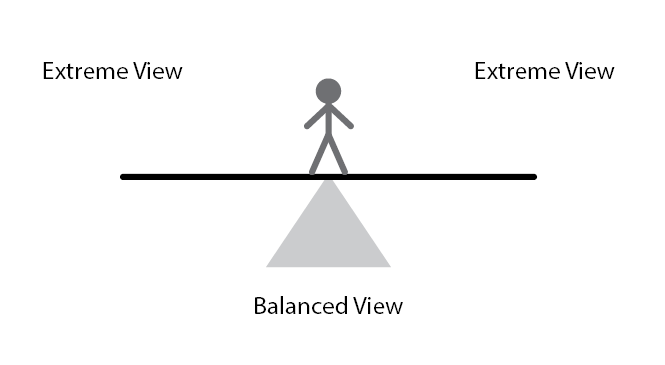
We each view life from our own perspective. While this is certainly normal, we all have blind spots and tendencies in our thinking which may lead us to inaccurate conclusions. Because the marriage decision is so important, we must be intentional about keeping a balanced perspective as we seek to discern well. The intent of this document is to bring clarity and balance to some common extreme views on the marriage decision. It is meant to highlight a few examples of where thinking toward marriage decision making can become off balance.
|
Extreme View |
Balanced View Realizing both marriage and singleness are commended in the scriptures. |
Extreme View Believing singleness is of greater spiritual value than marriage. |
|
Extreme View |
Balanced View Believing God deals uniquely with each person and not according to a formula. Being submitted to God throughout the entire decision-making process can give you confidence God will lead you over time. |
Extreme View |
|
Extreme View |
Balanced View Taking the decision to marry very seriously and cautiously. Seeking out God’s direction through the Word, prayer, and godly counsel. |
Extreme View |
|
Extreme View |
Balanced View Moving slowly and intentionally, praying through every step and seeking counsel. |
Extreme View |
|
Extreme View |
Balanced View Realizing unresolved or ongoing sin, emotional or relational issues can be stressful or even increase in a marriage. Focusing on living an overcoming life by taking responsibility, being accountable, and desiring to be conformed to the image of Christ. |
Extreme View |
|
Extreme View |
Balanced View Realizing people can change, but also realizing some things may only change a little and some things won’t change at all. |
Extreme View |
|
Extreme View |
Balanced View Seeing the importance of knowing a potential spouse is of Christian character and has values and a core direction in life which lines up with yours. |
Extreme View |
|
Extreme View |
Balanced View Having good male-female relationships while maintaining accountability and ensuring you do not do anything which could potentially compromise yourself or another person. |
Extreme View |
|
Extreme View |
Balanced View Realizing honoring and preferring one another is essential to marriage AND so is having a healthy Christ-centered identity. |
Extreme View |
|
Extreme View |
Balanced View Realizing feelings of love or attraction to a potential spouse are normal, healthy, and godly; however, emotions should not be the only measure of whether the decision is wise. Since God examines the heart, so should we. |
Extreme View |
|
Extreme View |
Balanced View Understanding the decision to marry does not come with absolute certainty about the future. It is to be a balance of faith and wisdom, where we prayerfully use godly wisdom to seek his will and then step out in faith. |
Extreme View |
| Extreme View Not seeking out godly counsel from others OR refusing to receive counsel and advice. |
Balanced View Seeking counsel from a support team of wise, mature Christians who take you to the Word. They are encouraging to you; however, they are also willing to challenge you, pointing out blind spots or places you need to grow. |
Extreme View |
Additional Articles

Obsessional Doubt and The Marriage Decision
The decision to marry is a major life decision. Uncertainty around who to marry, when to marry, and “how to know for sure” are common questions individuals considering marriage face. As Christians, there are additional layers of discernment around honoring God, aligning with his will, and stepping out in faith. Obsessive doubt is a condition where intrusive, unwanted thoughts (obsessions) target core aspects of a person’s

Am I Living a Healthy, Balanced Life?
“…I am come that they might have life, and that they might have it more abundantly.” John 10:10 God’s desire for us is that we can live a full and abundant life in relationship to him. Yet, life is full of situations and transitions which can shape and affect our

Before “I do” Podcast Episode
A lot of health for marriages lies in the prework, before the marriage happens. This episode speaks about the pre-contemplative, contemplative and engagement phase of marriage and the great deal of promise these stages hold.
Comments
Leave a Comment