


Unknown Expectations Podcast Episode
Uncertainty, unpredictability, unreliability, riskiness, chanciness, unsureness, changeability – 2020. It’s one thing to have expectations gone unmet. It’s another thing to be so uncertain that expectations can’t even be set. Those are the days we are in. And yet, there is an advantage these days afford. In this episode of Breaking Bread, Arlan Miller helps us see those advantages.
- We learn flexibility. A lot is out of our control.
- We learn childlikeness. God is our Father.
- We learn dependence. God is our supplier.
- We learn to be responsible in those things we know.
- We learn to shift our trust from those things uncertain to the one who is – God.
Transcript:
Extremely hard lessons, but there’s also a sweetness and it actually goes to the core of the identity of our relationship with God, right? He treats us like a father. He wants us to be like a child to him. Yeah. Welcome everyone to Breaking Bread, the podcast brought to you by Apostolic Christian Counseling and Family Services.
It is great to have you along. Arlan Miller’s with me. Hi Arlan. Hey Matt. It’s good to be here. Let’s start with a game, Arlan. All right. Okay. I’ve got a list of words, you have to guess the synonym. I don’t like your games Matt, but I’ll play along. Here we go. Unpredictability. Unreliability. Riskiness. Chanceyness. Unsureness. Changeability. The synonym for all of those words? Unknown. Yes. Unknown. Uncertain. Or you could say 2020. Yeah. For sure. Right? With everything going on right now. If we can’t laugh about it, we’d cry about it. Right. Because it’s real. And we are being, I think, profoundly challenged in this concept of certainty.
And I’ve never really realized, I don’t think, until this perfect storm, how much grounding I had in things which I thought were certain, but are not, or I thought were known and now have become unknowns without a, I’ll call it a recalibration now and then. You kind of forget how much you had relied upon this or that or the other things, kind of the normalcy of certain things.
And some time ago we had a podcast series a few years back on unmet expectations, right? Right. So, we’re going to tweak that a little bit here today and talk about unknown expectations because I think that’s a little bit about where we’re at. Yeah. I like that. You know, hey mom, am I going to be going to school next fall?
Right. It’s really odd to be thinking, well, let’s wait and find out. Or is my skillset, my vocation going to be in demand in three years? Right. Based on what I’ve seen shift in two months. Can I even picture three years from now? You know how far out can we make plans and have kind of a reasonable sense of all the way down? Are we going on vacation or not?
Yeah. I think you’re right, Matt. It can be bigger type concepts, right? Things like jobs and schooling and employment and all of those kinds of things. And it can even come down to my son’s T ball just got canceled for the season. Right. You know, and it was an unknown that just emerged and developed.
Yeah. Let’s speak to this concept of unknownness because it’s not altogether foreign from the life of a believer. Am I right about that? Yeah. Bring some of those things into picture for us. You know, so there’s a couple of verses that pop into my mind, right? You know, there’s a short verse we talked about a lot, right?
We walk by faith and not by sight, right? And so, a little bit from the very beginning, we’re signed up to this life that’s going to be more about faith than about plans and sight. You know, if you wanted to live a life of your own plans and your own volition and your own decision making, to some extent, that’s not the Christian faith at its core and its essence.
Right. So, I think you have that concept and there are times in our lives, and it isn’t just tied in with the current reality we find ourselves in right now. There’re just times in our life when it is more uncertain than others. And that verse becomes more real to us. I think you just connected a concept for me in saying faith and talking about that faith.
Faith and trust, I’ll use those two words interchangeably, faith and trust very much rest on the foundations of certainty. Is that a true statement? They do. I mean, faith and trust. The way I have thought about it is it’s really forcing me introspectively to think about what have I been putting my confidence in, you know, is another word that I think is synonymous, right?
Where is my stability found? It’s shaking our core a little bit to see what’s underneath it. Yeah. You know, I think of that verse in Timothy, he talks about uncertain riches. He says, trust not in uncertain riches, but in God, who gives you all things richly, but he links together trust, certainty, uses the example of riches, and then replaces it with God, which is interesting, isn’t it?
Right. And such a common concept for all of us, right? In so many places we fall into this, I think, if we’re not careful. And there’s another passage I think is relevant here where at the end of James, I think it’s chapter four, there’s this little dialogue where they talk about, don’t say you’re going to go into this city or that city and make gain.
What is your life? It’s like a vapor, right? It just kind of passes away. He says, but do this, make those plans, but say, if the Lord wills, then we will do that. Right? And it’s interesting that he doesn’t fault the planning and the efficiency and the organization and all that kind of a thing, the thinking ahead, I guess you could put it that way.
But what he does fault, if you look at that, is he faults the boasting and those things. So, it’s not so much the planning, right? So, I think let’s talk a little bit about that. How do we live in uncertain times? How do we live with unknown expectations? Certainly, there is a skill set here that God has equipped us with to live in our realities.
And let me actually preface it with this little anecdote, and then I’ll let you respond to that. I had a conversation with a sister in our church who has a son in the Middle East. So, I was asking her, Hey, how is so and so doing and what does it look like where he’s at? And she made the comment I thought was fascinating.
She said they live in constant uncertainty. Those cultures do. This is just one more. And so, their reaction is a little bit different than our reaction. They’re taking precautions just like the rest of us, but they have learned to process life as uncertain. But for me, it’s a wakeup call. Yeah. Because life has not been uncertain.
Yeah. I think you highlight a couple of points there, Matt, which are really powerful for me, at least. There’s a cultural component, right? I mean, so the American culture that we find ourselves in is, I would say, a more certain culture that if you extend yourself out to other cultures of the world, as you said, sometimes people live in a better or more uncertain place than others.
Right. And it’s just an aspect of our upbringing and our background and so on and so forth. But then I think there’s also a personality component there too. Some of us just roll with it better than others. You know, I am not one by nature. I am not one to roll with it, right? I mean, the plans are made, and the things are in action, you know, plan the work and work the plan, right?
That’s what I was taught. And so, this has been a wonderful, sanctifying moment for me, right? And I have to intentionally say that because otherwise I’ll go negative, right? You know, or I’ll go down this path and say, Lord, what are you doing here? Well, see, I’m inspired actually by that concept that there are many who have learned how to live with unknowns.
There’s something for me to learn. What skill should I have now that I need to use? Yeah, and I’ve probably always needed to have, you know what I’m saying? Yeah, I feel like there’s a real opportunity here to grow in a really important way. As a human being, it actually is a core of resiliency.
If you want to think about it in those concepts, right? This ability to be flexible, to be resourceful. Okay. So, let me just pause. I want you to continue, but I think you’ve just said flexibility. What is flexibility as a skill set? What does that look like? You know what I’m saying?
Yeah. So, go ahead and fill it out, define that space. You know, one thing that comes to mind, right? With being flexible is having a clear understanding of what’s in your control and what’s outside of your control. I think that’s a skill set that you can start to put your hands around.
It’s almost a discipline you can do. And I think sometimes we can get most frustrated and struggle with being flexible when we are fixated on trying to control things that really, we have no business controlling. You take the tree, for example, right? We actually have some high winds today and you watch those small saplings, and they just bend over, they’re flexible and they come right back and they don’t for a moment think that they’re going to change the wind, right?
It’s just that they’re going to bend with it and then they plan to be resilient and to spring back. God has built into the frame of a sapling in order for it to live, it needs to be able to do this. And I think that’s inspiring. He has also created us with a dimension of flexibility. Think about that idea of going on vacation and contrast it with maybe the adult versus the kid, right.
And as an adult, you’re making the plans and maybe you got the tickets bought or whatever, and you have an idea of where the hotel is going to be. There are some more fly by the seat of their pants type people out there, but most of us have some type of organization and planning.
But the children, they’re kids. For the most, they’re just along for the ride, right? And they don’t know if we’re behind schedule or if the traffic is bad or whatnot. We took a trip out east and we were driving across a state out there and we were going to go to a church, and we had basically the afternoon to get there.
And it was pretty bad, pretty flexible. You know, we had four hours to drive two hours or something like that, right? We saw a couple things. We stopped alongside the road. We actually had lunch at this really cute little place that we never would have if it had been so cut and dried.
And for me, that was a really good experience, right? To kind of roll with it. Because really what you just said here is because you had margin, you were able to absorb uncertainty, right? And actually, for the kids, they were just along for the ride. Let’s talk a little bit about that childlikeness, expand on that.
I thought that was fascinating. I mean, Christ was very specific when he took a child out in the midst and sat in front of the disciples and said, you need to be like this child. What does that mean to be like this child? Again, to that point that I was making there, a child is somewhat along for the ride.
All right, they live in a state of uncertainty and, for the most part, it doesn’t bother them. They’re provided for and taken care of but God after all has said that he’s going to do the same thing. That’s why they’re always asking. What are we going to do because they don’t know but they’re excited to find out.
I think there are some really important nuances there about what we do being childlike. We recognize the chasm difference between the all-knowing one, God, and the unknowing one, us. And so, I think that provides a fresh perspective to think that I’m being thrown into childlikeness here.
Because I can’t even answer my kid’s question. That was easy four months ago. The question was really easy. Oh yes, we’re going to do this. Oh no, we’re not going to do that. Now it’s, I don’t know. But now back to the point that we made a little bit ago. This forces us to think about where our faith is and who our certainty is on.
You could say it that way, right? And childlikeness can exist in that state. I’ll put it this way, because they are absolutely confident and sure their father or their mother is providing for them. And so, it begs the question for me, is my faith strong enough to realize that my Father in heaven is going to provide for me?
He’s got this, and it’s probably not going to be the way I thought it was going to be, but the main thing is he’ll take care of that. I think that’s great. And I’m really fascinated even as we discuss this again by the skill set. How can I grow in this and be a more resilient person?
What other things kind of come to mind? You know, another one, I just was listening to a mentor of mine this morning and he was sharing something to the effect of thankfulness and gratitude is a great. I forget the wording that was said, but it’s a great antidote to disappointment and to frustration.
Thankfulness and gratitude force us to look at what we have versus what we do not have. Right? And I think that’s a really important concept that’s easy to say. But then it’s a discipline that we need to live out. Right. Another way to say it would be to list out what I know versus what I don’t know, right.
And be okay with that, but don’t get those two confused. Right. So, I think that’s really critical there. Kind of knowing what we know and almost as if to say, what can I do? Kind of, I guess, a corollary to knowing what’s in and outside of your control. But once we identify what’s in our control, then act prudently in that space.
Right. To go back to the vacation analogy. When I think about the trips we’ve taken with our kids and so on and so forth, to some extent, I’m open to their thoughts and their planning and that kind of a thing. But at some point, what I want them to do is just be more open. Let’s just kind of go along for the ride.
I really do. And to just do the next thing that I tell them to do. Right? If it’s going to be, wait here, we want to wait here. If it’s going to be go there and do this, we’re going to go there and do this. And I think God treats us the same way. You know, there’s a reason why he doesn’t lay out the path a mile at a time, he says one step at a time.
I’ve got this. Yeah. Just do the next thing I laid out for you. You know, I think Corrie ten Boom is probably a household name. And in a lot of our homes, this woman who helped shelter Jews during the Holocaust and those things and paid dearly for it. And she gives a similar story when she was asking her father about something.
And her father responds to her because she was not ready and old enough to handle the news of what she asked said, Corrie, when do I give you a ticket to get on the train? Well, you don’t give it to me until we’re at the train station, nearly ready to get on the train. And that’s when he gives the substance.
He gives what’s required for the moment. Could I picture this time as bringing me to childlikeness but bringing me also as Christ talks about the birds, who cares for the day and doesn’t think much about tomorrow. These are all very challenging lessons. I would much rather have tomorrow known than know only today.
But these are extremely hard lessons. Yes. But there’s also a sweetness about that. Yeah, and I think that sweetness is one of those things that’s captured throughout the Scriptures. And it actually goes to the core of the identity of our relationship with God, right? He treats us as a father and he wants us to be like a child to him.
Yeah. And that comes alongside this concept of trust in God. The answer, trust in God. But what you’ve just woven is a compelling God to trust. Right? Does that make sense? And I think that’s really critical in these days. Arlan, do we realize that? Oh, God is acting like a father now that I realize that I am a child.
God is acting like a caretaker now that I realize I’m like the bird. But this is helpful because as I think about the future, which is worrisome, Arlan, and for many of our listeners, it’s very worrisome. What are the markets going to do? Is there going to be an outlet for the produce I provide?
These are big questions. Life and death type questions, right? Absolutely. And what does the future hold? But what I like the stem that you’ve changed in my mind is instead of saying, what if this happens instead, how will I respond with God when that happens? See how that’s a slight shift from having if be paramount, but God being paramount in the if, if that makes sense. You know, I’m mindful, Matt, of one other example in Scripture, which I just heard last night in the sermon there in Gridley. You think about a well-known story, right? Peter walking on water. But there’s just a really clear principle that happens in that story.
Jesus comes walking to them in the midst of a storm, waves and turmoil and all kinds of things going on there. Peter steps out in the water and it says that when his eyes were focused and zeroed in on Jesus, he was above all of that turmoil. Right? And then very clearly it says that when he takes his eyes off and looks away, he suddenly starts sinking.
Boisterous. Right, right. Just such a simple concept that I could remind myself of every morning. Multiple times a day. Are my eyes laser focused on the certainty of Christ in this time? Yeah. The certainty of the God who’s going to provide for me just like he does and has promised to do for eons and eons and eons.
And God has grown us in some important ways here, Arlan, flexibility, knowing what’s in and outside of our control. Towards childlikeness, towards seeing God as our father, to seeing him as our sustenance and our defender. All of these have got, I think, a powerful opportunity for outcome for his glory and for our good, for our sanctification as we get closer to him.
Yeah. Thank you. Thanks for being here. Thanks to each one for giving us a bit of your time and we profoundly respect the unknown expectations that you are working through right now. All of us are, and we trust and pray that the content here in this conversation could be a reprieve and also be a help in this space.
Thanks for being here.

Listen on Spotify – Listen on Apple Podcast
Additional Articles
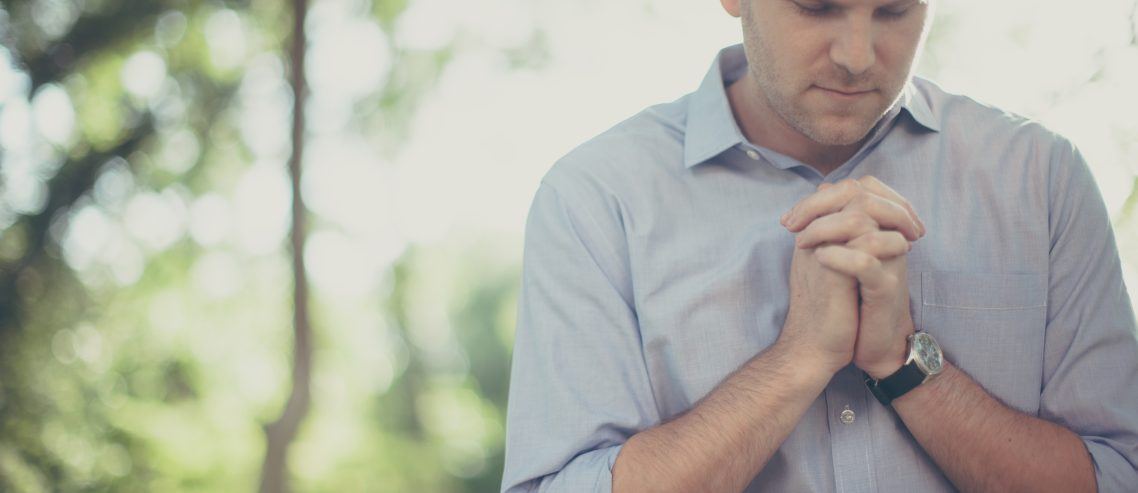
Praying Like the Disciples Podcast Episode
Christ knew what he was doing when he gave his disciples what we have come to call “The Lord’s Prayer.” It is beautiful to the ear. Rhythmic to the tongue. Simple to remember and loaded with power. In this episode, Joe Leman highlights this beauty and power and helps us
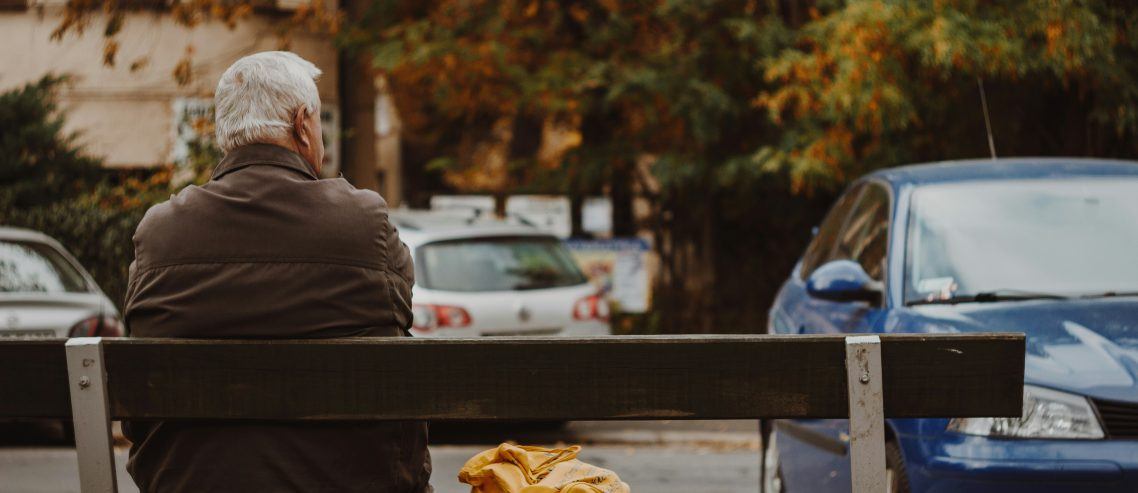
Aging with Intention Podcast Episode
To be human is to age. To age well is to transition. To transition well is to adapt. In this episode of Breaking Bread, Ron Messner and Lori Wiegand encourage us to be intentional in the aging process. In so doing, we find abundance of life where scarcity may have been assumed.

Are We Too Fragile in Life? Podcast Episode
There is a lot of offense these days. Probably not more offending than normal as people have acted badly for a long time. But it seems people are quicker to call foul when they are hurt by others. “Trauma”, “emotional hurt”, “abuse”, “bullying” are household terms and sometimes we drop
Comments
Leave a Comment