


Marriage Decision Making
WHAT IS MARRIAGE?
God designed and ordained marriage in the Garden of Eden before sin entered the world. In this setting, he stated, “. . . It is not good that the man should be alone; I will make him an help meet for him.” (Gen. 2:18) In the marriage relationship, the man is to “leave his father and his mother, and shall cleave unto his wife: and they shall be one flesh.” (Gen. 2:24) This marital union creates a foundation for companionship, growth, healthy sexual fulfillment, and procreation. This document is meant to be a practical look at the marriage decision process as we discuss what it means to pursue “marriage by faith.” Marriage by faith can be defined as a discernment process grounded in faith and godly wisdom that occurs with counsel in community. As we discuss this topic, it is important to begin by reviewing a few key principles.
Marriage by faith can be defined as a discernment process grounded in faith and godly wisdom that occurs with counsel in community.
Core Biblical Principles Regarding Marriage
It is good to start by reaffirming some foundational biblical principles about marriage. Too often, societal influence can erode our core understanding of marriage and alter our standards. The Bible states:
- Marriage is to be between one man and one woman. (Mat. 19:4-6)
- Christian marriage is to be between two Christians. (2 Cor. 6:14)
- God designed the marriage covenant to be a lifelong commitment. (Mark 10:9)
- God designed marriage to reflect the union of Christ and the Church. (Eph. 5:31-32)
Establishing a Healthy Identity in Christ
It is also critical to understand marriage should not be viewed as a solution to a problem of discontentment or to create a feeling of “completeness.” It is easy to fall into a trap of “If only…” thinking where we place our contentment hostage to a condition (like marriage) being fulfilled. It is not wrong to desire companionship and other potential benefits of marriage. One can be content and still have healthy desires and goals for life. However, a pattern of lacking contentment in life will not stop with a marriage relationship. It is important to reflect on whether we are seeking marriage in order to get out of an undesired situation or feel more complete, or if we are dwelling in a state of contentment and still sense the nudge of the Holy Spirit toward marriage.
Some common misconceptions regarding marriage are illustrated in the diagram at right. We can have the view t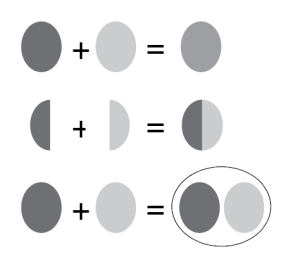 hat in marriage “two will become one” and lose their identity within this union (top line of the diagram). This is not completely accurate. Another faulty view is that a half of a person should seek another person who can make them complete (second line of the diagram). This can be a recipe for conflict and unmet expectations. After the initial bliss of finding the other half or soulmate, they find out they married someone who is not able to fulfill the fantasy image they projected on the other person. Both become disappointed. “If you try to find intimacy with another person before achieving a sense of identity on your own, all your relationships become an attempt to complete yourself.i” God’s design for marriage is actually for one whole person to marry another whole person (third line of the diagram). It is critical to realize a ‘whole’ person is not a perfect person. However, a single person should establish a firm foundation by focusing on being complete in Christ first and foremost and not looking to other singles to find the person or people who will complete them. This mindset can lead to unhealthy relationships with other singles, delay growth in Christ, and create difficulty in marriage.
Col. 2:10, “And ye are complete in him, which is the head of all principality and power:”
APPROACHING THE MARRIAGE DECISION
Should I Marry?
When considering marriage, one of the first questions to ask is simply, “Should I marry?” Choosing to marry and choosing to stay single can both be good, right decisions in the sight of God. Some will choose to marry, some will choose to not marry, and some desire to marry, but it does not occur. Neither marriage nor singleness should be looked at as a guarantee of a blessing or a lesser state. God wants us to be fully devoted to Him in whatsoever state we are in and allow Him to work through us there.
The Bible is clear that marriage diverts one’s attention away from being fully focused on God’s work. While marriage is not condemned for this, it does require time, effort, resources, and priority (1 Cor. 7:32-35).
The Apostle Paul mentioned he wished people would remain single in order to focus on God’s work. However, he recognized God did not intend for each person to be single (1 Cor. 7:6-9).
The Marriage Decision
The Bible does not prescribe the specific way or method to get married. However, God gave us many timeless truths and principles in the Word to guide us. In addition, there are a variety of examples of marriage decisions in the Bible including Isaac & Rebekah, Ruth & Boaz, etc. It is safe to say none of our marriage decisions will be exactly like these situations. These stories are meant for our example (1 Cor. 10:6) but not to be replicated in an exact way. They are not to be considered normative for all people at all times, and care should be taken to learn from the principles found within these stories but not to demand God work in our lives in the same way.
We seek godly wisdom and then step out in faith.
In considering the marriage decision, some people can become overwhelmed with its gravity while others may not take it seriously enough. On one hand, the marriage decision is one we make similar to how we would make any big decision; we use a biblically based process of prayer, counsel from others, and study of the Word. On the other hand, additional time and discernment is required as this decision has life-long implications, impacts more than just one individual’s life, and has ramifications for future generations. We show respect for the God-ordained institution of marriage by prayerfully seeking his guidance and direction. In this way, we don’t take it lightly, yet we don’t remain paralyzed with fear of the unknown. We seek godly wisdom and then step out in faith.
Avoiding Common Errors
There are some common errors which can be seen when approaching the marriage decision. Often individuals will focus too heavily on supernatural stories or expect God to directly “speak” to them and work in what most believe to be overtly miraculous ways. For most couples, however, their coming together is a process of God slowly working through their lives. Occasionally, we hear of a more spectacular experience which a couple went through. The tendency will be to compare this situation with our own and expect the same level of remarkable workings. Unfortunately, it can become easy to overemphasize the miraculous and minimize the “ordinary” way in which God works most of the time in the majority of individual’s lives.
Another error occurs when individuals expect God to work in their lives exactly how he worked in someone else’s life. Making demands upon God is not wise. It is important to neither limit God’s ability nor demand he provide us with specific clarity in a specific manner on our specific time schedule. Too often, single individuals base their knowledge of how couples become engaged on a conglomeration of stories and perceptions from other situations.
Finally, many individuals fall into the belief there is only one, “perfect” potential spouse for us in this world. While this is a romantic idea, it is not supported scripturally. There may be individuals who would relate better to us, who will be more spiritually refining for us, or whom God may be leading us toward. However, the idea that if we miss out on “the one” we have fallen short of God’s perfect will is a potentially damaging thought process which we should balance with the whole counsel of scripture. It is important to be aware of this inaccuracy and other common errors as we approach a healthy perception of the marriage decision.
Questions to Consider: Do you ever find yourself leaning toward any of these common errors? If so, which one(s)? How do you balance this with God’s truth(s)?
How Well Should I Know a Potential Spouse?
Sometimes individuals go to extremes about how much they should know a potential spouse prior to marriage. Some individuals err on the side of believing it is more spiritual to not know a potential spouse while others believe they need to know nearly everything before they can move forward. It is not more spiritual to not know a potential spouse, yet neither is it automatically better to know someone well. In general, engagement is a time for learning about each other and coming together toward marriage. Premarital counseling can help couples grow in their appropriate understanding and knowledge of each other.
Life Direction is More Important than Personality Type
As we consider a prospective spouse we may ask, “Are they my type?” It is important to realize questions of an individual’s life goals and the direction they feel God is leading them are different than questions of preference or type. We can have overconfidence in our opinion of the type of spouse we feel we would like to marry. We can misinterpret our own wisdom to justify why we should not be open to what could be God’s prompting toward an individual who might stretch us in our current state. This is very different than understanding and prayerfully thinking through whether a potential spouse has similar life goals and a life direction. Or maybe a potential spouse has significant life issues which need to be considered. A balanced perspective reliant on trust in God while utilizing wise counsel from elders and godly mentors is critical in this area.
Understanding the Role of Emotion and Love in the Marriage Decision
Some marriage decisions will originate out of strong emotion for another individual, and some will originate from a sense of commitment or companionship. The feeling we often call love is composed of three aspects: commitment, emotional intimacy, and passion. In a healthy marriage, these three aspects are all present and reasonably balanced, similar to the triangle pictured here. It is important to realize in a marriage decision that one of these sides can easily get out of balance.
Individuals who become infatuated with someone based on the passion side of love can be convinced they have found “the one” while  overlooking the commitment, character, or counsel. Others may be concerned that their emotions toward a potential spouse are automatically “self” and must be crucified and play no role whatsoever in the decision. Yet others may have respect for the spiritual depth or friendship a person brings into their life but struggle with the decision because the passion side of love isn’t present to a degree they thought it should be.
In each of these situations, an individual needs counsel from godly mentors and encouragement to understand the various aspects of love in marriage. Healthy and unhealthy marriages can be started from any of these situations. Keep in mind the balanced triangular view of love, and pray for surrender to God’s direction in this matter, not our feelings (or lack of feelings). Wise, biblical counsel from others can often help discern through emotions in these matters as well.
Questions to Consider: How well are you able to separate the different types of love in your life and relationships? Can you distinguish them in your life and your relationships?
The Importance of Leaving and Cleaving
Finally, when two people enter into marriage, they are to leave their family of origin, cleave to their spouse, and establish a new family unit. Relationships with family and friends will change. These former relationships can and should continue to play a role of support in the lives of a couple, but there must be a transition to one’s spouse becoming the primary support in life.
These considerations are not meant to be scary or limiting, but they are meant to be part of the call to “count the cost.” (Luke 14:28) We ask God for wisdom as we consider the cost of the commitment of marriage, viewing the commitment with eyes of faith.
PRINCIPLES TO CONSIDER FOR THE MARRIAGE DECISION
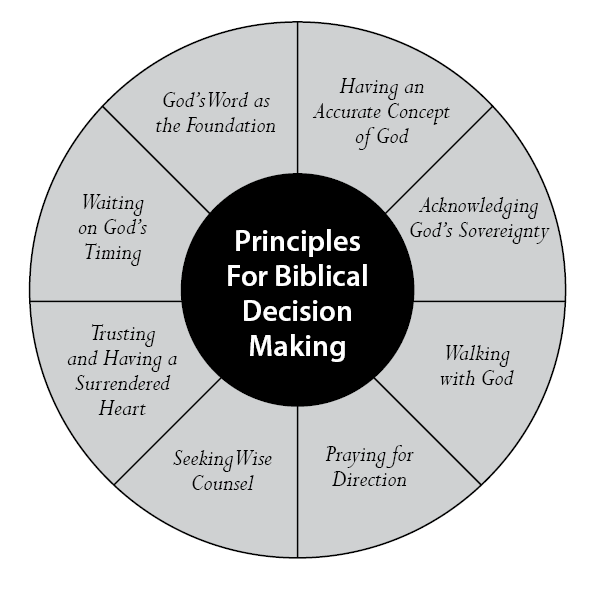 It is important to approach the marriage decision using faith and godly wisdom. Many principles and cautions are laid out more extensively in the document, “Principles of Biblical Decision Making”. We encourage you to think through the principles of biblical decision making in the context of marriage as you make your decision. A few guiding points for these principles are below.
Questions to Consider: As you review the principles below, which one(s) seem to be easiest for you? Which one(s) might be more difficult?
God’s Word as the Foundation
Psalm 11:3, “If the foundations be destroyed, what can the righteous do?”
Establishing that we will pursue a marriage decision based upon the foundation of God’s Word and his principles is a critical first step. Purposing that we will follow the truth of the Bible and not rest in what seems wise in our own eyes is crucial. While having personal motives, thoughts, and emotions is not bad or wrong, we must be aware that a feeling or sense of what is right or wrong apart from God’s Word can powerfully influence us. The marriage decision is by nature personally charged; we must balance out our personal persuasions with the unchanging counsel of God’s Word.
Having an Accurate Concept of God
Our concept of God can greatly affect how well we trust him with our marriage decision. If an individual does not view God as trustworthy (Psalm 9:10), they are more likely to take matters into their own hands. If someone does not believe God desires the best for them (Jer. 29:11-13), they struggle to have faith and confidence he is working “all things for good.” At times when we do not understand God’s ways (e.g., when someone desires to be married and is not or when a proposal does not go through), it is easy to feel as though God is withholding good things from us. It is wise in the marriage decision making process to spend time developing an accurate concept of God to further build on the foundation of Scripture.
Acknowledging God’s Sovereignty
God is the object of our faith as we consider marriage. No one knows the future. Ultimately, we move toward the future by faith. We are to put our faith in him and commit, up front, to seek his guidance and direction throughout the process. This can be greatly liberating, comforting, and terrifying at the same time.
Faith asks us, by its nature, to give up control and surrender to the One who is greater than us.
Yet faith can bring comfort when we believe and trust that he loves us and desires the best for us. God’s sovereignty gives us the perspective to say, “I will move forward with the Lord, and whatever happens, God will be with me.”
Walking with God and Praying for Direction
Our relationship with God is of utmost importance as we consider marriage. God places high value on this decision as it affects not only us but also our potential spouse. We should have a healthy relationship with God and be living an overcoming life by his grace. Our walk with God should be centered on the strong commitment to “seek first the kingdom of God and his righteousness”. (Mat. 6:33) Our prayer life should be vibrant, filled with the confidence God can perform that which he desires but also filled with the humility to place our desires in submission to his will. Walking with God, praying in the Spirit, and continually conforming to the image of Christ are critical first steps in the marriage decision process.
Seeking Wise Counsel
Seeking Counsel is Essential for the Marriage Decision.
A crucial check in the marriage decision making process is the counsel of others. It is a blessing to be a part of the Body of Christ where we are “members one of another.” (Rom. 12:5) These “members” can speak “the truth in love” (Eph. 4:15) by helping an individual check motives, determine a readiness or maturity for marriage, identify areas where an individual is not seeing clearly, and other aspects of wise counsel. It is strongly encouraged that counsel is sought from a support team of one’s parents and experienced and trusted mentors in Christ, not just peers. The wisdom of Proverbs 12:15, “The way of a fool is right in his own eyes: but he that hearkeneth unto counsel is wise,” is especially poignant in an emotionally charged decision such as marriage. Those who know us well can prayerfully help with the discernment process. Support people should help examine our readiness for marriage and in what areas of life growth and maturity are needed in order to be a healthy future spouse.
Get Counsel from Your Elder Early in the Process.
It is strongly encouraged individuals meet with their elder when they are starting to consider marriage. The time of considering marriage is a deeply spiritual time. It is a time of self-examination, prayer, and pruning. Godly counsel and encouragement from an elder can be of great benefit during the entire process. This means meeting with the elder or church leader and seeking counsel early in the process, well before the final proposal.
Trusting, Having a Surrendered Heart, and Waiting on God’s Timing.
At some point in a marriage decision process, there will be a “step of faith,” a decision to move forward with either a proposal or an answer. How sure do we have to be to take a step of faith? By its definition, taking a step of faith does not mean having perfect certainty or having everything figured out. It is walking in his strength and teachings today while trusting him for the future and surrendering the outcome to him.
It is trusting God through the uncertainty.
In addition, there will be times where we seem to be waiting for God to act or potentially work in others. Sometimes the “who” and the “when” of marriage do not seem to line up. Patiently wait for God to orchestrate while praying your faith can remain strong in the promise God is working even when it does not seem like it (Is. 40:31). However, care should be taken to ensure we are not passively waiting for God to simply work a miracle in our lives. Actively continue to serve the Lord faithfully. We should talk through our sense of leading toward marriage with our elder or godly mentor, continue to pray for our future spouse, and seek to walk with the Lord in large and small aspects of life. The first step in a marriage decision is a healthy relationship with God.
As a final point to consider, the Bible counsels us in Ephesians 5:15 to, “See then that ye walk circumspectly, not as fools, but as wise.” As such, when we make decisions, especially a decision that will impact lives as profoundly as marriage, we must consider the implications both short and long term. Asking ourselves the right questions and prayerfully reflecting on our answers in the light of the Scriptures is a critical aspect of the marriage decision. The Guide for Reflection is a resource to support self-reflection or to walk through with a mentor.
DIFFICULTIES WITH THE MARRIAGE DECISION
There are many individuals whose godly desires and expectations have not been met in the manner they wish. At times, God’s desire for our lives is different than we would choose. At other times, we must recognize we live in a fallen world and are affected by the choices of others, some of which can affect our ability to marry or be fulfilled in marriage. This fact does not negate the goodness of God but rather reflects the brokenness of a fallen world.
We can cling to the certainty of his love for us.
Dealing with an unmet desire we believe is a wholesome desire is very difficult. Often, it leads people to question God and his Word. One may conclude they are ready to marry and believe they are supposed to marry, yet it still doesn’t happen. The marriage decision can be especially difficult as it involves the will and decision of two individuals. When unmet expectations on the part of one or both individuals arise in a marriage decision situation, it is often not possible to know the answer to the question, “Why did this happen?” We can find ourselves spinning as Job did, attempting to explain and fully understand our situation. In moments like these, it is important to cling to what we know to be truth. We can cling to the continuing certainty of God’s desire to sustain us in the midst of hurt and disappointment. We can cling to the certainty of his love for us; we can cling to the certainty of his desire to use even a difficult situation to conform us to the image of his Son.
Rom. 8:28-29, “And we know that all things work together for good to them that love God, to them who are the called according to his purpose. For whom he did foreknow, he also did predestinate to be conformed to the image of his Son, that he might be the firstborn among many brethren.”
We can know God, but not perfectly. We can know his will, but not perfectly. Sometimes we need to seek grace to accept life as it happens to us, instead of needing to know God’s purpose or thinking. We must allow God to be bigger than us and more mysterious and his ways are above our ways (Isaiah 55:8-9). Sometimes what we envision for our life does not come to reality, and it is not possible to completely understand why. That is where faith becomes truly real. When we find ourselves questioning God, it is best to fully acknowledge those questions to him and seek comfort from him and his Word. For more resources to consider in this area, please visit Unmet Expectations.
Sometimes what we envision for our life does not come to reality and it is not possible to completely understand why. That is where faith becomes truly real.
Ps. 27:14, “Wait on the LORD: be of good courage, and he shall strengthen thine heart: wait, I say, on the LORD.”
2 Cor. 12:8-10, “For this thing I besought the Lord thrice, that it might depart from me. And he said unto me, My grace is sufficient for thee: for my strength is made perfect in weakness. Most gladly therefore will I rather glory in my infirmities, that the power of Christ may rest upon me. Therefore I take pleasure in infirmities, in reproaches, in necessities, in persecutions, in distresses for Christ’s sake: for when I am weak, then am I strong.”
CONCLUSION
Few decisions in our life will challenge us, grow us, and conform us to the image of Christ as the marriage decision will. It calls us to walk by faith while applying the wisdom he has given us to think and act biblically. It calls us to a state of vulnerability as we seek counsel and make our intentions known to others. And ultimately, it calls us to be dependent on him, leading us to a high level of trust in our God and his goodness, no matter what the outcome. One thing is sure in the marriage decision process. If entered prayerfully and with a surrendered heart, it will change us. We can expect to grow spiritually throughout. And if we purpose to maintain our trust and faith in him, it will bless us.
Ps. 84:11-12, “For the Lord God is a sun and shield: the Lord will give grace and glory: no good thing will he withhold from them that walk uprightly. O Lord of hosts, blessed is the man that trusteth in Thee.”
References
i Les and Leslie Parrott, Relationships: How to Make Bad Relationships Better and Good Relationships Great. (Grand Rapids: Zondervan, 2002), commitment with eyes of faith.
For Further Information:
A Guide for Reflection During Marriage Decision Making
Keeping a Balanced Perspective During Marriage Decision Making
A Greater Purpose- The Marriage Decision
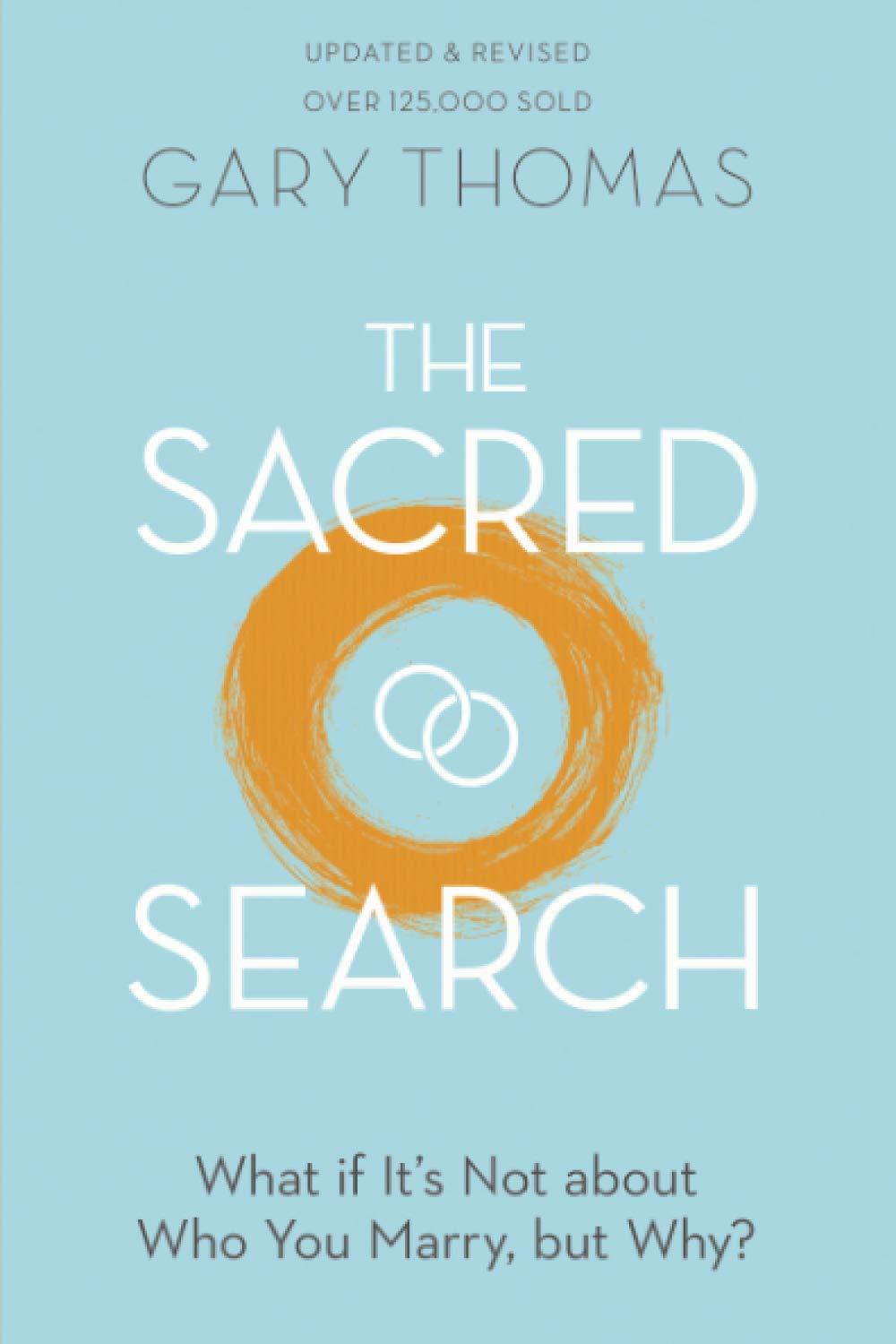 The Sacred Search: What If It’s Not About Who You Marry, But Why?
Author: Gary Thomas
In this 224-page book, the author helps single people of all ages make wise marital choices by rethinking what basis those choices should be made on. You will be encouraged to think beyond finding your ‘soul mate’ and instead adopt a more biblical search for a ‘sole mate’ –someone who will walk with you on your spiritual journey. Thomas asks, “What if we focused on why we should get married more than on who to marry? What if being ‘in love’ isn’t a good enough reason to get married?” And most of all, what if God designed marriage to make us holy more than to make us happy? The Sacred Search casts a vision for building a relationship around shared spiritual mission.
Additional Articles

Obsessional Doubt and The Marriage Decision
The decision to marry is a major life decision. Uncertainty around who to marry, when to marry, and “how to know for sure” are common questions individuals considering marriage face. As Christians, there are additional layers of discernment around honoring God, aligning with his will, and stepping out in faith. Obsessive doubt is a condition where intrusive, unwanted thoughts (obsessions) target core aspects of a person’s

Am I Living a Healthy, Balanced Life?
“…I am come that they might have life, and that they might have it more abundantly.” John 10:10 God’s desire for us is that we can live a full and abundant life in relationship to him. Yet, life is full of situations and transitions which can shape and affect our

Before “I do” Podcast Episode
A lot of health for marriages lies in the prework, before the marriage happens. This episode speaks about the pre-contemplative, contemplative and engagement phase of marriage and the great deal of promise these stages hold.
Comments
Leave a Comment