

Oral History Podcast Episode
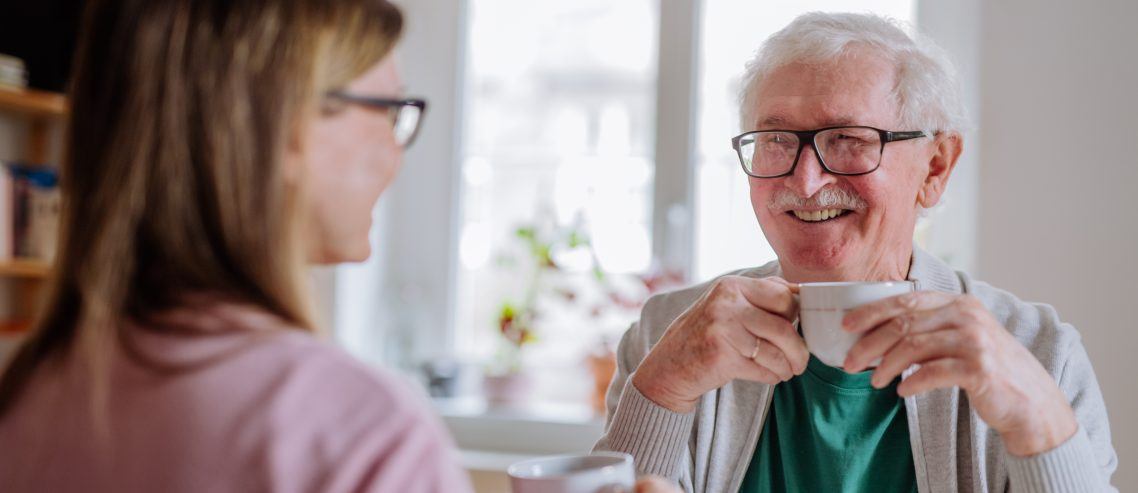
This episode of Breaking Bread, Fred Witzig and Erica Steffen give us a history lesson. Not a history lesson about our past. But a lesson about how to capture our past into history. Oral history is the means for getting this done. Fred and Erica will both explain how to carry out this collection of history as well as cast a vision for our participation in a larger Elder Teaching Resource effort.
Further Information
Oral Histories- ETR
The purpose of the Oral History project is to preserve historical knowledge of our ACCA heritage, build relationships between generations, and to provide understanding of our church practices, doctrines, and perspectives. This unique project provides a venue for older Apostolic Christians to contribute to the healthy life of our church.
Transcript:
One of the reasons why we have the Old Testament in the form that we do is oral histories, they didn’t write things down. They told stories. If we want to think about it in less technical terms, let’s preserve these stories.
Welcome everyone to Breaking Bread, the podcast brought to you by Apostolic Christian Counseling and Family Services. Excellent to have you along. Today’s episode is a little bit different, I think it will be valuable. It’s going to be a history lesson. A history lesson not in the sense of learning something about our past, but actually learning what perhaps our responsibility is in recording and preserving history. And to give this history lesson, Fred Witzig is with me as well as Erica Steffen.
Erica and Fred are going to teach us what oral history is, how it is conducted, and cast a vision for how we might even participate in an effort that the ETR or the Elder Teaching Resource is invested in. So, Fred, share with our audience a little bit about what the ETR is for one thing, and then the topic of conversation here today.
Yeah. So, the ETR, or the Elders Teaching Resource, began in 2019, and our purpose, one of our purposes, is to collect and preserve and present, make use of, Apostolic Christian history. And so, we have an archive, and one of the things we hope to put into that archive is our oral histories. Oral histories are simply interviews of people who have some familiarity with something of interest in the past, in this case, Apostolic Christian history.
And so, we’re going to talk today about that project and how people can contribute to that project. The real brains behind this and the energy behind this is Sister Erica Steffen. So, Sister Erica, why don’t you take it away?
Well, I am from Congerville and my husband and I and our three kids are there. And, years ago, with an interest in oral history, I did my first oral history interview when I was in fifth grade with my grandfather. I sat with him on a couch for four hours and had him talk to me all about his childhood. And while my family thought I was bored out of my mind, I actually was really thrilled with the opportunity, and I pursued teaching and history in college then, so I have a BA in history from Illinois State University, and there I was able to do more oral histories, kind of pursue that even more.
And I had a research focus in history of memory, how history gets remembered. And I really was interested in, not to get too technical, but historiography, how history gets recorded. So, memory plays a big role in that. And so, oral histories are your biggest primary source when it comes to how things, how history has been remembered. And so now I have this opportunity that I’m really excited about to apply that to our church and see how it goes from there.
So, I think most of us encounter history in book form, in text form, which is great. It serves a tremendous purpose. Or maybe the first time we encounter history is at a historic site, which is also fantastic. I’m a big fan of that. But another form of history that we’re probably, if we think about it, we’ve all experienced it, most likely in very informal ways. And that is just sitting across the table from somebody and just recounting something that we’ve experienced in the past. Oral history as a subject or as a field is intended to do that well.
So instead of just trying to remember, you know, I remember sitting on the, as you said, sitting around and listening to my grandfather say something. What did he say? I can’t remember. He had some story about this. I can’t remember the details. Well, oral history is there to say, hey, let’s tell these stories, but let’s do it in a really careful way so that we get the details and we preserve it well, and then we can really make use of it.
So, there’s really an art to this storytelling, or capturing the stories of people. And I think one thing, I think of museums, when you go through a museum, very often you’ll pick up the phone, it’s a museum, and you’ll hear, somebody on the other line talking about their experience, whether it was a military battle or whether it was some occurrence. And that’s really oral history, isn’t it? It’s taking that personal perspective, and this is now the craft behind capturing that.
Yes. And it’s a lot of fun. It is. It is a lot of fun. And one of the reasons why we have the Old Testament in the forum that we do is, oral histories, they didn’t write things down, they told stories. And that’s, if we want to think about it in less technical terms, let’s preserve these stories. We have all these stories, we have people who have amazing memories from things, or maybe some more mundane memories, but it helps us understand.
I like that, I like that you said that, Old Testament. Just this morning, Rebecca was reading in the New Testament account of the crucifixion, and she said, isn’t that interesting, this little detail, and we had this conversation about the detail that was provided there, and then our conversation went to, I think the writers in the New Testament were probably pretty good storytellers.
Like, it was very thoughtful, they weren’t winging it. They lived in an oral tradition where capturing it orally was important and conveying those details were important. So, they were probably very intentional about that bit of detail. Am I right about that?
Yeah, absolutely. In a day and an age where we don’t. The book learning, as you mentioned, have I left the history to the experts type of thing, as opposed to really owning it myself? Right. Yeah, I also like that comment, I think oral history is probably, if you think about it, the oldest, most pervasive form of history in the history of humanity. Yeah. Because it predates the written alphabet and that sort of thing. Sure. So that really raises a, there’s a duty there then. Yeah. Would you say that, and now I’m preaching to the choir to historians here, but, I get a sense that you two have a sense of duty.
Absolutely. I have a duty to the next generation to preserve some history to curate some history, the accuracy. I need to have a craft suitable to do that. And if I don’t, shame on me. We don’t want to shame anybody, but we do want to get people excited to see how this can be used, how it can enrich not only our lives today, but for the future, the next generation.
How is this going to be used? Who’s going to be listening to this? 20, 30, 50 years from now. Let’s expand on all of that. What do you see the purpose and the payoff to be on doing this well? I think there’s several really important outcomes of doing oral history. And so, I’ll just speak from the ETR standpoint.
There’s a need, we have a need, that we fulfill in various ways. Apostolic Christians, and so we’re interested in what we’ve always done. Well, we’ve always done it this way. Well, you know, in the old days, or my grandpa said that this was always the way we did it. So, we had these informal little fragments of memories kind of floating around out there.
And it’s not bad. It’s just that if you really want to get down to brass tacks and say, look, this is how our church really truly was. Well, where are you going to find that? We have some paper documentation. We have notes from elder meetings. We have the Silver Lining that began in the 1940s.
We have the various textual things that we can get. But really, a lot of what we’re going to rely on is oral history. So, from the ETR standpoint, one of the things that I feel very excited about this project is if we can get more people, and not just older people, although older people are the prime target here, if I can say it that way. Simply because they have access to the history furthest back. Yes. And if not accessed, then that history goes away. Yes. And then we lose it, and then we’re subject to random fragments of stories that get passed down that may or may not accurately reflect. It’s no longer a primary source. It becomes a secondary, tertiary source. It’s not your primary source. They were there, they saw it, they had the conversation, they did the things.
I’m smiling because I’m starting to twitch with primary and secondary sources. Like, oh, my 7th grade history class. But that makes perfect sense that we don’t have access to them anymore. Wow. Yeah. So, we want to access those primary sources while we still have them available now. Interesting point that you made is we have the elder conference reports, and you have these primary sources of maybe polished and canonized content, right, not only in our church, but otherwise in history.
These oral histories, I would have to think, are a little bit different. In what ways are they different than that? And I would imagine that comes with some pros and cons. There’s some real value here because of its difference. Does my question make sense?
Yeah. I think there, the value of the less formal, anecdotal, personalized experiences, and we all know, all the different personalities involved, all of the different thoughts and opinions that get expressed. You can talk to one person about their experience with an event or a subject or some sort of topic that you can get a really wide variety of opinions and thoughts on that. And that’s valuable.
You could just listen to one person’s take on something. But if you have this person’s take and five other takes, how much richer the whole picture of what went on or what they experienced. Yeah, it just adds that value to have a bunch of different experiences. And you may get some insights into one person. We read in the gospels, each gospel writer gives their take on and adds a little thing here or adds a lot of detail here where another one doesn’t.
And so it’s just… And it may have been part of their felt experience. Exactly. That was so important to them because of how they experienced it. Experience was the word that really stands out. Yeah. With what you said, which is very much a differentiation between what oral history provides and maybe what the formal, right, accounting…
So Matt, I have to tell you, one of the things that stood out to me when I first went to graduate school for history… Actually, probably even before that as an undergraduate, I noticed that the stories being told in a history textbook differ pretty dramatically from the stories that my parents would tell about the same time period.
So, I would read a textbook chapter on the 1960s, and then I’d talk to my mom and dad about it. They had a completely different perspective and I actually ended up doing a whole research project on this phenomenon of sort of professional elite ivory tower historians and how they tell America’s past versus how a lot of the people that I knew experienced it.
And I think both are valuable. The historian generally writes generalizations but when you interview people you get a lot of the rich texture of what the experience was actually like and as Erica says, I think this is really key as you begin to see that wait a minute this little generalization may have been generally true for many people but don’t take it as gospel.
There’s a lot of variety in there. There’s a personal touch to some of these formal things of how we view something. When you hear the personal story, it changes your outlook on what happened. I think that’s exciting. And I think we all do lean forward when somebody’s telling a personal story or experiences, right?
That emotion, I mean, Fred, we’ve all done teaching. And as soon as you break into story, all of a sudden people wake up and we lean forward to this. I think that’s exciting. And I think we’ve done really well. I think both of you have done really well in explaining what oral history is and the advantages of it. Now, you’ve talked about it being a craft. Is this a craft outside of the layman? Like, can I not do this or do I need a doctorate in history? And I know the answer to that. But now bring it down to us. What does it look like to carry this type of thing out? Is it trainable? Are there some simple things to learn?
Yes, definitely, and some churches have already taken on this project and done it well. Thanks to Fred for kind of heading it off. I wasn’t involved initially, but I kind of got involved after a couple other churches had done it. I had actually listened to what they had done for a few of the interviews, and I was like, oh, this is really exciting that people are actually doing this. So yeah, it’s actually a very simple process.
It doesn’t require a lot of material. It requires people that are willing to be on both sides of the table, the interviewer and the interviewee. So, we need both. We don’t just need a bunch of people that are like, oh yeah, I’ll record histories. You have to have the people who are willing to share their stories too.
And that will vary from person to person of how much they’re comfortable with talking. But, all we can do is ask, and if we know somebody has a particular experience to share, asking, hey, would you be willing to not go on record per se, because that might be a little intimidating, but would you be willing to share your story? We think your perspective of how you experienced this event or that event would be valuable to be heard, to be recorded and preserved.
I really like that, Erica. How would you help an interviewee feel like they understand their place in the story they’re giving? One of the things that oral historians often do is actually be very upfront and say, look, we’d love to hear whatever you’d like to talk about. This is where it’s going to go. This is what we intend to do. If we ask a question you don’t feel comfortable with, just say, I’m not comfortable with it. And, there’s nothing wrong with that. Or if after the interview you’re just like, man, I just shouldn’t have said that. Or I mentioned somebody’s name and I feel really bad I mentioned it. Hey, we can edit it out. You have full permission to edit anything out of this. And, I find that most people don’t really worry about it that much. There’s only been a few people who’ve said, ah, you know, I probably shouldn’t have told that story. It might reflect badly on so and so.
But most people are happy to talk about it. Because it’s their story. Who doesn’t like somebody saying, so, Matt, who are you? Where did you come from? Tell me more about that. I’m really interested in you. Yeah, it’s a wonderful way to honor people, isn’t it?
It is. I think people do feel honored when you approach it in the right way of, hey, we see a value in your story. Yes. And the expression of that value, we see that value, I think puts people at ease of feeling like, oh, really, even if they don’t see that value in their story, somebody else expressing to them, we value your story is enough, I think, to put people at ease and say, oh, well, yeah, I guess I can talk about it.
But then, to kind of go on with this too of what we do. Being fully transparent of what we intend to do with these, it’s not going to be broadcast from our pulpits. It’s not even going to necessarily be broadcast, as this podcast. It can be as accessible or inaccessible as that person wants it to be or what their wish would be to that. And we, that’s part of that craft of doing oral history. But we have to just be sensitive to that too. How do people want to use that? We do have the ability to archive them for people who are interested in our church history to access that now, but they can also say, you know what? I don’t want this accessible.
So, they have control over that? Yes. I was just going to say, I think there’s a key point there is they have the control. I think putting them in control. That kind of eases it. Although I think your point about being valued is huge as well. I’ve seen that. Like people, well, what do you want to talk to me for? Oh, none of us have ever went through anything like that before. And we’re just like, what is it like to go through this? Oh, a story to tell. And I think both of those are really important. We had one of those evenings in Bloomington, and both of you helped with that. It was tremendous, the young group participated. And to see three young girls at the feet of a 101-year-old tell about her story, I mean, they were attentive, and they listened to everything. It’s beautiful to watch. It’s a beautiful thing to watch. Fred, say a little bit, though, about your pie in the sky vision.
Like, if this went swimmingly well, right? So, unlimited resources, a huge buy in. We have a database on our archive computer that is accessible around the world. And out of that database, people can access hundreds of stories of what it was like to be an Apostolic Christian in the last 60 to 70 years.
Okay? And this is for professionals to use. I shouldn’t say professionals. This is for historians to use who are interested in chronicling Apostolic Christian history and learning the lessons. But it’s also for people who just want to know what it was like to be Apostolic the 1960s.
A huge upheaval, social upheaval. I’m fascinated by it. I was born at the tail end of it. I’d love to know more about what it was like to be an Apostolic Christian in the Midwest, most likely, and experiencing these social convulsions. Because in fact, I’m in the middle of a social convulsion myself. Right?
Yeah. So, expand on that. What value is it for us to really know that question? A. C. living in the 1960s. What value is that to us? I think two ways. One is for the leadership of our church to be able to understand who we are, how we got here. The decisions that we made. Oftentimes, when we go back and we look at how a decision was made that maybe we look at the decision, we say, wow, that was kind of a dumb, that wasn’t the right decision. You go back and you see the context in which that decision was made and you start having greater appreciation for it. And that teaches us, okay, so that was a different context. But that was kind of wise how they thought through that. How can I think through it?
So, in terms of leadership, I think the past can be very helpful and instructive in both understanding how we got to where we are, and then maybe some wisdom for going forward for the average person. I mean, history is just an incredible source of inspiration for me when I go back, who is inspired just to use a non AC story?
Who isn’t inspired by the story of Anne Frank in the Holocaust? Who doesn’t want to be like her? Who doesn’t want to react in that kind of way? And that challenges me. I’m inspired. I’m inspired by the missionary work among Apostolic Christians in the 1800s. Just within 10, 12 years, all these churches springing up, man, that’s inspiring to me. It makes me want to… And what if we had oral history on those experiences? Yes. What kind of light would that shed on our today? Yes, absolutely. And I think for today, too, you think about what we are, like Fred, you referenced, you know, what we’re experiencing today, the kinds of social upheavals and stuff.
We’re going to have those stories to tell and then our children, our grandchildren, you know, Lord willing, go back and listen to our stories and they have, you know, multi-generational experiences to draw on and we have that ability now to record. We didn’t have the ability a hundred years ago to sit down at a table with audio visual equipment or not very accessible at least to most people.
We have that accessibility. You have a phone in your pocket that can record an oral history. And so, I find that really exciting that the potential for generations to come to glean that, the information, the insight, the inspiration, like you said, and just the wisdom of the ages being passed on in that way, I think is really exciting.
Very exciting. Okay. So, Erica, something that you said, I want to connect back to the question that Matt asked earlier about, but does it take a professional to do this? Who can do this? If you have or can make a personal connection with somebody else, then you can do it. We have again, we’re gonna have some videos on some techniques and some strategies and that sort of thing that should really help you out.
But really, it just takes. Do you know somebody? Can you connect with somebody? You know what’s exciting about that too, Fred, is we all have people we can connect with. Yes. And, that might also cause us to say, you know what? There is a person I can contact and can ask this of, that maybe some other people can’t as extensively, or have them feel as open with, right?
Yes. That really employs us. And Matt, let me just drive this nail home here. Who would you rather sit across the table and talk to? Somebody who comes in with a name badge and Ph. D. and he’s in a lab coat and he’s okay now, so tell me about your experience. Would you rather it be a 15-year-old nephew, who’s in the young group and wants to do this as a project and comes in and says, Uncle, you know, tell me about this.
Yeah, I’m picking the nephew every time. The more personal we can get with the person, have it in that established relationship, and this often what it comes down to is what kind of relationship do you have with this person? You know, and you probably already have a little insight into, you know what, I know that they experienced this or they were there for this.
I can probably approach them and say, hey, would you mind sharing that story? And this is a project that I’m working on, because I know you, whether that’s a relative or just a close friend or someone from church that maybe you’ve talked about it before, and just say, you know what, I really see a value in preserving this, in recording this, I’ve enjoyed talking to you about it, I think other people would enjoy hearing your story too, and this is a way we can record it, preserve it, and potentially have other people benefit from it.
Hey, Erica, before we close here, I’d like you to share, just help us with the vision. What does it look like for a person to get involved and just provide that clarity. Sure. Well, I am happy to be the main point of contact for any individual, any young group, Bible class, even whole church group that wants to take on this kind of project and help you through that, what does it look like to set up conducting interviews, how they want to structure that. We do intend to, Brother Fred and I, would like to have some instructional training videos that we actually record to help you kind of walk through all of the more nitty gritty details.
It’s not, like we’ve discussed, it’s not overly complicated, but there are some things to point out, that helps make this process go smoothly. And yeah, we want to be able to support you from beginning to end of this project from the first thoughts of, do we think we can do this? And just kind of talking through, you know, logistically, okay, what group of people are we dealing with here?
Is this a whole church? Is this a smaller group? And then give direction where needed to help actually get to the point of conducting the interviews. And then once they have been recorded, where do we want to go? Do we want them to go into the archive? Do we want to just keep them for that church?
Our hope would be that we could put as much in that archive to be able to be accessible. But as we’ve discussed already, we know that there’s sometimes privacy concerns or just not very comfortable with having it widely disseminated. So, we just want to be there to walk you through the process, train you in how to do it, and then bring it to completion and see it done well.
So, I appreciate that, Erica. I appreciate everything that Erica has been doing. She’s been volunteering her time and doing a great job putting all this stuff together. And she is, as she mentioned, the point person for anybody interested in this project, you’ll be communicating with Erica.
We do have a webpage that you can go to and find out more about the Elder’s Teaching Resource. That’s etr.apostolicchristian.org. Or easier yet, if you’re interested in the Oral History Project, simply email the ETR at [email protected]. We’ll get the email, we’ll forward it on to Erica, Erica will contact you, and away you go.
If you do so, let me just thank you in advance. You’re doing a service to the Church. I think you’ll find it a service to your congregation, and I think that you’ll really enjoy it. But I just want to thank you for your interest. Thank you, Fred and Erica. Telling stories on purpose and for a purpose.
Exciting. Thanks. Thanks, each one, for listening in.
Additional Articles

Celebrating 10 Years of Breaking Bread Podcast Episode
Join us in the studio as we celebrate 10 years of Breaking Bread! In this celebratory episode, Arlan Miller, Katie Miller and Brian Sutter turn the tables and interview Breaking Bread host Matt Kaufmann. They go behind the scenes of the show, telling stories and reminiscing. Most importantly, they pay


Annual Report
Thank you for helping us serve our church family in 2024. Your continued prayers and support have made this possible! Full Annual Report ACCFS provides webinars throughout the year on various topics. Find out more details on archived webinars as well as a link to register for each of the

Comments
1 Comment
This is a very special project! Thank you for sharing and all the effort that you are putting into it to see that it’s done well. I do believe that God will be glorified and that many, many, many will be inspired by the fruit of your labors 🤗🙏💞 May Our Lord continue to bless you as you go forward 🙏💝🙏
Leave a Comment