

Supporting Those with Special Needs Podcast Episodes
Part 1
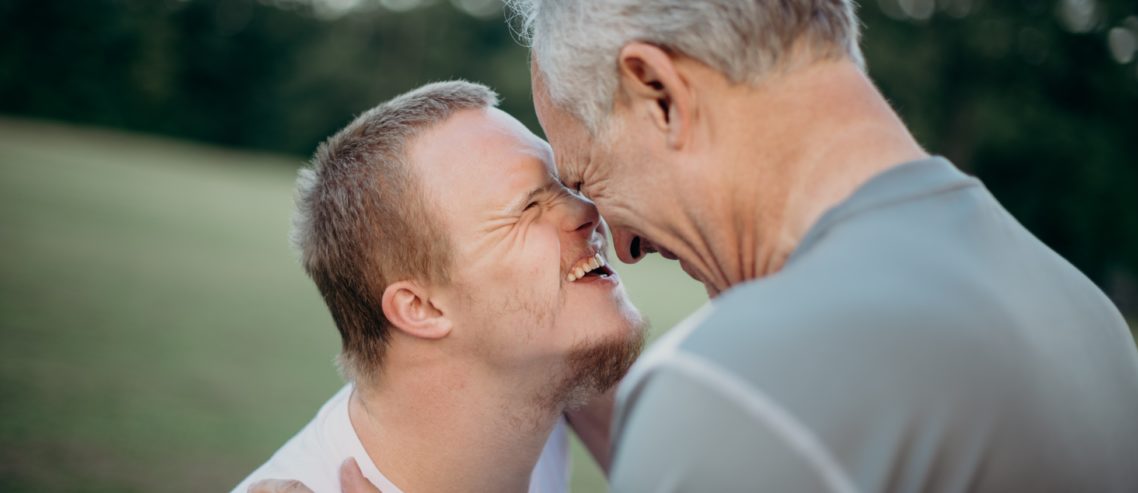
Jesus engaged those with special needs – the blind, the lame, the leper. And we should too. In this episode of Breaking Bread, guests Randy and Evie Mogler educate us on the beautiful world of special needs.
- The vocabulary we use to refer to those with special needs is important. Terms have come and gone. The best terms place emphasis on personhood and do not reduce a person to their disability. For example: a person with developmental disabilities, a person with Autism, a person with Asperger’s Syndrome, a person with Down’s Syndrome.
- The reality of special needs settles on us in different ways. For some it is known pre-birth. For others it becomes a raw reality over time. Some disabilities come by way of consequences while others come by way of accident and yet others come to be with no explanation at all.
- Often parents and caretakers feel ill-equipped to care for their loved ones with special needs. Yet, God gives special wisdom and grace to parents and caretakers to tend to the needs of their children and loved ones.
- Great strides were made in the United States in the mid-twentieth century in caring for the personhood of those with special needs. This was accomplished when parents rose to the occasion to advocate on behalf of their children with special needs. The community rose to accept special needs persons and legislation ensured their right to education.
- As a community we are coming to greater understanding of the need for “inclusion.” Those with special needs have much to gain from the community and the community has much to gain from those with special needs.
- God is using those with special needs to challenge the larger community on what success is, what love is, what patience is, what selflessness is, and what happiness is. They show us how to suffer well. They show us what overcoming looks like. They make our world larger.
Part 2
A supporting community is not just a nice idea for those with special needs. It is essential. Wonderfully, the church is such a community. In this episode, Randy and Evie Mogler conclude their remarks about supporting those with special needs. Included in their remarks are practical tips for engaging those with challenges as well as a high and noble calling for the church.
- It is important that we learn how to engage with those with special needs.
- Tips for how to interact with those with disabilities:
- Talk directly to them, giving them eye contact at their level. Kneel down if necessary.
- Offer your hand to be shook.
- Wait to offer assistance until after they have accepted it.
- Treat adults like adults and children like children.
- Respect the accessories they use for their disabilities. For example: do not lean on their wheelchair, walker or cane.
- Listen carefully with patience. Do not pretend like you understand.
- Use appropriate vocabulary for their age. If in doubt of cognitive level, begin with high level vocabulary and adjust accordingly.
- Relax and enjoy them.
- Educate yourself about the disability or special need of the individual you wish to engage.
- Learn from parents and caregivers.
- Learn from web resources:
- The need for community
- The fear of the future is real for those who have loved ones with special needs. Will they be cared for? Will they have friends? How will they manage? The church, wonderfully, is an eternal community and is well-suited to care for the lives and souls of those with special needs.
Transcript:
It is interesting that Christ Jesus decided to very pointedly address people with disabilities. You know, maybe Jesus was having us see that he is success. We are complete in Jesus alone, not in anything else, not with or without a disability. Welcome friends to Breaking Bread, the podcast brought to you by Apostolic Christian Counseling and Family Services.
I’m delighted to introduce to you two special guests in the studio today, Randy and Evie Mogler. Welcome to both of you. Thanks. It’s a pleasure to be here. Randy and Evie have agreed to have a conversation with me around a very special topic. And that topic concerns the world of those with special needs.
Adults and children with special needs, their parents, caretakers, the wider community, and in particular, the church. I want to give both of you an opportunity now just to speak a little bit to your intersection with special needs. Oh, yeah. Well, we were just saying before we began that it was 50 years ago this year that both Evie and I were at Illinois State University, and we started our careers in special education for different reasons.
I don’t want to speak for you, Evie, but there’s been a trail of experiences, information, beautiful people, challenges, joys, that has been a part of this journey. Of course, we see things differently than we did 50 years ago. Both of us worked at Apostolic Christian Life Points for 30 years.
We’re retired. So that’s a piece of that. I’ll let Evie speak about her own experiences, but particularly in Washington, our local church, we’ve had some great exposure and inclusion of individuals with challenges. And so that has helped shape who we are. Actually, quite frankly, some of our best friends are individuals with challenges of one variety or another.
Let me cut in right now for something I think that’s important, and then Evie, I’d like to hear from you as well, but the vocabulary we use, the terms we use are important. And I think some of us wonder what terms should I be using? So, I used special needs. I hear you say challenges. Are both of those good terms. Is there a difference in those terms? What terms should we be using?
So interesting. Again, Evie, you can speak for that too, but terms have changed, come and gone. Part of it is mentality. It’s heart. It’s how we process who we’re talking to and who we’re including. A person with a challenge is a term that’s being used for a person with special needs or a child with special needs. Some words that have been seen as debilitating and handicapping to a person would be terms like mentally retarded. That’s an example of something that’s been switched or changed. People are referred to as those individuals who have challenges in that way are people with intellectual disabilities. For example, 50 years ago, a person with an intellectual disability was considered a moron. And we couldn’t even imagine using that term today.
You’re right. I don’t think we have to emphasize or obsess on the words that we use, but I think that sometimes the words, the vocabulary, the way we say things about people do shape our view of that individual. I think that distinctive is helpful, right? And even if you look at that word moron, what you’re doing is you’re placing identity on them, right? As fully described by their challenge, a person with a challenge is that the emphasis is on personhood. Amen. With a challenge. Those are vastly different.
I think that rubric is helpful, right, as we think about this. Yeah. Evie, your background. You were at ISU as well? I was. And my introduction to people with challenges actually began when I was almost 12 years old. I was 11 when my sister was born. And so, I always trace my career back to that day on the piano bench when my mom said, Evie, sit down here. We’re going to have a little talk. I want to tell you some things about your little sister. And I can remember that day as clearly as if it were yesterday.
Wow. So, I always tell people that’s the day my career was born. And my mom’s attitude and the way she began teaching me about my little sister was just pivotal to how my life has gone. Did that come pre-birth or after birth, that conversation? Well, it was in 1963, so it was after birth. My mom and dad had no idea that Karen had Down syndrome.
And see, this is the point that I want to make, too, is that special needs come in so many different packages. For some, you go into the birthing process aware. But others, that realization of a special needs existing drips out over time, over four or five years, that a raw reality is at place. Does that make sense?
It does. So anyway, I just wanted to accent that point that it just comes about. And, yeah, what you’re saying is so accurate. Say, for example, someone at 12 years old has a stroke or someone has a bicycle accident, and they have a closed head injury and traumatic brain injury in terms of legal issues and funding issues. That individual, if they are under 21 years old would be considered having a developmental disability. Should the individual have a closed head injury or a traumatic brain injury after 21, it changes the way the person is serviced, the way the person has services provided, and also the stressors on the family.
Siblings are often grown or older, if they’re over 21, parents are older. So, there are lots of other circumstances. But what you say is this topic of developmental disability is huge. It is very expansive. It includes lots of people with lots of varying needed supports, but it all points back to Psalm 139.
He knew us when we were created in the womb. He knows our standing up and our sitting down. Every person is precious in God’s sight. We are created in his image. These are all things that are very strong factors in how we see this picture, but we have to realize that we’re talking about a variety of things.
My mind is exploding with things that I want to talk about, Randy, and we’re going to get back to God to put this in context of the gospel. So, we’re not going to let that one go. We’re going to come back to it. But I do want to place my finger on the expansive nature of it. You know, as you were talking about that, I’m a category person.
I like to put things in different buckets. It helps me understand. But really, as you shared about a person having an internal brain injury that came about through a tragic event. In the case of your sister, it was genetic.
So, we have things that come where it is nobody’s fault. Then we have those that come where it is perhaps somebody’s fault. And that again adds layers of difficulty, doesn’t it? It does. So, Evie, you have this vivid memory there on the piano bench, and you would trace your heartbeat for those with these special challenges to occur there.
Bring us a little bit along on that journey. Just even anticipating this podcast made me do some reflection back to the growing up years with having a sibling with a special need. Yeah. I’ve been reflecting about that, but several things occurred to me, but one of them was how wise my parents were and I know where their wisdom came from.
It came from God because 50 years ago, many families were being told if they had a child with Down Syndrome that it would ruin their family or it would be difficult and that the child should not live with the family, grow up with the family. And so, my parents really had a gift of a good pediatrician who chose a different path, and he said, oh, take her home and love her.
She’s going to be great for your family. And you have five older girls who are going to be great models for her. So, she’s going to learn even more. So, my parents have always been thankful to God and to this physician who steered them in the right direction for Karen.
Without interrupting too much, I want to say this. That’s heavy, because what’s so encouraging about that is how God equipped the parents. That’s what you said. Yes. God equipped the parents to make the right decision. I just want to accent that point, because I think that a lot of parents feel totally ill equipped. Oh, yeah. Yes. So, thank you. Go on.
One thing my dad said was quite profound, I don’t remember at what point, but sometime during that first year, they didn’t actually know at the time of birth, but she didn’t develop normally. And so, they were going to the pediatrician. During those difficult times, those difficult months, I remember my dad telling us and others in the family, like extended family, he said, first I thought, why us? And then he said, I thought, why not us? And that again is a pivotal thing that steered my life and others that I’ve shared it with.
That was part of the family’s feeling. I think so. Don’t you? Yeah. I think it was the attitude. I distinctly remember my mom defining what in those days was the word retarded, like Randy mentioned. And so, she said, have you ever heard of that word? I want to tell you what it means.
And she explained that it actually technically means slow. So, she said, it’s not a bad word. It just means Karen’s going to learn really slow. And the best thing you can do for her is to teach her. And so that’s why I say, that was a pivotal moment in my life because my mom is the one who said, you can help her.
You’re a part of this picture. Yes. You both mentioned ISU 50 years ago. Is that right? Was special education rare or was it budding? I’m just curious. What would that have looked like historically? What’s the history here of special needs? So, it was budding.
I think there was the most pivotal moment in terms of history. Recent history is 1973 when the Rehabilitation Act was ratified by Congress, which said that all children in the United States have the right to a free, appropriate public education, not only education, but life. In fact, some of these moms and dads from the 1950s were very instrumental in this movement.
For example, in our community in central Illinois, mom and dad, along with other parents were responsible for the first educational programs for people with developmental challenges. No kidding. Karen was three years old when she got on a city bus that was then driving from Eureka to downtown Peoria, and they would walk her down the hill.
Can you imagine putting a three-year-old girl with Down syndrome with limited language on a bus to go downtown Peoria? But they were very instrumental, this group of parents, in developing that. And so, from around the country that occurred. So, we’re talking a stepping up in the 1950s, but that stepping up wasn’t just policy.
What I hear is this is a community stepping out into this space. So put your child on a city bus. It meant that she was understood in the community for what she was doing and needed assistance in carrying that out. Provisions, services, supports emanates from the hearts of people because the heart of God is that all people, whosoever will, can come to him.
All people. Culture has grown to understand the need for inclusion and the beauty of people and what they offer, the totality of society. People with challenges offer one thing that’s heartbreaking for me because of the passion I have about this is. During some of our travels that we’ve been gifted from the Lord we have talked with people in other parts of the world and we always, because of our interest, seek to meet people with special needs or visit schools. And we’ve had a variety of experiences doing that and shared with people and learned, and it’s just heartbreaking sometimes to hear that some of the attitudes that probably our great grandparents’ generation had are still existing today in this world. But if children are born with special needs, what happens to them is pretty heartbreaking and hard to talk about. So, the climate around the world varies quite a bit. Yes, it does. Yes. Yes, very much so. I want to go back now and pick up on the comment that you made, Psalm 139, I think is what you quoted, Randy.
You talked about God. Let me set this up with John chapter 9. In John chapter 9, Jesus sees a blind man. He engages the brokenness of this man. In fact, we see Christ engaging with brokenness throughout the Gospels. But in that particular story, the disciples were pretty quick to ask why. And I think it’s a natural question.
I understand the consequences of sin, for example. And so, the brokenness that falls out of those consequences, there’s some sort of explanation. I think there is a question that lies on so many that says, why? There’s no traceable reason for the brokenness I see in my child. Does that make sense? And so, I think they ask with the disciples.
Why? Could you help us understand from a Godward perspective, from your experience and as you’ve thought about this? I’s a deep one. Yeah. It is interesting that Christ Jesus, our Jesus, decided to just very pointedly address people with disabilities, even people with acquired disabilities. We would call it AIDS in these days, or maybe some other challenge that’s harder to understand. It may be this brokenness that we face is one of God’s megaphones to get us back to himself.
In fact, I think when someone with a special need, a child with a special need, or a person with a disability is entering the scene, whether that’s through birth or a childhood disease or whatever situation, it causes us to look back through a different lens at things that we value. What is success? How do you define that? You know, maybe Jesus was having us see that he is success. We are complete in Jesus alone. Not in anything else. Not with or without a disability. We are complete in Jesus.
I like that, Randy. Because I think in that passage, does he not say that for the glorification of God, he says that I am the light that all men need, and then he heals the blindness. But I think just exactly what you said, Randy, he sets himself up as being the ultimate answer that all brokenness points to. Is that fair enough to say? Yeah. You know, we sometimes talk about Karen, who has gone to be with Jesus. She loved him. She was 48 when she died. But we wonder when we get to heaven, we have this big debate, like, I want her to have Down syndrome.
That’s who she is. She was wonderful. You know, I had a dream about Karen and in the dream, she was back. She looked like she did, but she looked healthy. And she had Down syndrome features, but she was looking in a room with mixed people. Some people with challenges and some without. And it’s almost like she was there to say, keep going. There’s a purpose in this. But she didn’t say that. She didn’t use words. It was so profound because she was so okay and so healthy and so good.
And now whether that’s legitimized, we don’t know this is a different realm. This is God’s realm, not ours, but here’s what you’ve just cast. Okay. Here’s very profound. Right. And that is all the fixing Karen needed. It was not her Down syndrome. That’s right. That’s so true, Matt. That is absolutely right. And, you know, people, parents, I think other professionals, when they are confronted with this diagnosis or whatever it is that causes you to know that you have someone with special needs, that’s one of the first modes we get into.
Maybe it’s our cultural background, but it’s the fix-it mode. And you just try to find everything in every way that you can. Some of that’s good. There is tremendous support and systems available to help people these days. In fact, this podcast is saying the church is here to help as well. And we want to come alongside. We want to understand, teach us what the mode is, but we do get into the fix-it mode and some of it is not that. Yeah. Some of it is just enjoying who God has put in front of us.
I want to go now to that next point that I wanted to pause and talk about, and that is the value that they bring. Yes. I think we’ve gotten to know Karen just from this conversation. I can probably guess some of these, but if you were to place your finger on some of the unique values that you would have been without, had she not had her special need? What are some of those?
That’s a good question. I think it would be stretching all of us to see things we would have not seen. I’m kind of speaking for my sisters and my parents right now, too. But we learned things, of course, like love and patience and giving up your own desire. If Karen didn’t want to go on a hike, somebody had to stay back with her because she didn’t want to go, her feet hurt. And so, she couldn’t always hike as far as we wanted to hike. And when we were growing up, things like that, we learned those things too, which were great character development for us as an adult.
And looking back, we could all name so many things, but to sum it up, I think I would say that she made my world bigger, and I learned more about this world, and of course about me and the world to come. And she taught me about perseverance in suffering too, because I’ve been painting her and Randy does too, which of course, those are the precious memories now as being a gift from God and how fun she was, but they were also difficult valleys that she walked through.
And we walked through with her when she struggled with things in life that were tough. Going through those with her. Yeah, it just opened our world to a world we wouldn’t know. And I can distinctly remember my mom saying once, and Karen had lots of doctors, in fact, one of her quotes she used to say, I have a hundred doctors and she kind of did.
So, despite all the professional help and they were wonderful, I’m not discounting that, but I remember my mom through some of the worst of times saying, you know, God is the best physician of all. He is the one that is doing this. That’s just helping us through all of this and helping the doctors to help her.
So, I hope that’s the answer to the question. No, I like that. And I would like to, Randy, key in on a comment that you made that they challenge success. Do you remember that? Yes. Can you speak to that? Because I think there’s something very powerful there. They challenge what we think success is. Yes.
They challenge what we think abilities are. They challenge us to think what success is. I think sometimes they challenge us to think about what love is, what makes you happy. I think individuals challenge us on all those levels. I guess it just goes back to personal testimonies when I thought I was giving and suddenly I realized I was receiving, and that made me see persons with disabilities differently.
And so, for example, there was a grown man with autism. It was very hard for him to be overstimulated with a lot of things, a lot of visuals, a lot of noise. So, there was a fall wiener roast, and we sat on bales of hay and did what you do at wiener roasts. And this guy came and sat next to me, and I said his name and I said, I can’t believe this.
You are amazing. It took so much for you to come and sit by me. You were able to sing. You gave me more than I expected. You participated in my life, and I sang, and it was joyous to sit next to you. I want to capture something here. Okay. What you’ve just done is you’ve helped us see that individual is an overcomer.
Yes. Extreme overcomer. His challenges might seem like a low bar for us, and so we miss it as an overcoming moment. Oh, yes. Does that make sense? Oh, yes. Profound. And with special needs and those with challenges, meet the challenges. Their high bar in the everyday routines of life. And for them to get to the end of the day is quite an overcoming test.
Yes. It was his energy and his humanness as humankind within him that God created within him. That was so beautiful, but it was also a byproduct of people who were supporting along the way, and I think he felt safe with me. He must have, I don’t know why, but he felt safe coming next to me. Or maybe he was, some of us gamble with relationships, going to gamble and see what I was going to do.
I think this is a great segue into a place where we want to go with this conversation, because you just talked about this surrounding community that helped him with overcoming and getting to the place where he needs to be. What should we be thinking? What should the lens be through which we see individuals? Does that make sense?
Jesus is foundational. He reached to people, quite frankly, most of us really don’t know what to do and say with someone with a disability. I’m glad that you brought that up, Randy, because that’s exactly what I was thinking.
Speak to that reality. There are ways to support every single person. There was a family that came to visit Washington Church with a young adult gentleman who has significant challenges with autism. And I don’t mean to just say autism. There are others as well, and his mom and dad came and were church coaches, and he was included at all levels of the worship in our church.
And so, this family must have given some visuals about what the schedule will be, who they will see, where they will sit. He might’ve had a need to escape. I think they might’ve even had something like a cushion or whatever for him to sit on, to know that was his place. If he stood up, knew to sit back down there.
He joined in for lunch. He sat with us at the table, bowed his head and prayed. The young man worshipped. He worshipped in our church with adaptations. Now that’s a stretch because that required quite a few things, but the congregation was willing. And actually, as we all looked on, we were learning a ton of stuff from this guy, this brother who was showing us what to do.
There are people who show us what to do. I like that, Randy. And I like the thoughtfulness of the congregation to accommodate. Right? Yeah. To say, you know what? How can we make this work? Inclusion is on a variety of levels. It depends on the person’s need. Maybe a full worship service in the church sanctuary isn’t exactly what that person needs.
At what level can they be most fully included? Would that be for lunch? Would that be for a hymn sing? Would that be for other parts of that? Help design that around the person’s needs, but don’t just say the person can’t necessarily participate. Maybe with support they could, but don’t push the button either if that’s not something that would be good for that person to be included.
And Evie, I want to turn to you now because no doubt you have had this experience many times. You no doubt were confronted with how people reacted towards your sister. Does that make sense? It does. So, what could you tell us? Here are a few tips. Yeah. Well, she knew everyone in our home church that she grew up with by name, if they spoke to her.
We noticed that later as she grew, it was growing up, we noticed the people she knew were the people who paid attention to her, you know, not to say anything bad about the people who didn’t, they were probably in that category we just talked about where they didn’t know how to do it. The people who sat down next to her at the round stools and at the coffee table that said, hey, how are you?
She knew which ones knew her and engaged, is really what I’m hearing. And I just smile and say, hello, that’s enough. And Karen responded to that. If people called her by name, she remembered their name. You know, the more you give, the more you’re going to get. Even if you fail in the process, there are risks involved in everything, in our interactions, in our relationships, in what we do as people, in what we do spiritually, there’s risk and we can’t protect people from risks, including people with disabilities. We can’t protect them from the risk of failure and us from the risk of failure too, because we learn from our failures.
We grow and change from those. But Evie, to your point, Karen remembered all those names of engagement. And I’m sure some of those were awkward and perhaps fell flat. They might have used vocabulary she didn’t understand, but she understood the smile and hello. That’s enough. And this is where I’m going to cut in on our conversation with Randy and Evie.
But when we return, we’re going to continue with this concept of engagement with some tremendously practical tips on how to engage those with special needs. We look forward to that episode. Thanks everyone for being along. Goodbye.
Transcript:
It was a very moving scene. It makes me cry to remember it, but I was able to assure her that someone would always be there for her granddaughter. I couldn’t promise to always be there. I couldn’t promise that the group home staff would always be there. I couldn’t promise that any certain person would be there and she had no one else with flesh on, but I could say the church will always be there.
Welcome to Breaking Bread the podcast brought to you by Apostolic Christian Counseling and Family Service. It’s wonderful to have you along. Today we’re going to air the second part of a conversation that I had with Randy and Evie Mogler concerning the challenging yet beautiful world of those with special needs and handicaps.
In this episode, listen for the practical tips for engaging those with special needs and also the important role that the church plays. You know, the more you give, the more you’re going to get, even if you fail in the process, there are risks involved in everything, in our interactions, in our relationships, in what we do as people, in what we do spiritually, there’s risk.
And we can’t protect people from risks, including people with disabilities. We can’t protect them from the risk of failure and us from the risk of failure too, because we learn from our failures. In a sense, if you try to engage and fail it’s better than no engagement. Yeah, is that true? Absolutely true.
Okay, because I think that fear is there and we don’t want to say something that’s going to make this worse or is going to, you know, there are a lot of stories we play in our head. I think in these moments of possible engagement if you were to give us more just engagement pointers, what would some of those be? One is just speaking directly rather than through an interpreter.
Offer to shake hands when you’re introduced. People, even with limited hand use, can usually shake your hand. Another one is if you offer assistance, wait until the offer is accepted, then take time to listen or ask for instructions. The one I often use is just to say, how can I help, or would you like some help?
It’s very important to treat adults as adults, not to be patronizing. One simple example is it can feel patronizing if you lean on somebody’s wheelchair or you kind of hang on it, or if you’re patting a person on their shoulder. Remember that a person that rides in a wheelchair will see their chair as almost like an extension of their body.
So do people who have guide dogs or help dogs. That’s just a personal space issue then. Just like we would honor people’s personal space. Yeah. Listen attentively. Another little hint is to put yourself at eye level with the person you’re speaking with. So, if they ride in a wheelchair or are sitting in a wheelchair, kneel down. Or positioned in a recliner or something, it’s sometimes a good idea to kneel down so you can have eye contact. A rule for communication is to never pretend you’re understanding. Just repeat and be patient. And that person is probably patient already more than you are.
So just don’t fake it. Don’t pretend that you’ve understood what they’ve said. Just say, this is what I understood and let them respond, whether that’s correct or not, and they will. And when you’re talking with someone who you’re just first meeting, and so you don’t know at what level intellectually they’re understanding, it’s always wise to start up and go down.
So, start at a normal cognitive level and assume they understand all the vocabulary you use and start speaking at that level. And then you can usually tell by the response of the person if they’re understanding. And then you can go down to the next level, the next level, and down to maybe a child’s level of language.
But you would not want to start at the child’s level. No, I think it could be insulting, and you could lose ground establishing a relationship with someone. So, it’s wiser just to speak normally first. And usually, you can tell by the response if they’re understanding. And I guess the last point is just relax.
Communicate the best you know how and that’s going to mean the most to the person you’re going to engage with. You know, Evie, as you went through that list, they all made sense when I thought, oh, yeah, I guess I would like that. Good point. Yes. Isn’t that the golden normal interaction?
Isn’t that what Jesus said through normal interaction? Yes. Would it be welcome for folks to engage the caretakers, for example, and say, how can I best engage? Oh, yeah. Absolutely. That’s a given. And not only caretakers, but there is a myriad of resources. You might be one of them, ACCFS, but other systems, social workers in public schools and go online.
There are just tons of ways to structure and help. To your point, there is no lack of resources, we can find the answers to these pretty quickly anymore, and it’s really incumbent upon us to do a bit of research. Yeah, I think so and also remembering the person part of this. You’re not going to be totally successful.
None of us are in anything we ever do, totally successful. It’s developmental. And don’t forget your sense of humor. Well, let me place my finger on what’s important here. We’re talking about educating is really what you’re saying. Educating those who don’t have that firsthand experience.
And that’s really important. I think there’s maybe a presupposition or a basic axiom that says if you don’t know, you’re going to probably come to some wrong conclusions about things. I think that’s basic, right? So, for example, if I don’t know the issue with this individual, I might come to some wrong conclusions about how that person is being parented.
Does that make sense? If I don’t understand the uniqueness of the special need, I might come to wrong conclusions about why they did what they just did. Does that make sense? And those preconceived conclusions that go on in our mind influence us. What I hear you’re saying, Randy, is it’s incumbent upon us to be educated in a way so that we draw the right conclusions.
And that comes with information. It comes with exposure. It comes, in this case, maybe a presentation, but as you’ve already said, it can come with a Google search as well. Yes. There are a lot of resources. Professionals. Other families. Yeah, I think that’s a really important point, Matt, because, you know, when you are confronted with a little baby or a child, and now you know your child has a health issue or has a diagnosis to know that you’re not in it alone that there’s a ton of people there to help.
It could be other parents. Let’s now talk about supporting parents. I’d like you to speak to parents, Evie. No doubt you’ve done this many times. Parents know better than anyone else. And parents can be educated, parents need to be encouraged, but they most of all need to be listened to. And if I have regrets, which we all do, I think there were times when I felt like I had to find answers.
And I had to think of the right answer. When I was teaching, I had to think of the right IEP goal for the year. When I was a case manager, I had to think of the right approach and the right accommodation with a way to, like Randy was saying earlier, fix that behavior and have it be successful.
And that was my role all through those years of serving in that way. But also, those things are all part of the system, but there never was a lot of time to just listen. And so, it just occurs to me as we’re talking this afternoon that maybe the church can step up to the plate more in this area. But parents need to be listened to, just like Randy was saying earlier about any burden that comes into any of our lives.
What do we need? We need someone to listen and someone to care, someone to come alongside. And that’s what parents with kids with special needs need and benefit from. Oh yeah. That’s so true. And we all do need to come alongside. I think there’s a couple of bullet points about my experience with parents over the years that might be worth mentioning.
One is when the diagnosis is realized or the situation is realized, there’s a grieving process. Often, not always, but often. So, there’s anger, denial, bargaining, you know, getting to the point of acceptance that comes and goes. It’s the grief process. You’re grieving a broken dream. You’re grieving something different is going to occur. You can realize that there will be a new normal that will occur at some point, and it can be very good and very beautiful, but getting there is where grieving occurs.
Another thing, I think, is that sometimes spouses have different perspectives, and that can be pretty challenging. One person might be able to relate to the child better than the other in certain times, and vice versa. They might have a different perspective on goals or where to go. Or they’re on different levels or different people. And let me accent this, Randy. There are more decisions to be made per individual. And a husband and wife have more responsibility in those decisions. Yes. It tees up conflict. It tees up difference of opinion. Yes. It’s true. And so, the support available for family counseling shouldn’t be seen as a bad thing.
Sometimes a professional can offer a listening ear and help tease through some of those issues because what you say is very accurate. The pressure on a marriage is multiplied when it comes to having a child. It depends on the level and the kind of child we’re talking about with the diagnosis but multiply the pressures on that marriage.
And then to speak to that in terms of pressures on the marriage. Another bullet point I thought about was the function of the family. So, the marriage relationship needs to be nurtured as well as the other children. The siblings’ involvement is very critical, and it’s not all perfect, and it doesn’t all just come about.
It’s developmental, too, but there are ways and interventions to do both. So, nurturing your marriage, like everyone suggests, have a date night, if that’s what you’re interested in, or a time to talk with just you two, and sometimes talking not about the child. And that can be made more difficult to find a babysitter that can handle the demands. Yes, and so that’s the other level, to find the support around you who can step up to the plate. And there are people and are ways, in most cases, that will be able to provide babysitting services even if it’s for an hour and a cup of coffee, rather than a whole evening or a weekend.
Sometimes it could be either of those as well, but there could be support people. And that’s where the church can step up. You know, you don’t have to be perfect. You know what to do if somebody hurts themselves, you know how to call 911, you know where they’re going to be. You can call if some weird thing happens, but most likely both parents would know how to structure that if they’re gone for an hour. What an amazing way to bless a family. What an amazing way. And a couple in the whole situation can be blessed in a way to help. Yeah. And so even I’ll guarantee if you think you’re giving, you’ll receive.
Yes. There you go. Thanks. Like I said earlier. There should be an opportunity for that because of the extra stress that’s on that marriage. Then the other thing is the children, the siblings. And I don’t know if I have good suggestions or not but find ways to identify the specialness of each child and even ways to encourage the child without a disability.
Like Evie’s mom did. She sat with her on the piano bench and said, we’re going to expect all of you four of you girls to be involved here, but she sat with Evie individually. I always admired her too for individually telling us, I don’t think my mom read any book about how to do all this. I think God just gave her wisdom with dad encouraging her. She would communicate more about it than dad did, but she didn’t have a family meeting, you know, where they told us all together, she individualized it. That is a critical crossroad that every parent. When do I tell the siblings? And I think you’re absolutely right.
It’s all individual. It’s got to be at the right time. But anyway, I appreciate you sharing that. And then depending on the disability, that becomes a little tricky. Yes. In the sense of some siblings together if that disability isn’t real outward, if the disability is not as obvious to a younger sibling or whatever, it just adds to the flow of family life.
It does. As we’ve already said, this is very complex. So many levels. The flow of family life is definitely altered if there’s a significant challenge. Yeah. I mean, if the person needs total care, they need total care, it’ll be really obvious no matter what age, almost maybe more sensitivity for the less obvious challenge, but those that are there, those on the autism spectrum that have Asperger’s type syndrome, people that are able and verbal and bright and focused on certain things and able to communicate completely differently than somebody who is physically challenged, who needs to be lifted from wheelchair to chair at the table or a bed or whatever.
I want to shade a reality here and then ask for your comment again, speaking to parents, is a major fear I can see today. Maybe they’re in our care and I’m strong enough, but then you quickly wonder if your child should outlast you and that future look requires a community, doesn’t it?
Absolutely, you no doubt intersected with parents at Life Points at this critical moment of trust realizing that’s very significant and goes unnoticed by most people. Yeah, I was there. Each of us were there many days when parents would leave their grown child, adult now, in our care.
And it’s not without tears. There are always tears. It’s just part of it. But I don’t know. We’ve also received so many times when parents have said God just opened doors at the right time when we needed this. The hope that you just cast with that story, Evie, is that there was a community to cradle that.
The church is an enduring community. I think there’s something very powerful here. The church is an enduring community. It will last beyond me, beyond all of us. So much more importance now that as a church, we realize responsibility here. Is that right? Am I thinking correctly?
That really moves me to thank the church. This isn’t a great opportunity to do it, but I had the privilege of being at the bedside of an older lady from one of our churches out of state as she was dying, and her granddaughter was sitting next to me. We had been called and, granddaughter had a disability, and the granddaughter had always wanted to be there when her grandma died because her grandma was her primary caregiver. Well, God answered her prayers, and we made it there in time. And so, we’re sitting there, and this woman was just ready to go into eternity, but she was conscious enough to know that her granddaughter had arrived.
So, I was able to help the granddaughter say goodbye. It was a very moving scene. It makes me cry to remember it, but I was able to assure her that someone would always be there for her granddaughter. I couldn’t promise to always be there. I couldn’t promise that the group home staff would always be there. I couldn’t promise that any certain person, and she had no one else with flesh on. But I could say the church will always be there. The church will take care of her. There will always be someone to take care of her. And Christ said the gates of hell cannot prevail against the church. That’s the assurance that you’re able to stand on.
That’s so profound. That’s really a good example, Evie, of how God provides through the church. What you’re talking about with the future is a myriad of questions, fears, and needs. It’s just not one thing. It might not be residential placement, but it might be just success of that person in normal life.
Will they get married? Will they have children? Are they able? Where will they live? What support will they need, or do they need institutional placement, meaning residential placement? They have friends. Will they have friends, a social life, who will interact, how will they know how to interact?
All those questions are real questions. We’re thankful that the church is rising to the occasion. I think one reality, a hard reality, speaking for parents, there are only new phases. The challenges don’t go away, but they change from one stage of life to another stage of life. That is a reality of the special needs’ world.
It is that way. I would imagine, Evie, that you would be able to see that more than most. My dad, too. The day the doctor read his chest x ray, the doctor said to me, your dad only has about a day left. The doctor left, and I went into the room. The first thing my dad said. He looked at me and said, take care of Karen.
And I said, I will. And how old was your dad? Ninety-three. So, his parenting was as vivid as a ninety-three-year-old. God was right there to comfort him and comfort me. It was for Karen though, too, on her end. I picked her up. After she was told she comes walking in with boots on with her Mickey Mouse pajamas knelt down by the bed, which had been lowered at that point, put her hands on his chest and said, dear God, I do love my dad in Jesus’ name. Amen.
So powerful, profound, you know, just profound. I think I know the answer to this, but I’d like you just to say it. Have you seen deep and common faith among special needs? Oh, yes. That’s incredibly life giving, right? And faith is, by definition, without sense, our senses, without sight, without smell, without touch, without taste.
Faith, when you get to the ground floor, is a belief and trust in Jesus when things simply don’t add up. You can make the case pretty quickly that faith among these precious souls is faith indeed. I sometimes shudder to think what my faith is resting on. Is it my health? Is it my relationship with my wife? You have individuals who wonderfully display that faith in Christ, which is so deep. The Eternal Perspective.
There’s a gentleman who doesn’t mind me sharing this who lives at Life Points at Timber Ridge who has an unusual diagnosis. His diagnosis looks like cerebral palsy, so he sits in a wheelchair. His body is cramped. Quite twisted. His back is contracted. If you’d look at his back, it’s just twisted. He’s very bright. He has compromised speech because his muscles are involved with this disability. But he’s a guy who’s so spiritual that he likes to have Bible studies. And he actually leads a monthly Bible study for residents.
I would always sit in on those studies because everybody there came in a wheelchair. There’s one lady that would come in, could only move her head just a tiny degree to the right, but nothing else. No verbal ability. Could blink her eyes, but absolutely no other movement with CP. And so, the scene was interesting.
These folks, probably close to 10 folks there. And then this gentleman would lead into a Bible study. He’d always come in with a Scripture or something to do. And I know it was about 10 years ago he rolled into this Bible study in May, and he said, I want to talk about the suffering of Jesus. I had to, it was even worse than that, but I know him so I can translate what he is saying.
And then he kept saying, I want to talk about the suffering of Jesus. He started out, he went to Gethsemane, and he talked about the awfulness of the blood coming down. And this was all in the CP type speech, the awfulness of this. He went on and on there, the chains and the whips and dragged through the Kidron Valley.
I’m thinking, my word, he knows everything. Not only that, but he’s really graphic and he gets to this trial, and he was falsely accused. And we know the story, but he plays it out the whole deal. And he was carrying the cross and he fell and there was mud and spit in his face. And they looked at him but couldn’t even tell he was a person. And then he gets him to the cross and he can’t move his arms out to make how Jesus may have had to have his arms stretched out. He couldn’t do that, but you get the picture and he’s like, and they nailed him in every nail. Like by that time, it was like, just get this over with because it’s the nail on one hand, the other and the feet.
And so, we’re waiting for all of this suffering to end. And he said, he was nailed and then he died. And he just stopped talking and the silence was not golden. It was uncomfortable or confusing. And then he said something very powerful. He said, if he could do that, we can do this. If he could do that, we could do this.
Oh, that’s deep. That means the God of the universe, with the stars and the moon in space, if he could set himself aside and die that cruel death, then I can do this. If he could do that, I could do this? Everybody has a “this.” Somebody’s “this” is now having a child with a disability. Somebody out there. That’s your “this.”
If he could do that, I could do this. We could do this. And that’s from the mouth of a person with a disability. Do you ask, what kind of things does a person with disability give their world? Well, that’s one he gave me. Yeah. We’re friends yet. Yes. I love seeing him. We talk. Not just about deep things, sometimes about goofy things.
Don’t you think it kind of dispels the myth, too, that all people with handicaps are the same, are happy all the time? You know, I mean, we’d like to believe that, but it’s just a myth. It’s not true. And this man acknowledged that sometimes it brings suffering. Randy and Evie, thank you for being here. I’ve wanted to do this topic for some time, but in my mind, it could never be good enough.
And I think that because of the nature of this issue, the multi layers, as you’ve already so well expressed, the unique experiences that people both with special needs have as well as those who care for them. They’re so unique. But I feel like today we’ve been treated to a wonderful 101, leaving lots of things unsaid, leaving lots of stones unturned.
But thank you for sharing your experience and expertise. It’s our pleasure. Yeah. Thanks for inviting us. And to our friends, thanks for being with us here today. Again, we trust and pray that what’s been shared is helpful, perhaps gives voice to realities that you will experience. Life Points is a wonderful resource, right?
Anybody with questions could go to their website and I’m assuming if they Google Life Points, something will surface with links to aclifepoints.org to help them learn. So, thanks for being here.

Listen on Spotify – Listen on Apple Podcast
Further Information
Christ and Brokenness: John 9: Some brokenness in our lives is healed and managed through circumstances. Our “crutches” are rendered needless as a result of medical operations, social restructure, therapy intensives. Sometimes however, there are other broken areas whose remedy is of a special nature and in these areas, Christ is and will forever be, our crutch. [ACCFS]
What is Autism Spectrum Disorder?
Autism Spectrum Disorder is a development disorder characterized by difficulties in relational connection and atypical behavior. Autism presents differently from one person to another based on an individual’s specific difficulties and the severity of those difficulties. This article discusses common areas involved with Autism spectrum disorder and provides resources for further support and information.
Additional Articles

Loving Like Jesus: Building Authentic Relationships in the Church
The body of Christ provides opportunity for us to build and cultivate healthy relationships. God has designed church not just to be a place to come and worship him but also as a place where we learn to walk with him in relationship to other members of his body. This

The Story of Mental Health Podcast Episode
May is Mental Health Awareness month. Like most matters that get highlighted with a month’s recognition, there is a story to be told. In this episode of Breaking Bread, Ron Messner and Ted Witzig Jr. join to tell the story. A story that has loving as Jesus loves at its

Understanding ADHD in Adults Podcast Episode
ADHD has been well understood in the classroom. For a long time, ADHD has been well understood in children and treated for optimal growth in their maturing years. What about adults? What does ADHD look like later in life? How should we understand its effect on life and relationships? How
Comments
Leave a Comment