


Parenting Podcast Episodes
Part 1: Having a Vision for Teaching your Children
Teaching is wonderfully optimistic. The sky is the limit, what do you want your students to know? With a little intentionality, parenting is exciting in the same way. In this episode, Craig Stickling and Brian Sutter, interviewed by Matt Kaufmann, encourage us to seize the parenting moment of teaching.
Transcript:
The Lord will be there. He’ll give you wisdom and insight. I think it’s our job to say, okay, what is it that I want to be teaching and be sensitive to the Spirit’s leading? Because sometimes we can be just so overwhelmed by everything else that we’re not in the moment with our children and then we just miss those small, precious, teachable moments.
Craig Stickling and Brian Sutter, great to have you along. Thanks Matt, good to be with you. So, you bring that little bundle of joy home whom you’ve been waiting nine months for, and you soon realize that there are more instructions for the baby bed than there was for the child. It’s a wonder that it makes it. That’s for sure, yeah, it just seems so fragile.
Sometimes it’s good you don’t know what you don’t know yet, and you can rest in that ignorance, but they will quickly let you know that you need to know a little more than what you do. So, as we talk about this concept of parenting, maybe a presupposition, maybe the groundwork. If God has blessed you with a child, he’s equipped you.
I think that’s such great news for parents, Matt, because I think that’s so true that as we walk through Scripture, as you think about it, God is faithful to just continue to bless you with the skills, the grace, and the wisdom that you need for the task in front of you. And that’s really good for parents when you come home, and you don’t have a clue what you’re doing.
But it’s also something that we should grow in. The hope here is I can grow. There are some teaching points. Brian, where are we going to go with this particular series? I mean, there’s a thousand things we could talk about with parenting. Provide a little bit of scope. To start off with is just the vision for parenting.
And with that, how do you instruct them towards that. And then the other places we want to focus on are relationships with your child and how that facilitates instruction. And then also how discipline comes into play when a child’s not following instruction. As a teacher, I like to think of teaching as being very optimistic.
What do I want to accomplish this year? What are going to be my major take homes? If nothing else gets done, these kids are going to learn this, right? Very optimistic part. And so, I like to use that a little bit as a backdrop as we talk about parenting. Parenting in that same way has some optimism to it as well, doesn’t it, when we think about what we want our children to learn.
Yeah, I think that is such a great picture, Matt. And I think not being a teacher myself, but what I appreciate about what you’re talking about there as a teacher, it sounds like you have a goal of where you want to end up. And then that helps give you some markers through the school year of, okay, at this point we want to be here.
And then we teach this concept and that builds to this concept. And that’s really the heart of what we want to encourage parents with is that you’ve been blessed with a great opportunity to impact that child that God’s put into your home, and with some vision and some purpose, by God’s grace you have a great opportunity to shape their heart.
Craig, help us with this visioning piece. What are some fruits or what are some end goals that we might have for our children? Well, the Word definitely blesses us with a picture of the fruit of the Spirit, right? And whether our kids learn that in Sunday school or we get to teach that at home, the love and the joy and the peace of that heart that is changed by God.
The Bible gives us great examples of where he wants us to lead our kids and our family. So, here’s an example where you’re lifting some qualities out of the Scriptures. Yeah, and that’s so fundamental. You know, if you think about it, if you don’t take the time to think about where you want to go with your child, the culture will shape that, and you’ll end up pursuing things that aren’t coming from the Scriptures. What a detriment when you pursue a vision that’s not the ultimate vision.
The Bible talks about where there is no vision, the people will perish. And our kids are the same way. They desire to have a vision. They desire to know what our home stands for. This is what mom and dad stand for. When you think of those lists of virtues in the Scriptures, the Beatitudes come to mind, right?
Yeah. So, there’s another set. Exactly. And in that, you get the opportunity to teach your child a different economy than what they’re going to see around them. Okay, now I’m going to stop, and I want you to explain that a little bit more Brian, because I think a different economy can be very challenging.
So, one of the tactics of a teacher is comparison. That’s one of the age-old tactics. You compare, you put one thing right next to another thing and you say, look at these, see how they’re different. See how they’re alike. And so that’s what you’re doing. Yeah. Different economy. What do you mean by that?
In terms of what other economy? Right. So, for example, if you just look at one of those, like for example, blessed are the poor in spirit. That is something the Scripture values, that you see yourself as someone who is in need, who needs a Savior. Whereas the world around us says, no, you’re great. Look how wonderful you are, and you don’t need anybody and if you just look inside yourself, you’re going to see hope.
But that’s not what the Scriptures teach us. But instead, those who are poor in spirit, those are the ones who inherit the kingdom of God. Blessed are the hungry. Yeah. Blessed are the meek. And those who mourn. That doesn’t make any sense in our world. Right.
Beatitudes are a great picture of how Christ was wanting his followers to learn how to relate and engage with other people around them. That’s to communicate the message of the gospel and his teachings. Ten Commandments. Here’s another important list given to us in the Scriptures, how do we take this and where do we go with it?
So, for example, you just take one, thou shalt not kill. Like, there’s so much that that’s laid on about sanctity of life and God being the creator and the soul being within a human, like you can go so many places as you pour into your child why it’s not right to kill and fundamental beliefs about abortion and what it means to treat other people, even if they believe different things and, and so on and so forth, that only the Scriptures give us and only the Christian worldview gives us an opportunity to teach those things.
You know, Brian, as you talk about worldview and you talk about other people’s thoughts and beliefs, it leads me to another age-old basic teaching principle and that is if then. Teach a person if this occurs then that is going to occur. Make a connection between cause and response, right? And that seems to be a lot of what you’re talking about.
If we believe this then we believe that and we act this way. Powerful teaching concepts for children. Yeah. And that concept, Matt, is wrapped into probably one of the Ten Commandments mostly geared toward moms and dads and kids. Honor your parents because what? There’s a promise. So that if you learn how to honor, then there’s a promise that God has designed and presented for that. And so that’s a great reminder of that principle for our kids. Well, certainly a basic if then that we’re always teaching is if you disobey, then this is the consequence.
If you leave the chicken gate open, then we will have dead chickens in the morning. It sounds like I have been through that! We know that God knows where all the sparrows and maybe even chickens fall but he loves us even greater doesn’t he, and he has the desire that in our hearts we learn how to be obedient to the Word and moms and dads get that first opportunity.
It’s in that commandment that we have our first opportunity to teach our children about obedience. That’s a great way of keeping the soil of their heart prepared for the gospel, the good news of the gospel, to be able to follow the teachings of the Word. Craig, when I hear you say that I can tell there is a deep-rooted belief in what you’re saying that teaching your children to obey is so much larger than the house running smoothly, following your directions, or even showing you respect.
But there is a future projected vision here of this lesson of obedience in the gospel. We had a story at our supper table once about one of our daughters going to get the butter and my wife had asked one of my daughters to go get the butter and she was not obeying. She was not listening to that and I remember just pausing for a moment and kind of saying, okay, I have a chance to respond and is this about the butter or is this about that my daughter did not listen to a command that something that my wife shared with her? And I could have made this all about the butter, but I remember just having one of the few moments of parent clarity for a moment to say, oh, this is about your mom asked you to do something. That was the issue that we had, and it wasn’t about the butter. And as you cast this larger vision of wanting our children to think first about what God desires for them, that’s the thing that drives all of their life.
You know, and we get to reflect that in our own lives and show that. And if we can get them there, what a glorious place as a believing parent to say, I want my child to first ask the question, what does God want, and to be ruled by him. As we talked about words like respect and honor, they definitely have overtones of character.
And so, then when we talked about character qualities. There is a great deal of character qualities, and that’s got to be an intended end that we want out of our children, right? No matter what. That character is being learned. What we want is the right type of character to be able to be used at the right time, the right application, the right understanding.
And for us to be looking for those moments, to be able to bring that out, to know that there are so many situations where character lessons and topics can be presented, can be talked through, can be shared in the good or the bad, but it’s our opportunity to be looking for those. What are some specific character qualities?
I think one that comes to mind right away, Matt, that is really rooted in the golden rule. Treat others the way you want to be treated. A huge character piece is that ability to have empathy, to understand. What is someone else going through? Okay, I could take that last piece of something that was supposed to be my sister’s, but if I took it, that’s good for me, but what would I be going through if someone did that to me?
What are some other tools that a parent could use to say, alright, I’ve got empathy in mind. I want my children to understand empathy. How might we direct those lessons? So, for example, as you read the Bible story, let’s say you’re reading a story and let’s say you’re reading about David and Goliath.
Okay, and you’re walking through that story, and you might pause and say what do you think might have been going on for David? What do you think might have been going on for those other soldiers? What do you think was going on for King Saul? How do you think he was feeling? Yeah, how do you think that statement would have struck him?
You’re just trying to help them see that there are other people who have a soul, and they have a mind, and they think and feel just like you do. And being able to do that is a wonderful skill to connect with people, to love people and care about people. Now I’ve got integrity in mind looking to where I see it play out.
One thing that comes to mind for me is I remember as a young man, there was a neighbor who needed to borrow our tractor for a job. And I thought, oh, I wonder what we’ll get in return for letting them borrow our tractor because this particular neighbor owned a firework stand. So, in my mind, I’m thinking, cha ching.
You mean you weren’t even wondering. Yeah, it’s true. Yeah. And I remember my mom sitting with me and saying, you know, son, we’re just giving that for them to use and we don’t expect anything in return. That still is ingrained in my mind. And it was such a great lesson of how we do integrity in the sense that you give just to give and not out of a selfish motive of, I’m going to give this because they have that and maybe I’ll get, you know.
I love that this lesson impacted you. You have remembered it for many years, and it came out of real life. It really wasn’t in a classroom. No. But it was like the time presented itself for the lesson to be taught and your mother seized upon that opportunity and taught that lesson. I think that’s a great challenge for us to be looking for those moments, right? Those are short little moments, aren’t they? They’re just brief little spots that just flash like a sunset. If you’re not watching for it, it’s going to be gone. And that we have those moments with our kids to be able to put that positive connection to something.
And kids are able to remember those. I think I would encourage parents to not complicate it and just let life unfold and the Lord will be there. He’ll give you wisdom and insight. I think it’s our job to say, okay, what is it that I want to be teaching and be sensitive to the Spirit’s leading?
Because sometimes we can be just so overwhelmed by everything else that we’re not in the moment with our children and then we just miss those small precious teachable moments. But what I hear you say too, Brian, is some calculation. What do I want? And that’s part of what we want to accomplish in this episode.
To spur on some thoughts of, wow, maybe this, oh, I could teach that, wow, what if my kids understood that? Yeah, and I think it’s, again, another place where we as parents get to model. If we spend all of our evening thinking about how we’re going to grow our business or how we’re going to get to work and get that done or how we’re going to get this technology and enjoy this.
If that’s all we think about all evening, which there’s a place for that for sure, then our heart isn’t going to be able to be awakened to what it is. What is it this week? I want to really pour into my child and take advantage of those moments to get your heart and mind ready before that situation arises.
Some encouragement in this is maybe for the new parent that’s going, oh no, I don’t do that very much, or I don’t know, that doesn’t come naturally to me. A great thing to consider is that when we practice something, we’re just like a young person learning how to hit the ball off the tee for the first time, the more we practice it, the better we become.
And these types of questions and looking and having the lens and connecting the dots, that’s a great thing as parents that we get better at the more we do it. And so, to be encouraged in that, we might have to practice a little bit here for a while, but once we get on to that, we learned to start seeing, ah, these are some good areas to try.
And I think there’s a lot of hope in realizing that we’ve done this a lot without the vocabulary that surrounds it that we’re bringing down today. So, we’ve been doing this, but bringing attention to maybe more intentionality in doing it, but also wherever our kids are at. Today’s a great day to start.
Oh, I think that’s a great point, Matt. Yep. Just wherever they’re thinking about the next step. It’s not about where you think they should be or all the opportunities you’ve missed. It’s this is where we’re at. What does that look like doing it right now? Because every season of life and season our children are in casts maybe a different perspective hue or approach but certainly, they can be engaged in all of those levels now. You’re the clinicians. You understand seasons and I don’t know if there’s something to speak to that point. Seasons are a great lens also to look at our kids and to know that in some times and places where they’re going to be wanting to ask questions all the time, others maybe it’ll be a little more quiet or reflective, but to take the seasons that our kids are in and maximize their strengths that they have at that time.
There are going to be things that are going to be tough for them, but to maximize your strengths and say, oh, I want to be aware of that and I want to capture that season that they’re in. And as you walk through life, as your children age, you’re going to see a shift or feel a shift of starting off pouring into them and talking and teaching and then it moves into more kind of watching.
And then, maybe down the road even further, it’s more listening, and you’ll see that progression, and that’s a good thing. It’s not a bad thing. And some of that progress, I would expect, comes with their cognitive levels. So, we speak to their cognitive levels, and I know from an education standpoint, perhaps a very young person, you are feeding truth into them.
This is what the Beatitudes are. This is what they mean. A bit of definition. But that reasoning skill may be for that more developed mind. It’s wise for us as parents to just check our expectations. You’re going to have different expectations for a four-year-old versus a 14-year-old. And as you pour these instructions into their heart, and you have this vision of where you want to be. You’re not going to be there by the time they turn six. This is a lifelong journey and you get to play a part in these first few years and hopefully you’ll move them down the road a little ways.
I’m going to throw something else out there maybe to consider and that is comment on the learning our kids are doing. When we spot that they’ve put things together to comment on it. I’ll give an example because I was just picking peaches with my son, who is young, six years old, and he was going up the ladder, grabbing a peach, coming back down, putting it in the bucket until he realized that I could untuck my shirt, and I could load my shirt up, and then I could go down and dump it.
And as I watched from the outside view, I saw him learn. You know what I’m saying? And it was fun to accent that, oh, he’s being creative, right? He is problem solving here. And encourage that. I think that’s done spiritually as well as practically with lessons that we want our children to learn. And for them to be stroked appropriately when that’s done.
Sometimes we’ve had input, and sometimes then we have to step back and let them kind of struggle a little bit in trying to apply some of that and trying to go to their memory and try to figure out what to do. Sometimes we just want to jump in and, and fix it and tell them and, and sometimes it’s hard to step back a little bit and let them kind of struggle through something, but that’s really helping them take their learning to another level.
And I think sometimes there can be misperceptions for parents that if they praise their child or encourage them or notice those positive things, that somehow that’s going to elevate self in their mind. But I think instead, it’s an opportunity to say, hey, I see you, I notice you. God has created you with a wonderful mind that you can think things through, and just to point them back to the Creator and who he is and how wonderful he is and how God’s working in them. It is really a joy when we can do that.
There are also practical things we want our children to learn. A work ethic, for example. I think biblical as well, but, you know, there’s good financial stewardship. There are some things like this that we need to think through as well, don’t we? Yeah, we want our child or children to be productive members of society and respectable members and so yeah, there’s a lot of practical day to day things.
When something doesn’t go right, what do I do? But to learn how to work through that, to understand that. Sometimes we’re always looking for easy ways to do something and sometimes just teaching this is going to take hard work. God has commanded through Scripture that parents, and grandparents even, train children.
And where do we find that? Well, I think one of the first places that come to mind is Deuteronomy 6, and it has this place of parenting being really a product of community coming alongside. And you’ve got this place when you’re walking and when you’re at home, and when you lie down, and all of these places that it says.
Teach them, train them in the ways of the Lord. And that’s really what we’re getting at, I think. I love the piece where it adds teach them diligently, right? So that gives us a qualifier to the mom and dad heart to have to that. I want to teach them diligently. I want to be aware of that, getting back to the stewardship that we’ve been given with children and to understand the intentionality of that.
And we can do that grudgingly or discouraged, but we can also do it cheerfully to be thankful for the opportunity that we have been given to teach our children every day, every part of the day. And I would hope that this episode in particular has cast a little bit of vision, perhaps stimulated our thoughts to think, oh, I want to be more intentional.
I want to be more calculated. I want to think a little bit more about this. Wow, there is a lot of optimism here, but also as we can conclude this, the ultimate end would be for the salvation of our children. How much influence do we have? And this is maybe a trick question, right? But it’s one that weighs on parents as we think about training and teaching our kids.
Yeah. And I guess as I would look at the Scriptures, the thing that pops out to me is God never tells us as parents to convert our children. He never gives us that responsibility, never says we’re able to do that, but he says, here’s the role that I’ve given you and I want you to be faithful in that role.
So, that’s where I would encourage parents to be faithful to your role and it’s only by God’s grace that salvation is going to come. But it’s exciting to think that a godly family is often a resource, a lens, a means of grace God uses to convert the soul. And so, they do have a great deal of impact here, but they shouldn’t carry the weight of this is on their shoulders.
That’s so helpful. And to think that God will draw on these lessons the whole life of the child, even after our passing and to think that God draws on those. And so sometimes the gain out of the lessons that we teach our children are not seen or realized in our lifetime, or maybe in what we see. So, God be praised for his goodness.
Thank you, brothers, for leading us through this discussion, and as we move forward, we’re going to talk about something very basic, very central, in order for the instructions to actually even make a difference or take place, and that is relationship. So, we look forward to that conversation.
Part 2: Child Parent Relationships
By default, our children enter into our families in a relationship with us. After all, they are our sons and daughters. However, relationships are not in name only. In this episode, Craig Stickling and Brian Sutter speak to the importance of building meaningful relationships with our children.
Transcript:
Our relationships with our kids and our understanding of them, and then as we sometimes get the rawer picture of ourselves, how much we are able to see our Heavenly Father in such a clear lens.
Back with me today is Craig Stickling and Brian Sutter. We’ve started a conversation in a podcast series on parenting, and so we’ve talked a little bit about vision and the optimism of parenting. Being an educator and being a teacher to our children and what might we want them to know and understand and produce. Optimism is there and so now there’s a very central prerequisite in a sense in order to make this teacher student relationship work or parent child and what is that?
One of the fundamental realities in Scripture is all about the relationship first and foremost with the Lord and in this context, we’re going to be talking about is the relationship between parent and child. And if you don’t have that as a foundation of instruction, your ability to instruct their hearts is going to be very, very limited.
Kids don’t care how much you know until they know how much you care. And that relation piece that we’re sharing about here today is really going to drive that home about sending the message how much we care about our kids and what a gift they are to us from God. You know, it all starts with the relationship, doesn’t it?
And I mean, biologically starts. Yeah. Our children are our children. They are our progeny. They come from the relationship we have with our spouses, and now they have sonship, right? So, before the lessons start, there is a biological relationship, and that’s not by accident. Yeah, that’s right. And in that, to see the wonder of that, the excitement of that, and then to be able to move on and say, okay, that’s where it starts.
God starts us there, but I can’t just rest on the biological connection that’s given. And I want to grow that and for it to be beyond that. And it starts there. And how do we grow that to a place of more than just biological? Well, it is a default in a sense. It’s not enough to carry the relationship, so there is a responsibility we have to the biological relationship.
So, speak to that responsibility we have. First of its importance, which I think we’ve already commented on, and then a little bit on the practical how tos, or what does it look like? Responsibility starts with a piece of that word of our response, right? Matt, what is our response to that?
Yeah. So, we look at that relationship piece, this little baby comes home, and I’m starting my response. Bonds to look at that as far as that relationship is. And what does that mean? From a proximity when they’re little they’re connecting physically close, then the emotional piece, the sharing piece, the verbal piece, the time piece.
There are so many elements that are woven into relationships. And in that too, we get a very unique opportunity as the mom and dad to model our relationship with the Lord. So, in a sense, how he relates to us, we get to then pass that down to them and give them a starting place of how to view authority and how to think about God and draw some of those connections, which is a big deal.
Well, now you’ve just made the connection of relationships, the passing down of relationships. Certainly, everything started in the Trinity. Right, which is a relationship, right? And the story of the Scriptures, that is the gospel has a lot to do with relationship, right? And so, it does seem in step with the pattern here, that we then would model relationships and have relationships with our children.
If I understand you correctly, this is going to be very important for how our children are going to relate to that ultimate relationship with God. That is the ultimate end we want, right? Exactly. Some have said, and it may not be 100 percent applicable, but you hear the phrase sometimes of people that will say, well, my view of God was like the view that I had toward my mom or toward my dad.
They make that connection first and then they fill in the God blank with that. So, not that we should be fearful of that, but that we should look at that as a great opportunity to say, I want to mirror my Heavenly Father as closely as I can for my child.
And the picture it seems, over and over that I think about relationally between God and his children is he being the shepherd and us being the sheep. And as you think about that role, you know, I don’t know much about shepherding, but from what I understand, there’s this intimate connection there where the sheep trust the shepherd and the shepherd leads and the sheep follow so you see a lot of trust there. And what a beautiful picture and how that would carry over into parenting then it would seem to me. Again, I’m not a shepherd myself but there is a doing life together that a shepherd and sheep have. If you didn’t want to do life together, I would imagine you’d build a fence. It’s just stay in there and I’ll be back to check on you while I do my thing. But the shepherd was in the landscape with the sheep, hence they knew the voice, hence they needed to follow.
All right, so let’s work that metaphor out. What does that look like with parents and with children as we have this relationship? It must have something to do with walking alongside. I need to be mindful, just as you were sharing that shepherd picture, I was wondering if the shepherd wakes up one morning and just looks out and says I have to do the same thing today that I did yesterday. And I’m going to have to do the same thing tomorrow that I’m going to do today, and there’s a lot of that in parenting. Yeah, you know what, I’m going to get up I’m going to do the same thing I did yesterday on behalf of my kids or for my kids or with my kids. And I’m probably going to do that tomorrow but that part of that mundane element of life has such a profound impact because we’re able to model a consistent love and care to our kids.
I think three things that jump out at me, Matt, and there are probably several others, would be the one that you mentioned there, time together like that would be a huge parenting implication. Two would be that our spoken words are like the shepherd speaks.
And then another one would be appropriate touch that there is some physical connection as well. Those are things that come to mind for me. Yeah, I’d like to take each of those separately and maybe look at them a little bit. And we look at the time piece. Time is tough, isn’t it?
Sometimes it’s like, you know what? Hop in the truck, I’m taking you to Menards, and we’re going to push through the aisle, and we’ll be talking, and we’ll be looking at some things. You know what? I’m still trying to get my things done as dad, but I have a child with me, and I’m combining those two things.
You know, I’m taking quality time and blending it in with just the quantity of what I have. What you are saying, Craig, is that it doesn’t mean I’m down on the floor with them all the time. It doesn’t mean that their schedule necessarily dictates mine and that I’m following them around. But for them seeing me having proximity and location and time and to know that my dad or my mom want to be with me. They want them with me. That understanding is so significant in kids and the reality is that this is going to be harder for you as mom or dad.
But to be able to see that as being purposeful and when there is a quantity of time naturally there will be moments of quality in there, but the reality here too is this is hard. There isn’t a lot of time, so you have to pick those windows and see those windows and be purposeful and if you get 15 minutes a day, that may be pretty good for a lot of days.
And so, then use that time and make sure that you don’t miss that. I remember someone pointing out why it was interesting when our kids are little and they’re wanting to do stuff with us and we’re always saying no to them. And then when they get older, we want them to do things with us.
So, when you have that time together, then naturally that’s going to lead to the others where they get to hear your voice, and they get to hear how you’re sorting through the fact that the Menards line is really slow today. And it’s really frustrating or they don’t have the trim that you wanted, and they get to see how dad sorts through this world that he lives in.
And that’s not always good, but it is good. You know, they get to see those things you do really well, and they get to see those things you really blow, and you get to talk about on the way home. You know what, dad probably didn’t handle that real well. What do you think about that? You know, even in those interactions that we might quote unquote say are quality or we intend to be quality time, whether it be fishing or whether it be a canoe ride, bike ride or whatever, I am going to confess now that sometimes I do those totally dragging my feet.
You know what I mean? I’ve been called a no daddy. He says no, right? To your point, Craig. Okay, so I’m going to be a yes daddy today. Well, so the request comes at the most opportune time. And I’ve got to face myself. Am I going to be a no daddy or a yes daddy? Okay, well, yes it is.
Grumble, grumble, grumble. Go get the fishing pole. Grumble, grumble, grumble. You know what I mean? And the whole time, I’m just bouncing my knee wanting to get back to whatever, but they’re thrilled with that. You know, sometimes I’m just so thankful to God that they are so grace filled and forgiving that they’ll reflect on that fishing trip or canoe trip in glowing terms, right?
And I’m embarrassed because it wasn’t for me. And it should have been. Yeah. It’s an amazing thing, a journey in parenting, isn’t it? How our relationships with our kids and our understanding of them and then as we sometimes get the rawer picture of ourselves, how much we are able to see our Heavenly Father in such a clear lens.
I love that learning principle as a dad and to have moments just to say, oh, I wonder if this is how God looks at me or how much he appreciates my enthusiasm to be with him. It’s a great element to also continue to connect us and our relationship to our Heavenly Father. And to point our children to the Heavenly Father as well when we make those connections.
Yeah. And I think it does. It takes us back into our previous episode of vision and what do you want for your children. And I think it’s so easy for us as parents to accidentally portray to our kids, what I want is for you to please me. And just to keep that in mind in our interaction with our children, when we have those opportunities to interact with them, that we get a chance to speak into their hearts and say, hey, I care about you and, and I want to be with you.
Admittedly, there’s going to be a lot of times that you don’t want to, and how do you sort through that? Brian, I think you raise an issue, and that is how we maybe respond or the notions we cast to our children that we don’t intend to, but I’m going to point out a situation as you talk about pleasing. Your teenager comes home with a mark or a hole in their body or colored hair or something like that, and it’s easy to hit the fan with it, and say, clean that up before Sunday is all I’m telling you, right?
And we have this ultimatum and all of this, and I’m not even saying that you can’t have that discussion, but if my child sees that this is all about dad. And all I am is a feather in dad’s cap, and if I’m not favorable, then I need to be chained. You know, that erodes relationships, does it not? We were sitting on the couch with our four-year-old. She just looked at mom and said, you know, you’re going to love me even if I do bad things, right? You know, it’s just like yes, why are you asking? This is a teachable moment right now. This is front line teachable moment. Go check the bathroom, something’s up. Yeah, exactly, what is going on?
That’s where my mind goes first. But that is such an important lesson that I want her to know, and I want to teach that at four, but you’re exactly right. At fifteen, how do they know that, no, this is not okay? And I can’t endorse this behavior, but you need to know too, son, that my relationship with you is never on the chopping block.
So, then you get to really distinguish between the person and the behaviors and sometimes we’re too quick to lump those together. And your behavior is who you are. It defines you; it is you. And to be able to keep that separate, as our Heavenly Father is able to keep that separate in us.
Okay, I want to ask something directly, just because working in this agency, I know some of the work that you counselors do, and one large thing that surfaces is this missed identity piece. People don’t understand their own identity in Christ and misplaced identity and so I want you to speak to that now that we have an opportunity to help teach good identity concepts that you are my son and what it means for you to be my son and my daughter. What a wonderful key if we can help our kids understand that and particularly as they get older, as you give the example of a teenager, there has to be a place for open dialogue and say, okay, they’re already going to know that you don’t like the earring that’s in their ear. So, to go into the sermon of why you don’t like it is going to be one approach versus the hey, we didn’t ever talk about this and you’re coming home, and you know how I feel about this, but can we talk about this and for them to be able to sort through, what this looks like. Okay. Mom and dad want this, but relationships are still in place. What a great way to facilitate identity. It says, okay, we’re asking that child to sort through in their own heart what they believe about this or don’t believe when they’re still under our roof and what a great place to form identity.
Think about Jesus and how he modeled this so amazingly in the New Testament. He engaged them first with a question. And so, he’d always start with that question, he just engaged with them first. And then he would let communication happen, and then he looked at the influence piece.
Sometimes as parents, I think we have to come in with the influence of a sledgehammer. I think a very common parenting approach is I don’t like what you’re doing, so I’m going to give you the silent treatment, or you’re going to feel my wrath, and you don’t see Christ doing that. You see him, if he’s frustrated with what’s going on, he engages them, and he talks to them, and they know where they stand, but it’s very different than this, hey, you can only be with me if you do what I like, and if you don’t, then I’m not interested at all.
So we’re talking about relationships and what happens when one of your children are bringing a challenge back to the home? Let’s take a moment and say how that reflects in the mom and dad and even their relationship as husband and wife. Because what can happen is that starts to stress the husband-and-wife relationship. So, it is important that we keep maintaining the beauty and strength of our marital relationship during these child rearing years because there’ll be times that might get stretched and strained.
And to provide a little bit of scope then, as we move on to the next conversation here, this relationship piece is critical for our former conversation to be effective, for us to be able to instruct and to train. And too, having a relationship with our child is critically important. It is. It is critically important. And in that, the other thing I would encourage parents with is that you’ve got to be able to manage your own emotions in these conversations. You’re going to get fearful when your child comes home and says, you know what, I’m not really sure what I believe about homosexuality.
You’re going to go panic mode inside, but how do you stay calm enough to keep talking with them and saying, oh, help me understand. And I want to know you and I want to understand so that you can help formulate a biblical understanding of those things is huge. And that relationship allows for that conversation to happen.
Exactly. Right. Exactly. Seek first to understand. You know, ask those questions, then to be understood. We can’t pour into a cup that’s full. We have to let them pour out of some of where they’re at, then their cup’s a little bit empty, then that gives us an opportunity to pour. So, as we look at that Shepard model, not only do we have the voice element, but we also have the touch element.
How important is touch when it comes to a relationship? Yeah, touch speaks so much. You know, when you think about how you interact with a friend on a Sunday afternoon, or you think about any type of meaningful relationship, touch is a huge part of that. And in this context of a parent child relationship, it’s no less important.
Touching is under fire, though. Don’t you think? Yeah. I mean, with the dreadful things that have happened, abuse, it all makes sense why we’ve come to a place where teachers cannot touch students. Yeah. And it can make us as parents very anxious. Yes. How do I know where the line is and what’s okay and what’s not okay.
And unfortunately, then we, especially as fathers, can err on the side of okay, I’m not going to touch my kids, particularly my daughters as they’re going into puberty and they’re starting to develop. And that can be really hard for fathers, but it’s so important. That’s when they need good, appropriate touch from their fathers and we’re running away from it.
They’re growing in that awareness of that. They’re seeing maybe their friends get boyfriends or the boys get girlfriends. They’re starting to see some of that other growth of physical touch and it’s a beautiful thing. And we need to supply that to them. We need to let them know, ah, I’m going to put my arms around you. I’m going to grab your arm for a moment and just connect with you in that. So, there’s a security piece that we propagate through touch. It sends a huge message of you know what, you are a part of me, and I am so thankful to be your dad. I’m so thankful to be your mom, and I’m just going to pull you close for a minute, and I just want you to know that. And as our kids get older, sometimes we have to be a little more selective and intentional of the timing of those pieces, but they are still significant, nonetheless.
Yeah, and you’ll never hear it from your child. Well, you probably won’t hear it from them, but it’s something that they’re yearning, you know, they would love to be able to sit down next to you and sit on the couch and you put your arm around them, or for guys to be able to, Pop your son on the shoulder when he walks by, just that good, healthy, bonding sort of thing that we need to be able to do.
You know, I was walking down the road and I rested my hand on my wife’s neck as we were walking together. And she said, oh, that reminds me of my dad and my grandpa. Oh wow. You know that touch brought back those feelings like, oh, that’s how grandpa would walk with me, you know? It was pretty special. That is very special. What a neat thing that grandpa was able to touch her heart in that way. How cool our relationship with God as believers as a father to a son. We are sons of his and daughters of his, right? That’s the relationship standing we come into.
So, knowing and working and walking in that relationship of father and son is incredibly impactful and important for a believer. And we have the opportunity as parents to do that with our children. Yeah. And I think that provides so much hope, and so much context, and so much grounding to implement.
And God has given us this relationship tool as a way to move us in that direction. To do that. Thank you for this. We’ve got one more episode that we’ll talk about, and that is discipline. We look forward to that. And we’ve mentioned this before to our listeners, but you will find on our website at accounseling.org under the parenting tab, a great deal of information and you’ll find some of the content that we’ve even shared here. We offer for that to be a resource and a help for you.
Part 3: Disciplining our Children
Discipline is much more than behavior change. In fact, it must be. In this episode, Craig Stickling and Brian Sutter elevate this parental role to a more noble end than that of producing good kids. Listen for the hope that naughty kids afford.
Transcript:
It’s not just about the behavior changing, we are pointing our children towards the gospel. Again, it gives such a different context to just finding the right consequence to make this behavior stop. Well, even if we get this behavior to stop, there’ll be a new one tomorrow. You can be sure of that.
So, it’s gospel, gospel, gospel. Parenting is the topic of today’s broadcast of Breaking Bread. Craig Stickling and Brian Sutter are back with me. Welcome guys. Thanks, Matt. Great to be here. Yeah, we’ve talked about parenting, and we’ve talked about the optimism of training up our children to bear certain fruits, the importance of relationships, and I think our listeners are probably like, alright guys, get to the tough stuff when things don’t go smoothly.
Yeah. It’s such an important part of parenting, and as you walk through with youngsters, as well as when they get older, it is this reality of what to do when things don’t go right. Very seldom, after I’ve disciplined, do I feel like I did it right. I had the right words, I had the right timing, I had the right temperament, I had the right motivation, I had the right result, something in those things I’m repenting for. As we think about that, to see our own hearts in this and to be able to acknowledge from the get-go, there’s not a perfect way and at the end of the day you’re probably going to feel that way. You know, unfortunately Matt, when the next time you do discipline, there’ll be something that you don’t do right.
And that’s a good thing for your heart to be exposed to your ongoing need as a parent to grow Christ’s righteousness, Christ’s grace. And that is the reality of this part of parenting. Discipline is really a piece of love being applied. Whom the Father chasteneth, he loveth. And to be reminded that this act of discipline, though we might not be comfortable, and we feel struggles in it from time to time, but to be reminded that it’s a great biblical principle that we get to bring into our home.
So, let’s speak a little bit about the importance of it. It is an act of love. Why? Because it brings about the good end we are hoping for with discipline. Well, ultimately, as believing parents, our hope is that it’ll bring their heart in line with truth. To be able to see who God is, being under his authority, and just the reality left to themselves, that’s not the natural road they’re going to take, and we all need correction.
Just even with that explanation, Brian, you’ve taken a fork in the road that I think a lot of us don’t necessarily take in the heat of it, okay? And that is I see a very earthly end to my discipline, right? Because I have been offended, or my rules have been transgressed, or they have placed themselves in danger.
But you’ve just cast a spiritual vision which I think we want to capture here because I think there is a larger piece to this whole thing. Yeah, and it’s so important that we don’t miss that, that we recognize there is something bigger and broader and more glorious going on than just this specific moment and this specific behavior, this specific issue, it’s so much bigger than that.
And hopefully that can give us courage and perseverance on this road that there’s going to be discipline to give tomorrow and the next day and so on because this is about a heart being changed and moved from its natural state to eventually being converted. We are to be stewards of them in a sense for raising them in a godly way and looking at that, we’re not asked to do this alone, but our Heavenly Father has said, I know what you need and I’m going to be there with you as I’ve given you these children to be stewards of.
I love that mindset. And it makes me think there, Craig, of the picture in Scripture that says God is the author and the finisher of our faith. That we as parents get to be in this ongoing process. Discipline and change are not a destination, it’s a journey as a parent and for us to have that mindset to hang in there. This is for the long road. To realize this is for something bigger can help just keep it all in perspective. And I’m blessed in the sense that I remember the terrible twos, but my children are all in their twenties now. And looking at the role of what we did in the terrible twos, and I’m looking at where the lives of my daughters are now.
And as you watch your children grow and progress and take some of that teaching, some of that truth, Brian, that you talked about, and start to see that farm out in their life and produce that fruit, that’s the goal. That’s the heart of a parent that we desire. Discipline is redeemed a bit in the sense of this larger spiritual goal of preparing this child to know right from wrong, to feel conviction, to be pressed towards repentance, to realize and feel justice and mercy. There is such a larger intention here. If I have that lens going into discipline, I might not be as desperate as I find that I always am in that moment.
I think that’s such a good lens to remember. Even the Scripture casts this vision of the law being the thing that drives us to Christ. And this is right, and this is wrong, and that correction helps us see our need for Christ. And we get the same opportunity in our homes that it is something that’s needed and it’s helpful for their heart. And if you look at the society around us, it will say, don’t discipline. You’re going to hurt them. You’re going to hurt their self-esteem. So, how do we balance this and stay on the right road rather than err towards this place of only discipline or saying, oh, I don’t want to hurt them so no discipline.
Neither one will end us where we want to go. If I’m just the punisher when I think of discipline, then we’re just selling short the powerful element of discipline, which, when you break it down, actually looks at that word to be a teacher with what I want my kids to learn. Yes, there is the punishment part of discipline, but I’m very anxious to bring this reconciliation part around as well. And in so doing, the gospel is modeled, isn’t it? And that’s a great opportunity. You get a lot of opportunities as parents to model the gospel, but in discipline, again, it just gives you a bigger picture, a bigger vision, and brings purpose to those moments that make you want to poke your eyes out.
You know, I apprehended one of my children doing something naughty and asked them, why did you do that? Why did you do that naughty thing? You know, wanting full confession. And she said, because Daddy, you’re a sinner. Well, she’s exactly right, isn’t she? And I face myself in that discipline very much, and so I see myself.
My child just did this because she’s got my blood. And the picture of the blood of Christ then becomes the solution to her statement, doesn’t it? And to be driving that back home. In that moment, you’re able to teach that daddy is in the same place you are. We both need Jesus, and this is hard, but Praise God, there is a place, there is a solution that we can all run to.
It’s not just about the behavior changing, we are pointing our children towards the gospel. Again, this gives such a different context to just findind the right consequence, then this behavior will stop. Well, even if you get this behavior to stop, there’ll be a new one tomorrow. You can be sure of that.
So, it’s gospel, gospel, gospel. If I want to prepare my child for the gospel, a prerequisite for them to receive the gospel is for them to know they need it. And for them to know they need the gospel, they need to know they’re a sinner. We have the opportunity to help them understand their need for a savior, maybe as opposed to somebody who goes years and years and years and never really thinks they’re in need of fixing.
Yeah. And that only comes about when you’re focused at a heart level change rather than just merely good behavior. Yeah. You can get a lot of really good kids or moral kids, but if it’s not affecting their heart, you’ve actually done more damage than you have good. And so, keeping the crosshairs on the heart and saying, no, I love you enough that I want to bring discipline here, and that’s such a hard thing to do. Let’s get into some more of the specifics, and Craig, I’ll direct it to you, because I know that you have taught these principles before. There are some wonderful take homes on discipline, some things that should be in place.
There are some foundations that are so vital to have in place. I think a huge one, which we’ve shared in bits and pieces, but boy, in our communication to bring forth a level of sharing a message. We have a message that we want our kids to learn. Communication is how we get it to them. And we have to understand that a huge piece of discipline is how I am communicating with my child.
And even check in. Hey. Do you understand why you’re in trouble? Do you understand what just went wrong? It can be such a basic thing but a huge thing when it comes to discipline. We get really good at using commas and we get these run on sentences that just go and go and go and you know what, our child has about a five word span and so we have to be concise.
And that is so hard. Yeah. Because you’ve got so much to say. And there’s so many good reasons why what they just did was really foolish. And you want to tell them all but keep it short. Is there something about timing as well? About when things should be said. That’s a great point, that in the moment, to keep it really short, condensed, and right to the point.
But later on, if you want to have a longer conversation about it, that could happen maybe later that evening when there’s been a few hours and everybody’s cooled down, and it’s not in the heat of it. You can do some extra teaching at that moment. Right afterwards, you just keep it short and just get through the crisis.
And so having that foresight is important. Someone once shared that we waste so much of our great lectures to our children when they’ve emotionally checked out. I mean, it’s in the heat of the moment, and we’ve got this great dialogue to share with them, but they’re already so emotionally spent, and their body has responded, and it is adrenaline, or mad, or angry, or crying, and they’ve already emotionally gone, and their brain isn’t really even in the processing mode right now.
And they miss most of our great lectures. Is there something then also going on that to say about objectivity in discipline? And now I’m speaking a bit from experience in the classroom. I found that there was more success when I was objective about this is your consequence for that. I love you just the same. This consequence has nothing to do with my love. Yeah, whenever we can do that, it is a very wise thing to keep an objective and condensed. It’s really hard as a parent not to get into the debate. You know, kids are so good at dragging us in the, well, what about, or, well, that’s not really what I meant, or, no, I didn’t do that.
And instead of just saying, no, I love you, and this is the consequence for what happened, you want to talk, we can talk later. But we also want to make sure that when we’re sharing with our kids it’s an important message, to ask ourselves, is it coming across in a commanding way? Not necessarily in an authoritative, drill sergeant type of way. But when I’m sharing with them, am I sure about what I’m telling them? Am I presenting it in that commanding sense that says, no, mom is right now taking ownership of this situation.
Before we move on from communication, this concept of being controlled convicts me because I find that a lot of times in discipline, I’m not controlled. I have actually been very thoughtful about why I’m not controlled. And a lot of times I feel desperate. And in fact, a lot of times I am angry at myself as much as anything in the situation. And that’s why I’m so angry. Parents and discipline unlock a huge area of their worth, their value, their shame.
How are they disciplined? And the shame or the guilt of my kid not acting right must mean I’m a bad parent and this is all I ever wanted to be, and I can’t even raise my kid right, and if this is their behavior, then that means a reflection on me. And that might be even a totally different lens of where you’re coming from.
But there’s a lot packed into that. I don’t think it is a different lens, Craig. And Brian, speak to that then. Is there a larger understanding for parents like me to think through? It’s okay to be frustrated. When you’re giving discipline and you know you are going to be angry, you are going to be frustrated.
Now, do we want to keep that in a controlled place? Yes. And it’s okay for them to see that dad gets angry sometimes. Mom gets angry sometimes. I would also just encourage parents that’s part of the journey. We want to keep that controlled but you will be angry, and anger is not necessarily a bad thing. You look at the larger picture and have the faith to say, okay God I have prayed for my children every day and I will continue to pray for them every day. God is faithful to those prayers and sometimes we just go back and rest in that.
That’s a great place to rest and have hope in. And, you know, one of my prayers often at the end of the day is, Lord, protect my kids from me. You know, it’s great. Oh, yeah. And you’re going to have those moments. Nobody likes those moments. I hope I don’t have any more of those, but I know that I likely will.
Let’s move on to another. We talked about communication. What’s another principle of discipline? Another principle to consider here is a favorite, if we’re going to say it, is consequences. Will my consequences be compelling to my child? Will they bring enough of the concept to their memory, maybe in an intentional way or a way that really gets to them so they’re going to be thinking about that.
You know, just yelling, you left your Legos out again last night. That’s probably not going to be an effective consequence because it’s not going to be compelling to them. In the teaching field, I love to see teachers who are able to use very thoughtful and natural consequences. They administered themselves in a sense, right? And again, as we’ve mentioned before, they brought objectivity to it and brought down the heat of the moment. Because it was just like, well, that’s natural. What did you expect? Yeah, and what a great picture if you can just let that unfold. It’s so easy for us as parents to go in and rescue it.
Consequences should be powerful enough or influential enough to compel our child to want to reestablish self-control in this present situation. In other words, to think about themselves and say, okay, what am I going to be able to do in this situation next time? Being able to connect the situation, the consequence, to the teaching principle. With both of you being in school districts, you run into this I think a fair amount with teens when they don’t do their homework or they leave it at home. What does mom or dad do in that scenario?
Sure, yeah, go help your teens. If it happens once, bring the homework to school. But on the twelfth time, it’s time for them to get an F on that project, right? We’ve got a saying that my mom will bring up. And everybody knows what she’s talking about. She says, I need five things from Kentucky.
That’s what my mom says. When I was in fourth grade, I had a Kentucky assignment, project, probably two weeks long, you know, research Kentucky, draw the map of Kentucky, resources of Kentucky, history of Kentucky. Well, part of it was, on the day of the presentation, you’re supposed to bring five things from Kentucky.
Well, yes. Who mentioned that on the way to school? Ha, ha, ha. So, needless to say, I didn’t get five things. I mean, we didn’t detour on the way to school through Kentucky as I thought maybe we would. That’s a compelling natural consequence. I still remember it. Yeah, exactly. All these years later.
Well, the great thing to remember is, we look at a child and sometimes we think that their brain is operating where our brain is at. And to be reminded that no, a five-year-old, or a ten-year-old, or a thirteen-year-old brain is going to miss the fact sometimes that I’m going to need a little more time to get five things from Kentucky than on the way to school.
But that’s where their brain is at. And to be reminded that, okay, I can punish that brain gap, or I can say, I want to teach them to help their brain develop the skills and the connections to say, how can I think ahead? That’s a wonderful point. There’s got to be something else with consequences in terms of being consistent.
Yeah. Okay. My experience in the school classroom is that kids are incredibly optimistic about whether I will pay good on this consequence. Okay. Let me give you an example. So, suppose there’s a consequence for transgression A. Okay, you get consequence. If I am 50/50 like I act on it 50 percent of the time, oh, they’ll take those odds. I mean, that’s a no brainer. Take those odds 50/50. Okay. But I have found that they are optimistic, like if I am 90% consistent with that consequence, they’re going to bank on the 10 percent this time. You know what I’m saying? Yeah. And that’s what makes it so important to be consistent, to be able to follow through.
And I think one of the things that I hear often around consistency where there’s some confusion. Consistency doesn’t necessarily mean to do the same thing every time, but it’s really more of a principle-based consistency. I think that’s important. Our children will know when they are not compliant, their heart isn’t right, with our expectations and what we desire, that there will be a response to that, and consistency is huge in that.
Do we get it right every day? No, we have terrible days and bad days in a general sense, okay? We want to be consistent with our application of teaching and training for our kids. Each of your children is going to be different. It’s really important to account for that. That one child is going to respond really well to this particular consequence where another one won’t.
And I think too, as you grow and mature as a parent, by the time you get to child number four, you might have some more wisdom. And that’s a good thing, and to be able to embrace that. And when the older one says, well, that’s not how you handled it with me when I was his age. You’re right. It isn’t.
And you know, give me some grace here because I’m learning. Yeah. Let’s talk about a sacred cow consequence and that’s spanking. It’s something that we hear in the culture and even legislation and I think there’s a concern about it. How do I do it? How do you do it? Well, speak to spanking.
Yeah, or if I spank does that mean I’m abusive? Yeah, I know there’s a struggle with that. I think a good lens to start that is to ask yourself, what am I spanking for? First of all, we want to heart check ourselves. Am I emotionally upset or almost on that edge of being out of control? We need to be in control if we’re going to use that form of discipline.
Something foundationally to remember is, are we using it for accidents? If there’s an accident that happens, if a kid spills the milk, or something in a developmental thing that they’re still trying to get right. Are we using it as a response to that? I think we really diminish the effectiveness of spanking.
Spanking addresses the rebellion of our child’s heart and the rebelling against authority, the rebelling against something that was asked of them and acknowledging that spanking can have an effectiveness in those types of situations. And I would imagine, Brian, there’s something to do with age and thinking about your child uniquely.
Yeah. As they get older, spanking should become less and less as the primary tool. Not necessarily because they’re going to be doing everything that you want. It just gets to be where they’re too old and you need to use other consequences. But it can be a very effective tool.
Control, and you’ve got emotions in the right place and even afterwards, to be able to bring him on your lap and give him a hug and say I love you. I want you to know that. You give him a kiss and say, you know, I do love you. There is a special time, and that isn’t there in spanking and also with other forms of discipline.
Sometimes when our child is grieving and they’re repenting of that and they’re acknowledging the separation right now a little bit that mom and dad are upset with me, and they feel that, and they want to be restored. To use that as a powerful element of the discipline package to bring that all back around and to encourage them in that and to say oh I cannot wait for tomorrow I can’t wait for the next time you’re in the situation. I think you’ll probably treat your sister a little bit better. So, we encourage them with the next opportunities we all wish we wouldn’t have to discipline.
But in a fallen world, there’s no escape from it. And God has used discipline, the discipline of his Son in place of us, to bring salvation. So, our Father understands discipline, as you quoted Craig about whom he loves, he chastens. And so, I guess in light of all of that, there’s a worthy and redeemable quality about discipline in our children.
And so, as we think about closing this topic here of parenting and to our listeners, I hope that the hope of the gospel has borne itself on the topic as we realize we can’t produce what we want from our children, right? That’s right. It’s not within our control, necessarily. But when we find need, and when we find that we’re at our wit’s end, we are going to need the gospel.
We’re going to need Christ to bear himself. And that’s exactly what he wants. Yeah. And so, our children often tee up, even in our own lives, the perfect storm for Jesus. They are a great mirror in that, aren’t they? And that’s a great thing. So, thanks, brothers, for this. Again, at our website, under the parenting button, you’ll find more tools and resources for help in parenting, child rearing, discipline, and other things.
Thanks for being with us.
Part 4: Stewarding Strengths in Our Children
Every parent wants his or her child to excel at something; to possess a gift, a talent, a strength. Because they have been fearfully and wonderfully made, they do. As parents, how do we steward them in these strengths? In this episode, Brian Sutter and Craig Stickling help shed light on this responsibility.

Listen on Spotify – Listen on Apple Podcast
Further Information:
How to Stop Your Child’s Angry Cycle
Focus on the Family link about maintaining effective biblical discipline with angry children.
Additional Articles

3 Habits for Our Kids
Parenting has its eye towards producing future adults. One powerful adult forming tool is instilling good habits in our kids. A well parented habit can pay dividends in the long run by building the muscle memory to do what otherwise would not be natural. In this episode of Breaking Bread, Brian Sutter examples this by suggesting three habits

Helping Children Develop Healthy Self Talk
Just like a ship’s rudder is the unseen mechanism that largely determines a ship’s direction, self-talk is often our unseen director. While all of us have an ongoing internal dialogue, many of us are unaware of this dialogue or the impact it is having on us. Our mind is constantly
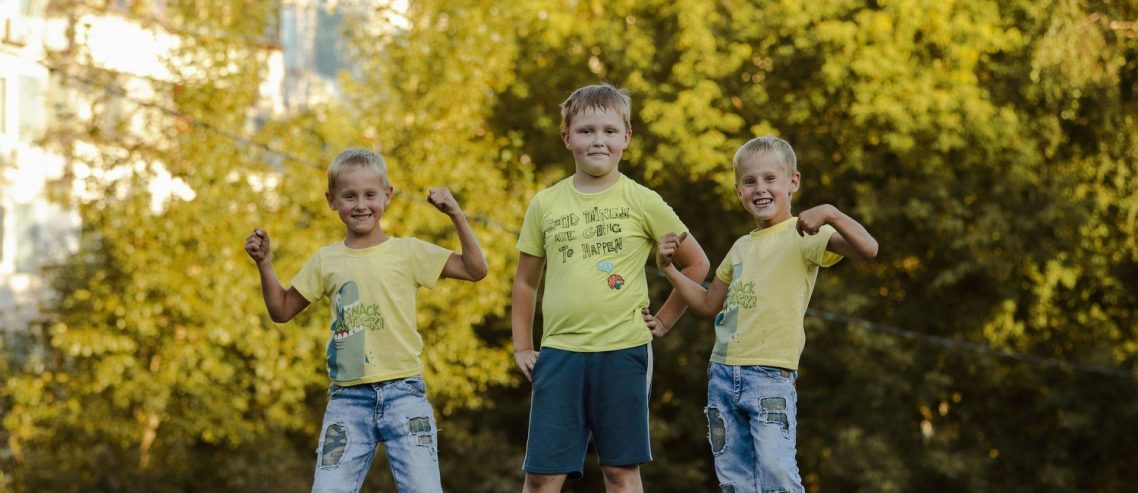
Three Healthy Habits for our Children Webinar
As parents, it seems there is so much we desire to teach our children in the short time we have with them. How do we know where to start? This webinar looks at three important habits which, if encouraged in our children, can have long-reaching impacts.
Comments
Leave a Comment