


God Image Podcast Episodes
Part 1 of 2:
The Impact of Seeing God without Distortions
Revealing God, the Father to human beings was one of the purposes of Christ’s ministry. He wanted his hearers to know God and to view him accurately. In this episode, Ted Witzig Jr. explains how our God image is formed and the impact that it has on us. While we will never understand God perfectly in this life, we can work to be sure we are not viewing him through distorted lenses.
It is important to note:
- Everyone has a God concept and a God image.
- How we picture God and believe he feels toward us are very impactful in how we relate to him.
- Those things we know about God (i.e., ‘head-knowledge’) make up our God concept.
- Our God concept is formed by information that we learn about him from the Bible and what others teach us.
- Those things we feel about God, including how we picture him, feelings we feel toward him, and how we imagine he feels towards us is called our God image.
- Our God image is formed through life experiences including our relationship with major attachment figures (primarily one’s father and mother).
- Positive influences such as love, security, mercy, and relationships with benevolent authority figures lead toward the development of a healthy God image.
- Trauma, mental illness, loss, and wounded trust are all experiences that can have a negative impact on our God image.
Transcript:
The God image is how somebody pictures God, how they feel towards him and how he feels towards them. Greetings and welcome everyone to Breaking Bread, the podcast brought to you by Apostolic Christian Counseling and Family Services. I have Ted Witzig Jr. here with me today. Hello, Ted. Hello, Matt. Good to be with you.
It’s great to have you here. Ted, there is a mission that Christ was on, I believe, that really comes out in the Gospels. He is continually pointing people to the Father. Yes, and in fact, you kind of get a sense that what he’s up to he is trying to reveal him. He often says if you knew me, you would know the Father.
Yes, and he very often was correcting could you say, inaccurate concepts of God. Yeah, so this was a big mission Christ was on, and it continues still today. And our conversation today really has a lot to do with that. And I know you’ve called it God concept or God image and those types of things. So, spell this space out, lay the groundwork for what we want to talk about.
All right, Matt, it’s an exciting topic because really having a clear picture of God is an important part of our walk with him. And in fact, there are people today who have walked away from God who actually have walked away from a picture of God that is errant.
Who they believe God is, is not who he is. The Scripture tells us who God is. Scripture helps us to know him. And Jesus, in fact, came to illuminate him. But I want to capture something very, very narrow that you mentioned in all of this. And that is, it matters. Absolutely, it matters. And can we even be as bold to say that it matters for every person in the world?
No question. At some level everyone grapples with who God is and that directly affects their trajectory, their course of life, their views on lots of things. We cannot escape the connection we have with the Creator. No. What I’d like to do is to define two terms. One is the God concept. And when we talk about our God concept, we’re talking about our knowledge about God. That’s kind of the facts about God. You know, God was the Creator. He gave us the Bible. He can do miracles. He is, and just these things that we kind of know what the answers are. Yes. Or supposed to. Well, and if somebody has a distortion in their God concept, you go to the Bible and then you can correct that.
Okay. So, it’s more or less a knowledge part about God. Well, here’s what happens. Have you ever heard somebody say this, Matt? Somebody says, well, you know, God loves you. They say, well, I know it in my head, but I don’t feel it in my heart. So, there is an existential part. That’s right. Do you have a name for that?
Yes. And that part is called the God image. Okay. And the God image is really more an experiential part, and it’s how somebody pictures God, how they feel towards him, and how he feels towards them. Now, this one is very interesting because life experience can really shape this and oftentimes shapes it in ways that are not in line with what the Bible says about that.
Truth or reality. That’s right. And so, we have this knowledge part and this experiential part. Let’s take, for example, that if somebody grew up in a home where they felt unloved by their father. And their father was unloving towards them and eventually abandoned them. Okay.
For them, experientially, father meant distance, father meant abandonment, hurt. It meant when the going gets tough, that person leaves. That person can very easily, then, superimpose those qualities. onto God. And really that’s not a reflection about God. That’s a reflection about our experience and what we’ve learned about human beings, but then we reflect it on God.
So, you’ve really given us one, perhaps of other ways that this image is shaped. Yes. Is that right? That’s correct. So, there are more ways that’s shaped and knowing the shaping and where that shaping comes from is really, really important. It is. And as I alluded to there, one of the most powerful ways is through major attachment figures like father and mother.
Oftentimes we think of father because we’re talking about God as a father, but one’s relationship with their mother also plays in there. Sure. Think about all the things you learn about life in the home growing up, safety, nurturance, security, love. How do I understand what love feels like?
That’s right. And so, all of those places are going to formulate what it means when God says, I am love. Absolutely. And so, there we have a concept. God is love. It’s pretty easy. We see it in the Scripture. Okay. God is love, but what does that love look like? Yeah. Another story. Exactly. And that’s the image part.
Yeah. And so, we want to say a couple of things. First of all, the God image generally is not just shaped by one image or one experience except in the where people have experienced great traumatic experiences. Sometimes if somebody has experienced a loss or an abuse that can really shift the God image really hard.
But remember Matt, I say it shifts the God image, but it shifts the God image because of the human experience that we end up superimposing on God. Right. And God himself has not shifted, which is, I think, exciting news, right? And that’s the beautiful part that God is real. He is really loving. He is really holy. He is really a perfect parental figure. And human beings, as flawed as we are, even as parents, we also often do many things right and good. Okay? I don’t want to give anybody the idea that you have to be a perfect parent in order to give your children a view of God as a godly parent. But in fact, even sometimes in our flaws, it is in how we respond to our kids out of that.
And it is how we point them to the perfect parent. And even how we show that we desire to grow more like God. That we, even in our imperfections, it shows Christ large. So, we have attachment. That’s huge. Yes. That’s going to shape my image of God. We have traumatic. So, if we’ve gone through trauma, at whatever level, we can be sure that’s going to have a part to play.
Yes. There might need to be some work done there in order to help steward that God image. Yes. Are there others? Yeah. Another one is interference from mental illness. If somebody has a mental illness, let’s just take depression here for example. When they experience depression, one of the things that Christian people oftentimes feel is that God is far away during times of depression.
Now, God hasn’t moved, but the feeling of where God is and whether God is forgiving or loving or all those things, it makes you feel like God is distant and God is, you know, dredging up all the sins of the past. And that, as we know from our God concept, isn’t what God does. God doesn’t move around, and number two, he doesn’t hold forgiven sin out over our heads, right?
He just doesn’t do that. But through the lenses of depression, it can definitely feel like God is abandoning, God is judging, all those things. So, when one looks at the Scripture and reads it, what do they see? All the verses that could be interpreted in a judging way. Even when a person reads a Scripture, like how much joy there is in the Lord, when a person’s feeling depressed, they don’t feel the joy.
Then they go, oh, you know what? I’m bad. And then God is angry with me. And that’s for somebody else. So, there would seem to be even a separation between God is this way to other people, but not to me. I’m surmising here. Well, yes. And so, one of the things that happens is that promises of God end up being kind of like, yes, God, loves everybody else, not me.
God forgives everybody else, not me. God answers prayer for everyone else, but not me. Those kinds of things. I think we have to acknowledge that Satan has a lot at stake with God image. Oh, absolutely. The last thing he wants is for us to have a biblical view of God. God is not our genie. He does not conform to our whims.
Therefore, we will always have a mystery about him because why did this happen versus why didn’t that happen? But here’s the thing. And I love this Scripture. It’s in 1 Corinthians 13:12. It says, for now we see through a glass darkly, but then face to face. Now I know in part, even then shall I know, even as also I am known.
See, we don’t see clearly now, but God doesn’t want us to see him through distortion. I think that’s critical here. Is it safe to say we will never on this side of the grave come to a perfect image and concept of God? Sure, because there are going to be some things just veiled to us that as human beings we can’t conceive, or we can’t see how it would look from an eternal perspective what we see in a temporary perspective.
So, we’re not necessarily trying to uncover the mysteries that are held hidden by him, but distortions are something that we do want to handle, and God wants us to take those on. And I believe that’s very important to God, and I also think it’s very important to Satan. The last thing that Satan wants is for us to be able to view God as trustworthy when we hit those hard times.
If you think about what gives us comfort when life is hard, as Christian people, we turn to God in prayer and to the body of Christ. During those times when we suffer, Satan is always just right there going you know what, God has abandoned you and he’s really pushing on those things. Satan wants them to go in a way that drives a wedge in between us and God, where for us, what God wants is for us to come through those times, even times of questioning and struggle, but to know that we’ve been held by him through that.
And even if we don’t understand on this side of the grave. But there’s no question there’s a battle over this. Well, and I think we can safely say if Satan hates God more than he hates us. Oh, yeah, and if he can promote a poor God image in us, it’s really an offense to God that Satan is wielding here. Which then I guess you look at the other side of the coin.
This is a really important place of worship too. Yes. Maintaining a high view and an accurate God image is at the core of what it means to worship God, isn’t it? It is. And this is where another factor that comes into the shaping of God image and that is our church families. Okay. The fact is that we are not designed to go through life alone.
We’re designed to be in a family and in his family, but you know what? We need to remind each other and whether it’s from pulpits or in Sunday schools or over the lunch hour we need to be reminding each other of both the love of God and the holiness of God and how that perfectly comes together in him and what ends up happening is God image gets distorted when one or the other of those is taken to the extreme without the other one present.
And so, if God is taught or received as condemning, or God is taught as a cosmic buddy, the two extremes, license, or condemnation. Neither one is going to bring out good endings. Neither one is going to bring what we want. And in fact, that’s why it is so important that when we teach people, for example, when we teach people about sin, for example, we want to teach about the seriousness of sin.
But we always want to teach, too, the remedy of sin and the open arms of Jesus to the sinner to be welcomed in. I want to also provide another angle to that church family source of shaping here that I think has a real advantage. And one in you’ve just really well laid out the mental or the thought, the truth, the concept, as you earlier stated it. But there’s also an experiential value that a church family brings, that you borrow the faith of others when you see them going through difficult things like yourself. Yet with faith, I guess I’m speaking out of my own experience, there is an existential value in a church family in creating church and God image.
No question. We rely on each other that way. But think about what is learned in the congregation when somebody who has been far from God, or who is far from God, who is received and loved on by the church family. The sinners of Jesus’ day were drawn to him. He never condoned their sin. Not once, not ever.
But somehow, those who were clearly identifiable as sinners and as outcasts in society were drawn to him. So really, you’re saying, going back to that attachment source, right? Those that we are attached to, play into our God image on whether they were or were not loving or were or were not forgiving.
We can overcome some of that brokenness by a church family that rewrites those scripts according to the gospel, according to Christ’s likeness. Yeah. Imagine this too, Matt, people who had difficult relationships with their family members or didn’t grow up in a family where there was love, those kind of things.
And then the church family gets to help be that to them. There are people who are fathers and mothers and aunts and uncles in the church to us. And it’s beautiful. Well, and just maybe to accent the point, the beauty of the gospel is we get a family with a Father. That’s right. Now, throughout all of this, we have to recognize that whether we’re talking about our biological families, whether we’re talking about a church family, there’s a mixture of experiences that we have, a mixture of personalities that are both good and bad and all those different things. So just understand here, as we’re talking about this, in this totality, of experience that our God image is being shaped and formed.
And I think it’s just helpful for us to know that impact and as imperfect as we are, even in that church family, that we would have the vision for more Christ likeness for the benefit of everybody that walks through the doors. Yes. That there is a lot at stake for us to live and love as Christ loved.
Is there another source for that. It affects our God image. One of the things that is difficult for all people, I would say, is when painful life experiences occur, particularly ones that don’t make sense to us at all. When a child dies, when something you really counted on to occur falls through, in our own mind, we can’t conceive of how it could turn out that way.
If God was good. Yes. We will all find ourselves in these places. Because that’s life and I don’t say that flippantly. I say that is one of the hardest things about life I think in those places again, our adversary Satan is trying to drive a wedge and what he would wish to do is to really cause us to not just go through periods of doubt or discouragement, but really kind of leave a question at the bottom of our spirituality tank that says, I’m not sure God can be trusted.
And that’s a tough one for us. And I’m not going to tell you that it’s easy for me, but I will tell you this, that those events are oftentimes the flash points at which when other milder things in life occur, our minds will go back to, well, you know, is he trustworthy? I completely resonate with that example, okay, from my own personal life.
And now I’m going to ask a provocative question, because sometimes I wonder, I would probably say our, our God image is probably impacted by culture. Do you think this issue of God’s goodness as it relates to our disappointment, is it more amped up today than what it’s been in the past? Yes. Because I feel like I feel my own self spinning with my couple of things.
And then when I take a hard look at my couple of things and reflect back on my grandmother, her generation, 1800s, 1700s, 1600s, you know what I mean? All of a sudden, I realized, okay. For a long time, the Christians have had hard things. Yes. And so, I’m just curious. I would say in the last 100 years, it’s been the first time essentially in world history that people could actually focus on their wellbeing instead of focusing on just sustaining. And so that certainly has a perspective. What comes to mind when you say that, Ted, has our affluence given us a God image? Yeah. That has impacted us just as much as disappointment has. Yes. Oh, I got a windfall. This must be what God’s like. Yes.
And that’s not the case. And you know what? We have to be careful about praising God when things turn out well and feeling defeated when things don’t turn out well. Okay. It’s the most natural thing in the world to do. But remember this, if you lose a hundred dollars today, God somehow wants to bless you with that.
And Satan wants to hurt you with that. And if you picked up a hundred dollars today, God wants to bless you with that, and Satan wants to hurt you with that. It does not matter. Well, certainly Ted, Scriptures have got to be a way to sort out. I mean, we’ve talked about the God concept, but there’s even God image there in the Bible for us to pick up.
Sure, and I think one of the things that happens, and you see this both in the Old Testament, like in Job, but also in the New Testament when the disciples were trying to figure out who sinned, this child or his parents. Yeah. So, one of the things that’s interesting, is that there was something called a belief in a just world. And what a belief in a just world means is there has to be reason good things happen to good people and bad things happen to bad people. Yeah, and that mindset is in the back of their minds. But what we learn in both the Old and New Testament is that that there was much more going on there that the people didn’t know about. And so, what ends up happening is Job’s friends end up really accidentally, walking into becoming his tormentors because they’re essentially saying, hey, Job, bad things like this don’t happen to good people. Yeah. And so, you must have done something wrong.
And imagine how cruel that would be to say to somebody like in the book of John there, you know, well, it was either this guy or his parents that sin made this happen. And Jesus had such a response to say neither, but that the glory of God or that the power of God would be seen in them. And so, in our finiteness in terms of understanding, we end up trying to make things make sense to us that actually we end up wounding people or our own selves because our finiteness does not allow for a different kind of an outcome.
Sure. And I think that’s a great example too of where we can come to the wrong conclusion based on what we see. And they came to the wrong conclusion about God. The disciples did in that moment. Who sinned? This man or his parents? Yeah. They conclude that God must be out to get this person for some reason.
And Jesus wonderfully reshapes our concept and, I believe, image in that moment. By coming along side that individual and showing the power of God through him and loving him almost as a God who’s with us in our brokenness. Yes. He is not the reason for our brokenness. He’s with us in our brokenness. Yeah.
I think another God image lesson you learn in the Scripture is with Jesus and the lepers. I want you to think about what it would feel like to be a leper in that time. You know, people literally stayed away from them. They had to say unclean, you know, all these different things. They were really outcast.
People today feel like social and emotional lepers for whatever combination reason, something happened in their family, something in their past, whatever, and they feel on the outside, even sometimes when they’re around people, I think what’s so powerful. Is that Jesus moved toward them. That is so mind blowing to think about what it would be like for a leper to have Jesus not only not shrink back from their circle, but enter the forbidden circle, so to speak, to touch them.
I think those are such powerful moments too, Ted, because when Jesus touched that leper, I think by law he would have been unclean, right? He would have been unclean. And so there we have just the microcosm of the gospel. Yes. Of Christ taking our uncleanness. Yes. And cleansing the other. That’s what he wants to do.
That’s exactly right. The things he touches are cleaned and cleansed. It’s probably a good transition to talk about healing the God image. Yes. And we want to go there because I think that’s, that’s where we’re at. So, we understand now that we’ve got lots of inputs that are going to help us come up with a God concept, a God image.
Now, that God image is going to have a huge effect in our life. Yes. And this is where I’m going to break in on my conversation with Ted. When we come back, we’re going to be looking at that effect and what to do about it. Thanks, each one for being with us.
Part 2 of 2:
How to Have a More Accurate View of God
God wants us to know him. He wants our thoughts towards him and our feelings about him to be guided by truth. In this episode of Breaking Bread, Ted Witzig Jr. helps us evaluate our God image and provides tips on how to have an increasingly more accurate view of God.
It is important to note:
- There are common inaccurate God images. Below are a few examples:
- “The God of Impossible Expectations” – God holds us to impossible standards and punishes us when we don’t meet them. He is never satisfied.
- “The Emotionally-Distant God” – God withdraws from us when we go through struggles and difficulties.
- “The Gotcha God” – God is out to get us. He doesn’t like to see us happy. He is always looking for a way to ‘pull the rug out’ from under us.
- “The Hiding God” – God has a will for me, but he won’t tell me what it is and will punish me if I don’t find it.
- There are good ways to recapture an accurate God image. Below are a few suggestions:
- Don’t superimpose your experience onto the Scriptures. Instead let the Scriptures inform your experiences.
- Surround yourself with people that model grace and truth and point out God image distortions.
- Be patient. It takes time to bring healthy correction to our long-held God image.
- Memorize Bible verses. Truth is required.
- Meditate on Bible truth. Personalize the Scriptures by moving the knowledge you’re your head to your heart.
- Take time to be still. Sit quietly and deliberately imagine God’s nurturing care, love, and reception of you.
Transcript:
We also need to work on asking God to help us to see the Scripture for what it is, and then superimpose that onto our lives, instead of taking the experiences that we’ve had and superimposing those onto the Scripture. Welcome everyone to Breaking Bread, the podcast brought to you by Apostolic Christian Counseling and Family Services.
Today I’m glad to air the second part of my conversation with Ted Witzig, Jr. on God image. So, Ted, we’ve talked about these different sources, these different places whereby we construct a God image. Yes. Okay. And you’ve given a few broad-brush examples of an austere God and then a cosmic buddy, I think is how you said it, but fill in the spaces in between. What are some of the images, perhaps inaccurate images that we might draw that would have devastating or not helpful ends in our life?
So, one is a God who has impossible expectations. A God who is never pleased. You’ll find that oftentimes that these God image distortions have a grain of truth. Like we’re supposed to keep growing, right? But here’s what happens when my need to keep growing or the desire to keep growing turns into a pass fail. You’re good enough. You’re not good enough. You’re in, you’re out. It becomes so self-defeating because when are you ever going to pray enough, Matt? When are you ever going to love enough? When are you ever, and it becomes exhausting?
Another one is having a picture of God as being emotionally distant. And this is one of those that comes out that God likes you when you have happy joyful emotions but when you struggle, when you’re depressed, when you go through hard times God is distant. Again, God image is oftentimes shaped by experiences where people have felt that withdrawal from human beings. But it’s so interesting Matt, because the Scripture talks so much about how God is close to the broken hearted.
The Psalms are filled with an emotional outpouring, whether in lament or in joy and worship and praise. But I think one of the things is somehow we pick up these things and sometimes they’re never really said out loud, but we pick them up. That if I struggle then he’s distant. He’s distant. I’m not a good Christian.
Another one is the gotcha God Oh, you know, there you were just feeling blessed, well, I’m going to take it away from you. We have to be careful that we don’t look at God as enjoying seeing us or anybody suffer. God is not petty. Yeah, he’s not like oh, well, you know, did you pray for three minutes?
Well, if you would have prayed for four, I would protect you today but since you only prayed for three you get a flat tire today. That’s just not God, but we can pick that up through life. Yeah, it’s a very common one that I hear. Another one is a God who is hiding, a God who is trying not to be found, is making it hard for us.
God has a will for me, but he’s not going to tell me what it is, but he’s going to punish me if I don’t find it. And I want you to think about how many times God the Father uses the parent and child analogy. And again, we’re imperfect fathers, both you and I, but is that how you would parent?
And all of these so far that you’ve said, fall under the weight of the father child relationship, you know, they don’t make sense. I think we would all come to the agreement whether you had a good father or poor father, we would all come to the conclusion, that’s not a good father. That it’s right for me to say to my daughters, I’m going to punish you greatly, but I’m not going to tell you for what and you’ve got to figure it out on your own. Good luck. You’ve got three minutes. That’s pernicious. That’s not holiness. Yeah, our healthy concept of God has to be able to hold the fact that he is above us and he is mysterious to us at a certain level.
Yeah. Okay. That we don’t understand how some things come together. And oftentimes for us that comes down to things that are painful, but sometimes it just comes down to things that don’t make sense to us in terms of how, you know, God’s sovereignty and free will. We don’t understand these things altogether.
And if our God image can contain that by saying, he is wonderful. He is trustworthy in that wonder. Yeah. Okay. That allows us to be able to see that. And what I like about what you’re really encouraging us in is that we don’t shrink away from these attributes of God, holiness, for example. But you’ve been encouraging us to lean into them, to search them, to understand them even deeper, to say, ah, the holiness of God must be much grander than what I’ve formally thought it to be.
Yep. Do you know, Matt, I think a lot of people that I talk to about a distorted God image, when they think of God’s holiness, they think about it in one dimension and they think about his holiness as judging sin, okay, and God’s holiness certainly judges sin. That’s true. One of the things that they forget is that the holiness of God is also one of the safest things about him.
What I mean by that is God’s holiness does not allow him to be petty. It does not allow him to just have a bad day and go, I don’t have enough time for you. He is so settled. The word is immutable. It’s so unchanging. And that is so safe for us because as human beings, you know what? Oh, did I catch on a good day or a bad day? A bad day of sleep, a good day of sleep, you know, a day that you have time for me or not. Can we say this for a believer? Every attribute of God should bring us a measure of comfort. Yes, that’s a bold statement, but I’m speaking as a believer.
Yes. Comfort. Another word that should also bring is just awe for the believer because of what Christ did. Okay, and because of his imputed righteousness being placed on us through Christ, I mean the comfort that gives the awe that gives, and I think what ends up happening is it actually promotes a healthy God concept because we don’t have to shrink away from God.
We are actually awed by him and drawn to him. Sure. So, Ted, we’ve talked about the different sources, where our God image comes from. We’ve talked about the different God images that can come about, the distorted images and the effect that those have. Well, on everybody’s mind is, how do I get a good God image?
How do I reconstruct it? How do I identify even if I’m off? Yes. So, the most important place to start is with Scripture. And we also need to work on asking God to help us to see Scripture for what it is and then superimpose that onto our lives instead of taking the experiences that we’ve had and superimposing those onto Scripture.
I just want to accent that because I think that’s key. We’ve been talking a lot about understanding and experience and how these interplay. Yes. And it sounds to me as I reflect over our conversation, Ted, it sounds to me that experience is pretty persuasive. It is a true statement. And unfortunately, Matt, for us as believers, it becomes very easy for us when our heads and our hearts disagree to follow what our heart or our emotions say. So, if our emotions say I can’t trust, that has many times a more persuasive voice. Yeah, so you’re saying we go to Scripture, we don’t superimpose our experience on Scripture, but we allow Scripture to inform our experiences.
That’s the goal. And the reason that we need to say it that way is it’s okay to say, life is broken. Our Christian worldview says we’ve had experiences that have shaped and shifted our God image. That’s okay to say that’s true. That’s the impact of life. The neat part is Christ is making all things new and part of that renewing of our mind that is going on is being able to see God for who he is instead of seeing him through our experiences.
And again, we’re going to be in a contest always. But a second thing other than the Scripture, the most important next step is to have people in our lives who are walking alongside us that we are talking to and in relationship with who are going to model grace and truth. The fact is sometimes we don’t even see our God image distortions, but other people can point those out to us, and we can talk through those.
I will oftentimes have people just do a little exercise for me. And here’s the exercise I’ll say to them. I would like you to draw me a picture of God, not out of your head, not out of your head knowledge, but out of your gut, out of your emotions. And then I use this example. This was the example that I was taught on.
And the person said this, I feel like I’m in a 100-story building. And God is on the top floor. I’m in the building and I’m even in the elevator, but the elevator doesn’t work. That was a person’s God image picture. It was based on some life experiences that they had. And so, it’s sometimes helpful to just kind of sit back and say, so how do I think about God?
So, what you’re really suggesting here is part of the work that needs to be done and getting a good, healthy God image is knowing where you’re starting from. That is exactly right. Really taking an inward look to say, what is my God image? And I think some of the value of this podcast is we’ve probably placed some vocabulary, some bins, to think about categories, because I think otherwise that’s kind of a difficult thing to do that type of exercise.
Yes. But it’s interesting, Matt, that as we do this, different things emerge. And again, I don’t buy any stretch of the imagination mean that everybody has some distorted, just ugly, awful picture. Okay. But I think one of the things that I want to know in my counseling work, but also as I work with people as a minister and as an elder is I want to know when I’m working with somebody, who it is they picture when they pray.
Yeah. Okay. Because it’s natural for us to assume that when we sit down with somebody, the who I’m praying to, the God who loves me and whom I love and that is working in me and that I believe is working as a person. I superimpose my picture onto their picture And so I assume that they have a picture of God as loving and who wants to see them grow and is challenging in that way.
But the fact is, if they have a picture of God as not being able to tolerate them as looking for a reason to kick them out, that’s going to really impact how they view God. For sure. Ted, I would imagine this type of work requires patience. Yes, I’m guessing that we don’t change these types of things very easily.
No. I wish. I will tell you this, that God concept work, the knowledge base work, can change much more rapidly because it’s about learning and oh, what’s this? Oh, I see. Yeah, where God image work oftentimes takes more repetition. It is slower and it’s not that distortions come up every minute of every hour of the day.
They tend to come up though, when something tends to push somebody’s buttons. They’re charged, or where the rubber hits the road. We might say it’s in those moments, sometimes, that we slide right into them, and we do so without awareness. Other ways, any other tips?
Matt, another area that I really encourage people is in Bible memory, prayer and meditation. And these things are all different, but they can move one into the other. Sure. And I encourage people to memorize Scripture because we have to really pour on the truth. Okay. And we have to learn to take the truth and bring it into authority over our lives.
Okay. If you’re going to wait to feel like God loves you or that God has forgiven you, sometimes your feelings are going to outlast you. Okay We have to start moving in the direction of the truth. We have to say this is the truth based on Scripture and I am going to move into that and I’m going to live like that is true. It is hard to do sometimes, that’s why having mentors and friends and ministers and whoever around us to walk in that is so helpful.
I think when you talk about memorization and then meditation, what you’re really doing is you’re occupying that brain space that thought space with that truth, infusing it with truth through repetition and through recollection. And that much truth in your thought space is going to have a positive effect. That’s correct.
That’s the way things go. Yes. So another piece to that is thinking through. Remember I said I encourage people to draw out the God image distortion, but I also encourage people to identify some type of an image that can represent a healthy God image to them. One that I’m really drawn to is Jesus as a shepherd. And I oftentimes do it in my counseling room. I do it in my elder office at home. I give people a little picture of Jesus holding a lamb. Okay, and in this picture, Jesus is holding on to this lamb and I will ask people and I’ll say to them. So, what do you see there? And they’ll say well, it’s a man holding a lamb. I say look a little closer and they can see that there’s a nail piercing on the back of Jesus’s hand in this picture. Oh, it’s Jesus.
Yeah, it’s Jesus. I say, so do you think that lamb is a good lamb or a bad lamb? And it is marvelous to watch people’s responses. Well, it has to be a good lamb. Well, maybe it’s a bad lamb. And, actually that says more about the person than it does anything because it really doesn’t matter. Yeah. If it’s a good lamb or a bad lamb.
What it matters is that the lamb is near Jesus. Right. And the lamb is leaning into Jesus. And I think one of the things that happens is really to understand that whether that lamb represents that person, represents you, Matt, represents me, represents each listener, that as we lean into Jesus, whether that is our worst day, of life where we have really come to an awareness of our sin of something. We’ve really messed up and we just come to him, and we lean into Jesus.
But what I really like about that exercise though, Ted, is you’re taking just the truth of Scripture, I am the good shepherd. Yeah, I seek the one out of the 99 when I find it.
It’s biblical, right? But it being a picture connects with our feeling, doesn’t it? It does. Which is a very persuasive part of ourselves. That’s what we’ve been saying. And so there seems to be a part of this journey in constructing good God images and moving away from poor God images is connecting with that experience.
It is. And therefore, when we have this image and I use this particular one, but it’s not magical. It’s not the only way that somebody can do it. But one of the things I want to do is particularly with the Scripture and with their prayer time and their meditation is to be able to sit there with the Lord.
Okay, and to learn for example, sometimes they’ve not learned to be able to sit and be nurtured by the Lord, to be loved by him. Okay, or how about this? Many people don’t know what it is to be corrected and that correction doesn’t mean rejection. Lovingly corrected. Okay. Yeah. This is a huge thing.
God’s conviction is a conviction that says, come closer to me. Yes. Okay. So many times people have only learned how to deal with correction through shame. You aren’t good enough. You’re outside. Again, God in his holiness will call out sin for what it is, but in his love, he says, come closer to me as it says, as a father to a son in whom he delights.
That’s excellent. Isn’t that amazing? It is. It’s so beautiful. I would say another thing that I would bring in there, is many times people end up dealing with their God image when they’re dealing with either painful mental health or emotional challenges or relational struggles. And so, in counseling, we deal with these quite often.
And so, when somebody deals with depression or OCD and scrupulosity, for example, a religious OCD, or somebody going through trauma or abuse or loss. These kinds of things will emerge and then we will work with them through the counseling process. And it is one of the things that I would say that many people that come into counseling, Christian counseling, that’s solidly biblical, it will have an impact not only on healing somebody’s hurts, their pain will go down, but it will allow for richness and healing.
I won’t say that going through the pain just for pain’s sake is anything good. I will say that because God is gracious and that he is good through hard things, he can bring something deeper and better into your life and more wonderful than we could have imagined.
And we have just the history of Christian testimony to that exact point, Ted, even circling back to that important role that the church plays, and church community plays and helping us understand that particular thing. You know, I think that even encourages us. And we know we should share testimony of God’s faithfulness in our lives, in spite of difficulty, in spite of trial, right?
To see him redeeming these things. Yes. I think one last thing that I would add, Matt, and it was just as we were going through the Sharing of the Gospel, Bible study, and there’s a section that teaches to take some Scripture and to personalize it. Put your name in there. Okay. And I think this is a beautiful way to really not only make Scripture real to us and personalize, for Matt, you are God’s workmanship created in Christ.
Jesus said to good works that he created you, Matt, to walk in. Okay. To be able to say that, to speak that gospel truth helps us to take something that we could just keep at a head level and move it down into our hearts. I like that. I like that very practical exercise of doing just what we’re talking about here, bringing together this mind and heart.
Yes. And that is exactly what it looks like. I think at a very practical level of personalizing it, reading it to ourselves and allowing that to be for us. For me, yes, it’s part of this God image work. That’s right. Ted, we started just reflecting on who Jesus was constantly going back. Yes, saying, this is the way God is.
Yes, if you know me you know the father. He had such a desire, didn’t he? That people saw the Father rightly. And I would just love our listeners to catch the Passion of Christ for that very thing. Yes. And Matt, I would just leave you and the listeners with this passage from Hebrews 1. It’s about in verse 3 here it says about Jesus who being the brightness of his glory. He’s talking about Jesus being the brightness of his glory and the express image of his person and upholding all things by the word of his power It’s really so beautiful to me that God the Father looks at the Son and says, everybody look at my Son. This is my Son and the Spirit’s going, this is Jesus, and Jesus is going this is my Father and this is his Spirit.
And you know what? That creates something so powerful for us because Jesus was meant to be somebody that we could identify with in a sense. And through him we get to know God. Yeah. So, thank you very much. Thank you for the opportunity, Matt. Thanks to our listeners for being along. And may the Lord bless you as he continually opens your eyes, as he does all of us to see him in more clearer tones than we’ve ever seen him before.
Thanks for being here.

Listen on Spotify – Listen on Apple Podcast
Further Information
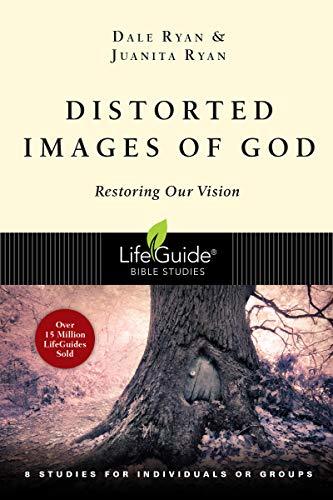 Distorted Images of God: Restoring Our Vision
This eight-session LifeGuide® Bible Study brings to light our distorted thinking about God and points us to the truth of who the God of the Bible is.
Additional Articles

A Christian Perspective on Tragedy and Suffering
A Christian perspective on tragedy and suffering is the story of a good God creating a good world that has been corrupted by rebellion. Humans were created to represent God and live out his goodness but instead rebelled, bringing corruption. Humans now live with the results of this corruption and in the hope of God’s promise to restore

Elroi: The God Who Sees Me Podcast Episode
She was useful until she was not. She was a victim of abuse and mistreatment. She was an abandoned outsider of God’s covenant people. In this episode of Breaking Bread, Kaleb Beyer and Matt Kaufmann linger on Hagar’s story. At her most desperate moment, God loves her really well. So

Spiritual Disciplines Podcast Series
The practiced pianist, athlete, and mathematician have in common that they make hard things look easy by way of practice. The same is true for the practicing Christian. In this episode of Breaking Bread, Isaac Funk and Fred Witzig help us understand what spiritual disciplines are and how they
Comments
1 Comment
Thank you so much! Your articles and podcast like these have been a blessing beyond words can describe. I have set free from lots of errors in my thinking. Its a journey and your insights have helped a lot.
Leave a Comment