


Emotional Affairs Podcast Episode
We are built for relationship. There is a yearning, need and desire within us for emotional connection with others. In the marriage relationship this can be both an asset and a liability. In this episode of Breaking Bread, marriage and family therapist Kaleb Beyer helps us understand the signs, offense and repair of emotional affairs – when emotional intimacy outside the marriage compromises the covenant of marriage.
Show notes:
Three stages of emotional affairs:
1st Emotional intimacy with another person outside of marriage.
- Deep connection at the heart and emotional level.
2nd Secrecy
- Walls are built between spouses and access to the illicit relationship is sought and protected.
3rd Sexual tension
- Physical relations may or may not be happening. However, there is growing openness to them.
Recovery from emotional affairs.
1st End the illicit relationship.
- The betraying spouse needs to cut off the illicit relationship at any cost.
2nd Boundaries are set.
- The betraying spouse takes full responsibility for the affair. Boundaries are set that will help the betrayed spouse feel safe and stable.
3rd The betrayer grieves their relationship loss.
- The betrayer closes the door on the illicit relationship emotionally. This is done through grieving the loss. This grieving process is best walked through with a friend or counselor and not his/her spouse.
4th Cultivate friendship and emotional intimacy with spouse.
- Over time, with relational repair, trust and emotional intimacy with spouse increases.
5th As a couple, reflect on the context of their marriage.
- The couple learns from the painful experience. What individual and couple dynamics provided the context for an emotional affair? Moving forward, how do we wisely live together to prevent it from happening in the future?
Transcript:
For all of us, there is a deep longing to be known, understood, loved and cared for. We move towards it. We seek it out, and we’re pointed in that direction even if it means gaining it in unhealthy and ungodly ways sometimes. Yeah. Welcome everyone to Breaking Bread, the podcast brought to you by Apostolic Christian Counseling and Family Services.
I’m Matt Kaufmann. Glad to have you along. Kaleb Beyer is with me today. It’s good to be with you Matt. Welcome Kaleb. Kaleb is our marriage and family specialist. You know, Kaleb, whenever you have a specialist of any type, there are a couple of categories that a specialist understands. One is good, healthy function of whatever it is they are specialist of. Whether it be the car engine or the human body or relationship which is your work, but you also have an eye towards and a pretty good understanding of dysfunction. Does that make sense? Yeah. Both function and dysfunction. Yeah. And today we’re going to talk about dysfunction.
But whenever we talk about dysfunction, there’s always a counter really healthy function that we’re speaking about too, right? Yes. And oftentimes when we speak about dysfunction, it can be at times the things that get in the way of a healthy functioning system or put a different way when we don’t have a healthy functioning system it gives rise to potential dysfunction. Yeah. Or infection if we think about our bodies in that sense. Right. And so, they do go together. For sure. And we’re going to talk specifically about the dysfunction of emotional connections outside of marriage. It can go by emotional betrayal. It could be called an emotional affair.
It’s often called dysfunction. That’s a common enough household term. But Kaleb, we welcome your insight into these matters as a person who would see more colors and more shades to the dysfunction than perhaps, we do. And I think that could be very helpful. Yeah, looking forward to the conversation.
It is a challenging conversation, Matt, but I think it is important and challenging on a number of fronts. Challenging in the sense of just the reality of walking through a betrayal, but I think also challenging, particularly when it comes to emotional affairs, in the fact that it does at times lack the clarity that we would like to have.
Certainly, I think it’ll be good to talk through certain signposts or things along the path, but there are certain nuances in situations that can be difficult to really identify. Well, I appreciate that. I think that is part of the delicate nature of this particular topic. Take physical affairs for example, and there are some very pointed questions that can be answered yes or no to make that very clear. And I think there’s a clearer boundary as slippery as that one is because there’s intimacy along the physical spectrum. Yeah. For sure. And so, there’s a spectrum here of intimacy along the emotional spectrum, but when lines are crossed, it might not be as obvious.
Correct. Which makes it a bit insidious. Yeah. And so yes, let’s start with a definition. Let’s work this idea out of what emotional betrayal is. What does that look like? And we’re specifically talking about marital relationships. Yeah. I appreciate that grounding, even in our conversation today. So, Jesus, when he was here, he communicated that what God has joined together, let no man put asunder or somehow disrupt. And so, there is a union that’s lifelong. It’s not temporary. It’s not.
And so, in some way, an emotional affair is a form of betrayal that takes something that is rightfully the spouse’s based on that covenant and then gives it to somebody else outside of the relationship. Right. In this case we’re talking about emotional, so our heart, our longings, our desires, sharing and disclosing intimate details and information and really giving our heart to someone else other than the one we’ve committed to.
Yeah. And I think maybe spelling that out and what that looks like is quite welcome. Because even as you address that, where do the flags start to fly in terms of sharing one’s heart with another person? Yes. Not altogether bad. In fact, as human beings, it is quite natural, normal, healthy at some level. Yes. And then all of a sudden not healthy at another. Yes. And in many ways, we would say, Matt, healthy relationships outside the marriage are good. It’s not healthy to have a marriage on an island by itself but to have a community walking around us, to hold us accountable, to encourage us.
And so, we would say we value relationships, and we need relationships outside of marriage. We could even back up now, and pardon the metaphor here, but I’m teaching a little bit of junior high science. Okay. I’m ready to learn. We’re talking about forces in Newton’s laws and that type of thing. But, simply put, a force sets objects in motion, or it slows objects from motion. There are human forces that set us in motion towards one another.
We can go all the way back to the beginning. We’ve been made relational beings. To further geek out, a force is a vector. It points us in a direction. It says not only to go someplace, but it also says, go in that direction. So, humans have forces, and we have to, at some level, understand the forces at play, don’t we?
And in marriage we have a very clear direction, but to recognize that humans we live with have the potential of forces in other directions. So I think what it makes me think of is just that whole idea of, and I think maybe we’ll talk more about this, but one of the things that comes out of that for all of us is that there is a deep longing to be known, understood, loved, and cared for.
And when that doesn’t happen in some way, we move towards it. We seek it out. Yeah. And we’re pointed in that direction. Even if it means gaining it in unhealthy and ungodly ways sometimes. Yeah. There is a propensity in us to move in that direction or to go along with that vector.
I don’t understand junior science like you do, but certainly that’s what comes to mind as you talk about that metaphor. Yeah. And to recognize that maybe you’ve given a bit of a tip too, when there is depreciation or when there’s a depletion of such emotional connection. Can we say that the human being is more ripe for or more positioned to seek it out in other places?
Certainly, that’s true. We have to be careful. So, I think when we talk about emotional affairs, there’s the context of a marital relationship, but there are also individual factors. And so, what we find when emotional affairs do happen when there is not a sense of caring and support emotionally, physically, within the marriage relationship certainly the risk of an emotional affair is greatly heightened.
We would also say, it’s the responsibility of each individual to maintain a godly life and to maintain proper boundaries regardless of the context of the relationship. Okay. But certainly, when that isn’t present in the marriage relationship, there’s great risk for something, even as you gave those two categories, one, the context of the marriage and also then the individual uniqueness. It does raise the observation that people have different emotional drives, am I right about this?
Some are very emotional. They connect deeply. Some are less emotional, they don’t connect, or I don’t know if it’s a need or a know-how, but there is variance in human experience as well. Right. There are factors that come into play. No doubt. Individual factors. So, let’s go into this. What does an emotional affair look like? You know, what would be some of those signposts you mentioned? Yeah, that would be helpful. What’s happening when emotional betrayal is going on? Yeah. So, there are a couple of indicators that we would say is turning into an emotional affair rather than just a friendship.
So, if you think about what amount of headspace or thought life this individual has with a friend outside the marriage relationship. So, are they daydreaming about them? Are they thinking about them often? Right. Are they rearranging their schedule to spend time with this individual? Are they beginning to withdraw from the marital relationship emotionally? And finding themselves starting to share and open up to their friend outside of the relationship more than their spouse. Okay. Are they withholding information from a spouse? I think this is a clear differentiation to what we talked about earlier when friendships outside the marriage can be healthy things.
And I think where it begins to cross the line is our loyalty comes first to our spouse. And so, what that means is that our spouse is okay with friendships and aware of what we share in those friendships outside the marriage relationship. I think there’s a clear line crossed when we begin to have secrecy that we aren’t first loyal to our spouse if they’re not okay with this. Right. They’re not okay with this friendship or they’re not okay sharing certain things that we honor that, because that’s a first commitment to my spouse before friendship outside the marriage.
But we live in an online world, so human connection is happening in ways today that didn’t happen even 20 years ago. And you know, the Lord only knows how that connection is gonna look in another 25 years. Yeah. Right. Speak to that online place. Yeah.
So, my oldest daughter who is now a freshman in college and she lives a couple hours away. And so I find technology really to be a helpful thing to stay connected with her. But it’s also true that technology blurs some boundaries that we would say are there when we’re in person. And so, I begin to share things in the moment and find myself going down a path with someone online, whether it’s just sending a picture, or I connect with someone online through Facebook or Instagram or whatever platform.
But then it can become a sense of a source of connection with low boundaries that I’m starting to share information that I wouldn’t think about doing in person. Yeah. So, what I hear in all of that is there is an acceleration that can happen because I completely agree there are ways to be vulnerable online through a text or a direct message that would take a long time to muster if I’m face-to-face. And then there’s this misperceived connection on one end. Yes. They perceive this type of connection. On the other end, not so much, but depending on how you read it, right?
Yes. And so, there are a lot of assumptions made or interpretations that aren’t necessarily there because you miss a large part of what we would say is part of communication. Yeah. Which is being able to sense tone or facial expression or all of these things that are just not part of the conversation.
That’s good. That’s very helpful. Research shows that 82% of the time when emotional affairs happen, the individual isn’t seeking it out. Which is really surprising to me. I would think when you think of emotional affairs or just infidelity in general that more would be actually actively seeking out.
Yeah. But in reality, that’s not what we find. Which is a little bit alarming, Kaleb, and kind of discouraging that it’s something we can fall into is the way you’ve said it, right? Yeah. It can start out as just sharing an interest together and beginning to spend more time together.
And so, it’s like we’re saying, even what we would consider healthy engagement can begin to walk down a slippery slope. Now again, this isn’t meant to say we can’t have friendships. We do need to have friendships. Shirley Glass has done a lot of research. She was an author who is no longer living, but she is known for her work in fidelity.
And she would say there are three areas that we would cross clear thresholds. The first is emotional intimacy which is what we’ve been talking about, is that sense of deep connection, sharing our deep fears, hopes, and longings with someone else other than our spouse.
And she uses this analogy, which I really appreciate, Matt. It’s called the walls and the windows. And when emotional affairs are ripe to happen, there comes a wall between you and your spouse. If you think about a wall, we’re not transmitting information or longings, desires, fears through that wall, and we’re beginning to open up a window to someone outside of the house and sharing some of those intimate details. And so, what you start to have is a wall within the marital relationship, and begin to disclose intimate hopes, dreams, and cares through the window.
So, I think the next threshold is secrecy. So, the first is emotional intimacy. The second is secrecy. And we already touched on this. I start withholding information rather than sharing it. Or we could say it can go in two different directions. We stopped talking at all about this friend outside the relationship. Or we’re always talking about this friend, they take up more and more space.
Yeah. Even in the marital relationship, which is an indicator something is happening within us. And if we find ourselves beginning to reflect and having to justify and even question, oh, if my spouse was there. If there was a videotape of us together. Would I be comfortable sharing that with my spouse? Yeah. Right. Is that something I’d give to them? Yes. Or is there a part of me that’s in that secrecy space? Yes. Okay.
I’m wondering what emotional affairs have to do with sexual appeal. Is there something sexual that an emotional affair will cross into? It may cross physical boundaries, but is that a thing? Does it not have to be a thing? Yeah, so, the third threshold would be sexual tension. Oh, the third one is, yeah. Okay. Yeah. So it doesn’t necessarily start there, but certainly if we think about the intensity of an emotional affair, it involves infatuation and idealization of the friend in this case, and a sense of passion that often includes fantasizing. And certainly, there’s the sexual piece that gets involved not physically, not acting out, but certainly the thought processes involved in that. Okay.
So, I’ve just had an aha, and you can correct this. Could it possibly be that emotional affairs are so difficult and dangerous because they follow the template of healthy human relationship that ends in covenantal marriage? Yes, absolutely, Matt, I would agree with you. I think there’s a deep bond that happens. And it is, we would say, following a progression of healthy bonding within an intimate marriage relationship.
For sure. And those are meant to be for those who are married, exclusive to the marriage relationship. Speak then, as a marital therapist, to the unique challenges of an emotional affair. Sometimes we can hear the phrase that it wasn’t physical. It was just emotional. As if to say it’s not as big of a deal.
I don’t even know how to make sense of that con entirely, but I’m sure you’ve heard that for sure. Speak a little bit about that. Yeah. Because like you’re saying, it’s oh, we were just friends, quote unquote. It minimizes, I think whenever we didn’t touch or engage in any type of sexual activity physically, which can be a minimization of the reality that you think about the potency of bonding emotionally deep with someone you know.
Proverbs 4:23, keep your heart with all diligence for from it flows the spring of life. You think about the life producing place within each of us, and that’s the vector force I’m talking about. That’s vector force. There you go. You brought it back in and you’re giving this deep bonding a label of force that, by the way, happens over time. You know, someone can have a one-night stand which is purely physical, sexual, and there is emotional bonding that happens, but not like a relationship that’s over months where there is a growing infatuation, and we would say brain space, time space, and emotional space. Exactly. Idealizing in the secrecy of it actually. And it continues to fuel that sense of unhealthy infatuation and passion. Yeah. So, for that to begin to unravel and untangle takes time. But also, if you think about it, for the one who has been betrayed, this is traumatic, and so it’s deeply wounding.
Deeply wounding, shatters their world, shatters their trust, and begins a sense of disorientation that’s just really, really difficult. So it’s not just an emotional affair. All right, so lead us out then. What does recovery look like? What does repair look like? Please tell me that there is repair.
Yeah. So, I think the first thing is that the one who is committing the affair acknowledges it, takes responsibility for it, and cuts it off. Meaning there are clear boundaries now that may look different, right? That may mean, if it happened at work, a new job reassignment. It may mean certain things have to be worked out with a couple themselves.
It may mean clear boundaries at work. So, there are different things, but there needs to be a clear cutoff between that relationship. We would say, back to the windows and wall analogy, there needs to be a wall put between the partner and the spouse that’s been unfaithful, and then opening up the window between the spouses, which then takes away that secrecy, which you mentioned as fuel.
Yes. So secrecy can be fuel. So that would be one aspect to cut the fuel. Which in one sense is secrecy. Yep. And then I think just ongoing honesty and transparency of the unfaithful spouse. And so, really if you think about the initial crisis, part of the initial phase is just stabilizing.
How do we create safety in our relationship? And the interesting thing in that scenario, Matt, the unfaithful spouse really needs to become the comforter of the one who’s been betrayed and lean in, hear their pain, stay with them, not justify in any means what happened, and to be able to be there and hear the hurt, the anger, as a way of saying, I’m here.
Obviously, that’s an ongoing process that would happen over time, correct? Correct. Because you’re really talking about a trust rebuild, aren’t you? Right. And part of rebuilding trust is consistency and faithfulness that the unfaithful spouse is doing what he or she said she’s going to do over and over and over and over again. Right. And acting in a trustworthy manner that begins to lay the framework after safety established, for trust to be rebuilt.
Safety first, trust second. Yes, and then when you have that trust, you can begin to build intimacy. And so, certainly there is a turning towards each other in the initial stages of activities and sharing interest. And there needs to be cultivating friendship and emotional intimacy in time. It’s not uncommon for these to take two to three years to recover from, sometimes more.
It depends on each case. I even hesitate to say a timeframe because it’s different for everyone because they’re so unique in the way that they’re manifested and the individual factors of the one who engages in them. For sure. And then I think another thing as far as the recovery process is that for the unfaithful spouse, they are grieving the loss of a pretty strong attachment.
And that is also painful. And so, they’re going to need support as they navigate a relationship that was wrong but deeply bonding and now, you’re pulling that away and tearing it. Yes. And so, there’s grieving of that in order to be able to turn towards the spouse.
Kaleb, that just seems so tough and difficult, and I could see as potentially missed that a grieving process needs to ensue and needs to come to completion, like the safety, the tear, the shutting things down. That all makes sense to me. Building trust makes sense to me, and this grieving process makes a lot of sense to me, but it seems almost offensive, right?
Oh, yes. How does the betrayed spouse view the other spouse grieving? Correct. Yes. And yet that’s necessary is what I’m hearing. It is. And I think in line with that though, is the unfaithful spouse needs to find a way to do that outside of the marital relationship. Okay.
Counselor, mentor, friend. Right. Because it wouldn’t be appropriate for the faithful spouse to do that, to turn towards, to be that person. Absolutely. Yeah. Yes. I think that’s an important piece of information, Kaleb. Then I think the final piece as the months and years go by, obviously there does need to be a sense of the couple of understanding their story maritally. So, that is to say, how did we get here? Where were the vulnerabilities that set us up? Again, I want to be very clear, not that the one who has been betrayed is responsible in any way for the behavior of the unfaithful spouse.
But that the marriage relationship may have been in a context through which this could happen. And I think understanding that is a helpful piece for both spouses to inoculate the marriage moving forward to be able to know, Kaleb, that seems like it requires two very mature and healthy people. Yes. To step back and say, okay, we’re going to talk about this space without offense.
Yeah, for sure. Yes, there is a sense of connection, friendship, acceptance, and compassion for each other. That then begins to reflect and say, okay, you know, what were the marital factors and even individual factors. There’s a resource that sometimes they use to get past the affair that they have.
You lay out, okay, where was I at individually that set me up for this? For the one who was unfaithful. And then how about the marriage relationship? You know, were we supporting each other emotionally or were we in a period of just dryness and stress? Or was there unresolved hurt and conflict going on? All of these pieces, again, aren’t to justify in any way. It’s just healthful reflection. So that moving forward, that we’re aware and we can bond and engage in healthy relationships because what they actually find is in some cases when couples don’t talk about those things as hard as they can be, they don’t know they can be set up for another affair, repeat.
Exactly. Yeah. When you go through those reformation steps of a healthy relationship. You’ve really laid out the architecture for a really strong relationship on the other side. Yeah. Have you seen that happen? Yes. Absolutely. Wow. Yeah, which is beautiful. We think of the gospel and the redemptive work that God does, and I think that’s an expression of that, Matt. Yeah. For sure. I think, Matt, that would be my heart, even as we, as we bring this to a close, is allowing this conversation for all of us.
You know, this isn’t about stirring fear in us. May it be about stirring us into seeing the couple that’s celebrating 50 years and maybe I’m not there, and what do I want to be celebrating? And how can I do that now? Am I supporting my spouse emotionally, physically turning towards them?
If not, what stands in the way? You know, I hope that for all of us we can cultivate towards each other through this process and motivate us in that way towards one another with vector forces of attraction. Hey, I was waiting for that, Matt, because we all have this as human beings and for that to drive us towards our spouses.
Yeah. I think the carnage of an emotional affair just speaks to the power of emotional connection that we can have with people and most importantly with our spouses. And I think that’s been well said. So, thanks, Kaleb, for that. Thanks everyone for listening. Yeah. I’m sure this podcast hits you in many different ways depending on your experience and what you’re going through.
We honor that and we totally respect that, and we hope that this can be helpful. God bless you.

Listen on Spotify – Listen on Apple Podcast
Further Information
Joseph: Rebuilding Trust [ACCFS]
Rebuilding trust in a relationship can be difficult, painful, and at times, confusing. However, the rebuilding journey is worth the pain when it leads to the restoration and transformation of a relationship. This article explores the life of Joseph as it provides us with some helpful principles to consider in the process of rebuilding trust in a relationship.
Marriage Builders
This website offers a wealth of valuable insights on building a strong, healthy marriage. You’ll also find dedicated sections on recovering from infidelity and practical steps to safeguard your relationship against affairs.
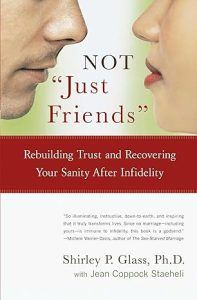 Not “Just Friends”: Rebuilding Trust and Recovering your Sanity After Infidelity
Authors: One of the world’s leading experts on infidelity provides a step-by-step guide through the process of marital infidelity—from suspicion and revelation to healing, and provides profound, practical guidance to prevent cheating and, if it happens, recover and heal from it.
This book also contains quizzes that may be helpful for you to consider.
- Has Your Friendship Become an Emotional Affair? Quiz
- Is Your On-Line Relationship Too Friendly? Quiz
- Relationship Vulnerability Map Quiz
Additional Articles

Understanding ASD in Marriage
Neurology is an integral part of who a person is and impacts personality, strengths, challenges, and the way a person thinks, speaks, feels and behaves. At times, there are conflicts that come up in marriage that are a result of neurological differences and such conflicts can be challenging to navigate.

Relational Wounds: A Block to Marital Intimacy Podcast Episode
Husbands and wives want healthy attachment, intimacy and oneness. Yet, sometimes it can be elusive. In this episode of Breaking Bread, marriage and family therapist Kaleb Beyer helps us see one barrier to intimacy – relational pain. Fortunately, there is a path forward but be forewarned, it will require going

Four Negative Behaviors that Spell Trouble for Marriages Podcast Episode
Conflict does not spell doom in the marriage relationship. However, how we do conflict might. In this episode of Breaking Bread, Kaleb Beyer shares four behaviors that need to be avoided when “working things out” with your spouse. Kaleb explains what they are and how they can be avoided.
Comments
Leave a Comment