

 in Women
The Settled Identity Podcast Episodes
Part 1
Who am I? Some of us ask this question out right. Others of us ask this question beneath our awareness. To be sure, all of us ask this question. The degree to which we are settled, content, satisfied and secure partially rests in this answer of identity. In this episode, Amber Miller helps us understand the health that is ours when we place our identity in Christ.
Transcript:
Hello and welcome to Breaking Bread Podcast, brought to you by Apostolic Christian Counseling and Family Services. I’m Matt Kaufman. I’m glad to have with me Amber Miller, welcome to the show, Amber. Thanks, Matt. Good to be back. Amber, I’m excited about the topic today. Identity. Yeah, and I think when we say identity crisis, most of our listeners have that as a lay term. Like, oh, so-and-so’s going through an identity crisis. Right? And we have that placed on a bunch of people. But you stereotype it as the guy who gets hair implants and drives a sports car.
Which isn’t me, Amber. Right. So, we’re not talking about me here, are we? Yeah, that’s right, this isn’t an intervention for you, Matt. With all seriousness though, Amber, we are talking about me, aren’t we? Yeah, we’re talking about all of us. This is something that’s so very critical for everybody. Everybody comes to a point or should come to a point of identity reconciliation on who they are. Right. And if we don’t, you might say we’ve got a larger problem. Yeah. This is a topic that is as applicable to a 13-year-old girl as it is to 45-year-old male as it is to a 70-year-old.
Bring it down to our level. How and where do we see this in our lives? Provide some examples here. What do we mean when we have a person who needs to work out some identity issues. So, there are a few indicators that I look for especially as I counsel different individuals. Some of the things I’ll notice are just a sense of unsettledness and sometimes almost like a chameleon attitude where they’re grasping at straws. It feels like they’re always trying out something new or trying different looks and trying to figure out what group they fit in. What club do they fit in? What does that look like?
Is it just the concept of subtleness as an indicator. Am I a settled person? Or am I not settled? That would be one indicator that maybe there’s something about identity that I need to hash out. Right. You know, another one that I see is comparison and the fact that we like to compare ourselves among ourselves which is not wise. I love Christmas cards. I love going and getting them in my mailbox. But yet it is a time of year when comparison can run rampant. Did it look nice? Yes. Wasn’t that great? And then the letters, here’s the letter with all the accomplishments that this child did, and, wow, this is amazing. And it’s so easy to look and say, boy, what’s wrong with my parenting?
How is it that they’re getting that product out in their kids? Yeah. And so, this comparison projects itself back on me, right? Or why am I not in a place in my career where I could go on a vacation like that, or purchase that? You see that not just with Christmas cards, but you see that with Facebook.
You see it in all these different settings, and what happens is we end up comparing our worst moments with our friends’ best. And so, you see the exciting vacation. You see these milestones. The first baby. Okay, so we have this unsettledness, we have this comparison issue. What are some of the other indicators?
You know, a lot of times I’ll see fear present in people and it’s this fear that I’m not good enough. I’m not measuring up. And they use all sorts of different rulers and measurements to try to see if they’re making the cut. And sometimes that’s just personal life goals, or sometimes that’s life goals that the world would have for them, professions would have for them.
And so, they use those as mile markers. How am I doing? Am I being productive or are there gaps in my life? It’s interesting, you used a couple words there that I want to highlight. Okay. How am I doing? How am I being? Being and doing are some interesting words.
Yeah. We use doing to look at the works that I have produced. And allow that to project itself upon my being. Is that the right thing to be doing? Well, I think what happens is we get that backwards. It really should be my sense of being should really give rise to how I’m doing and that’s the way it should go.
But you’re so right. People use the idea of doing and all of the things that they can see of their activities and all of their statuses to give rise to, am I okay? Am I making the cut? And this is why I think this is so exciting, Amber is because there is a wonderful answer for the believer in being.
And a lot of what we need to do as believers is apprehend that and that will go a long way in helping us not get sideways in our spiritual walk and in our mental health with this concept of identity. It’s true. If we can hold onto the truth that we are a child of God and that is our sense of being.
Our sense of being is not I’m a mom or I’m an executive, or I’m a business owner. Right. It’s not any statuses or roles that we fill in the earthly sense as much as it’s the fact that we are a joint heir of the kingdom of heaven. You know what? This rolls off the tongue so easily, right? But let’s just picture that mom.
As you say, I’m a mom. Well, the kids are going to grow up and they’re going to leave, and then where does that put that person? Right? Or I am a business owner. Well, times changed, and the economy took its toll and certain circumstances happened. I sold the business. Now I’m not a business owner or something has happened, right?
I think of retirement. Yeah. Right? It’s a huge place where we see identity crisis start to pop up. For 40 years I received 25 emails a day asking for my advice, and now, I don’t get any. Right. That’s not easy stuff to deal with. No, and you know what? The connecting factor with all of those things, they’re all roles that are going to end at some point.
And so, if you put your identity in some sort of status or role, those are going to end. There’s going to be a defining point where that’s going to have to transition and that’s going to change whether your kids leave the house or they start going to school, whether your job ends or you get moved into another position, like those things stop.
So, the answer to the identity crisis is not going to be, okay, this is how you build an unending business. Or allow me to tell you how you can be the mother of all mothers who always mothers. Right? The answer actually is more beautiful than that. Yeah. And more simple than that.
Yeah. The answer is really letting go of all those things, and that’s what we’re really talking about today. It’s letting go of all the earthly roles that we have. And investing and really grounding ourselves in the truth of the Word. Okay, so how is that done? I mean, I can imagine it maybe not easily remedied in the sense that, oh, here, let me hold a mirror up. Let me tell you about who you are and then that will click it, on you go.
So, walk us through that. One of the first things that we start looking at is who you are and who you are not? And that’s a way that we look at it sometimes, because what happens is that a person has to be able to accept their strengths as well as accept their limitations and the things that they are not are weaknesses to them. And a lot of times I’ll see a rejection of some of those things or an over-identification of those things. I’m a failure. I can never do anything, right? I can never be as good as my sister was at this or can never live up to my dad in this area.
And so, I’ll see where people are either afraid to go there or talk about their limitations because, you know, I don’t measure up and I don’t want to go there. That’s scary. Or they over identify. What comes to me as you say that Amber, is Paul’s account in 2 Corinthians where he said, a thorn in the flesh has been given me. And how he says maybe it is so that I’m not raised above measure, I think is the context of that. Again, being very self-focused is almost like an identity thing. That my identity might not be misplaced. Jesus speaks to him and says, nah, the thorn is there. So, the identity rests in me.
And so, you’re saying that a good understanding of both your strengths and your weaknesses is incumbent upon a person who’s got good identity? Yeah. Not being afraid to go there and not being angry at what you find, too. And what I mean by that is sometimes we’re just super disappointed with ourselves or with dreams that haven’t come to pass or roles that weren’t filled. I think of singles that didn’t get married, so they don’t have family now, and so that’s a piece of their identity that they have to let go of.
So, I think the same could be true for an individual who maybe didn’t get into the college that they wanted to. Therefore, they don’t have the career that they wanted. And they have to come to terms with that. And the fact that, okay, now I’m in this job that I wasn’t expecting and I’m not going to meet this life goal that I had by the time I’m 30, or this life goal that I had by the time I’m 50.
And so, they have to backpedal from that and realize, oh, did I have more of my identity placed on the stream of being a doctor or the stream of being an accountant. And now I have to figure out what God really has in store for me and how do I evaluate my life. Okay. So Amber, I’m gonna put a question to you. And I think whether our listeners are going to want to keep listening to this is incumbent upon the answer and that is this. I know the pressure is on. You feel the pressure. Yeah. A little bit. Yeah. Okay. Here’s the pressure. Is this identity in Christ really that great that it would supersede a great career that just fell through.
Does that make sense? Yeah. I mean, don’t you have to answer that question for me? It’s not that we don’t mourn the loss of those dreams, and we totally do. And it’s not that they’re not important. But you’re asking me to pick up my identity and place it somewhere else. And my question is. Is that better? I would say it’s better, it’s better to answer your question. Yeah. And what makes it hard is because we don’t really see our identity in Christ, so to speak. Like that’s something that’s coming. Heaven is something that’s out there and the tangible thing is the corner office, the house and kids and minivan and all those things.
And so, it’s really hard to let go of those things that you can see and move your identity into a place that’s seemingly abstract. Right, right. What are some of the play outs then to say, ah, this is the earmark of a person who settled in their identity in Christ. You see confidence. I think that’s the word I’m looking for, is just confidence in who they are. Being confident of this very thing that he would begin a good work in you and will continue to do it. So scriptural, right? That there is a confidence and you first started, your first indicator of a person struggling with identity is an unsettledness.
So, there is a settledness, I think in Colossians 1 it says being settled. Right. Being steadfast and unmovable. And so that makes sense that there would be an outgrowth of one who has that identity. Yeah. Another hallmark of it is the fact that I am smiling because it’s so great, the fact that this identity is something that everyone can have.
It doesn’t matter where you started out in life. It doesn’t matter if you grew up on welfare. It doesn’t matter if you lived in a mansion, you had an absentee father, or you had a very present father, poor things happened in your past. This gift, this inheritance, and this identity can be given to everyone, and that identity supersedes all other identities.
So, it’s not that we all have a common lesser identity, but we all have the common greatest identity. Right. I think one of those profound things we read in the Scriptures is our son and daughter-ship. Right now, we’re speaking of those who have faith in Christ who are believers and Christians and are sons and daughters of Christ.
You know, you get this picture, and God uses the term adoption in more than one place in the Scripture. But doesn’t that speak to identity? Yeah. Saying that you are my child. You know, I love the passage in Romans 8 where it talks about adoption and the fact that God is our father.
We are joint heirs with Christ. It’s hard for me to wrap my mind around that at times, like, God is our father, and Jesus is my brother. Really? You think of two little boys in the south in 1850, right? Two little boys playing in the dirt. And you might say, these two little boys are like the same until one is the son of the owner of the plantation and another is the slave child.
Now suddenly, that identity means everything. And Galatians steps through that example and basically says, we are adopted. To be a son of the owner. And with that comes this settledness, this release of comparison, this release of striving for some accomplishment that may or may not happen.
Yeah, this sense of settledness in Christ is something that the world can’t touch. We’re all about identity in the world. The culture just pushes that, and what it does is it really pushes the differences. You know, you are unique. Look at race, look at social economic status, look at gender identity, look at all these different things, and that’s what gives you an identity.
And Christ is saying. No, don’t look at any of those things. This is a common identity I have for you. I think you’re absolutely right. That’s a very discerning comment, Amber, about how our culture views identity. Going back to the couple words we used about doing and being. They very much would say, doing and feeling tells you your being.
And there is a great deal of freedom here to say no. We are not products of even our feeling and environment, but our being will wonderfully give rise to our doing when we realize that. Amber, we’re halfway through this discussion. Thank you for capturing the hope and promise of healthy identity.
And to our listeners, join us in our next episode as I continue to pick Amber’s brain on the finer points of redeeming our identities for Christ.
Part 2
Settling your identity on Christ will be a journey. A journey worth taking. In this episode, Amber Miller identifies the road markings for this journey and provides some practical helps along the way.
Healthy Self-Talk companion document.
Transcript:
Amber Miller is with me again. She made a strong case for healthy identity and its application to our lives in the last episode. Amber, I’m looking forward to furthering this conversation today. Yeah, that’s absolutely right, Matt. I love the story of David and Goliath. So, David, this boy comes down to this battlefield and he’s absolutely appalled that this Philistine, this gentile is blaspheming God.
I think a lot of that story has to do with identity. I think David understood identity so well that his doing was in step with his being. Does that make sense? Yeah. Where the armies of the Lord even were confused about that. And they didn’t act and seize that moment like David did.
What powerful examples. What other examples do we have of this? Well, so one that comes to my mind is John the Baptist, and let’s go to John 3, where he says those very famous words, you know, I must decrease so that Christ can increase. I’m paraphrasing there.
But. John recognized it in a very unique way, and his disciples didn’t see it. You know, they were coming to him saying, who is this guy that’s baptizing and he’s kind of infringing on your ministry, John? And John said, no, I have to decrease. My earthly identity has to decrease so Christ can increase.
And that’s exactly what God asked of us, that our earthly identities have to decrease. So that our identity in Christ can really take over. That’s, I think, an amazing example and I think that touches on another one. We’ve mentioned adoption and sonship as being part of our identity in Christ, but another one is our workmanship.
Right? We are his workmanship. We read in Ephesians 2, John understood that so well that he was a servant and a tool in God’s hands, and then he was able to really endure some amazing, difficult situations. Because of that settledness. As I think about different people that I’ve met with, a lot of times I’ll see this topic of identity come up.
And sometimes that is because of an awareness of that person coming to terms with their humanness and they realize that they need to take some action to become a child. So, you’re saying as you observe people and you interact with people, sometimes circumstances come up, and I’d have to believe God pushes those circumstances and pushes a person to a place where they need to come face to face with this issue and work it out. And so, I think that if someone hasn’t reached that point or one of our listeners hasn’t reached that point. It’s coming. I think that’s pretty safe to say at some point you will have to deal with this.
And you have to come to terms with the fact that has to start in Christ and look at, you know, have I decreased in the areas I need to, so that my identity in Christ can be the thing that is taking over. So, sometimes circumstances put us in the bind. They puts us face to face with this identity crisis and we begin to work it out.
And I think I’m going on a limb here, but I would imagine sometimes people push those boundaries themselves and the parents of teenagers out there will be able to identify with this. And the fact that teenagers love to push, and they love to try to figure out how to push buttons. Yeah. They’re at that stage where they are trying to figure out who they are.
And so, you’re going to see that, where they’re going to try to differentiate and figure out like, okay, what if my upbringing fits? What if it doesn’t fit? Sometimes you’ll see them push against rules and boundaries. They may dress differently. You know, they’re trying to figure out, a light bulb just went off my head, who they are.
My light bulb just went off in my head that not only is it incumbent upon us to have appropriate identity of ourselves, but we also need to have appropriate identity pictures of other people. If I don’t have the right identity for my wife, I’m going to expect more or less from her than I ought to.
Right. Yeah. And I would imagine that I’m picturing that teenage son thinking, is it my grades? Or is it me? Yeah. Is it that I am good at baseball or is it me? Yeah. Is it that I am good on the farm or I’m good at the business? Or is it me? Yeah. And if those questions aren’t settled, we might go down this trail.
Right? Yeah. I’m so glad you brought that up. It’s absolutely right. And the fact that we do have to see accurate identity because otherwise you can take that personally. You can take that as, oh my kid’s pushing back at my rules. That’s a personal attack on me. Instead of viewing them in a spot where they are trying to figure out this and so can I set some healthy boundaries and also give them space during that time?
Okay. I’m glad you said that, Amber. Because I think there’s got to be some coaching that goes on here. Alright, so let’s lay down a few of maybe the basic axioms. This doesn’t happen overnight. Is that fair to say? Yeah, that’s true. Okay. So there needs to be some endurance. And some patience on the part of parents.
And not only parents. You know, I think of employers, right? With employees going through this identity. We think of church members with those in the church going through identity. Right, exactly. You think of someone who repents and is going through that process and they’ve come from a very different background.
That’s not something that should change overnight. That should be something that’s going to take months for them to figure out who they are in Christ and where and reconciling that. But very frequently we look at the doing, don’t we? Yeah. And we say, okay, since things are doing correctly that must mean things are being correct. Right. And that’s not always the case. That can be confusing. And so, we need to allow people space and encourage them towards being settled. Then the doing will play itself out. Yeah. Maybe not on our timetable though.
Oftentimes not. Do you think God has a hand in that? I wonder, you think he’s maybe trying to refine us a little bit. Yeah, maybe. So, a way that I think we could look at it too, again, with that sense of being, if we’ve come to terms with klat our doing as believers, what’s going to come out is very natural. You’re going to see fruit of the Spirit. I think of Galatians 5. You know, you’re going to see spiritual gifts start to emerge. And so, are we going to own those? Are we going to be able to use those? Are we going to wrestle with some of that? Yeah. You know, I even think of the situation where a believer, a Christian believer, is really struggling with a besetting sin.
Okay. And there again, we can project backwards on ourselves and say, I am not regenerated. I am a failure. I am all of these I am statements. Instead of realizing that, no, I need to reckon myself dead to sin, I need to realize that I am a son or daughter. And how much that realization may go a long ways in my behavior.
One of the things that’s really beautiful, I would say about the fruit of the Spirit, about the spiritual gifting. We talked earlier about how we can get too caught up in our earthly identities and those things love, joy, peace, gifting, mercy, singing, administration, all of those things.
They’re transferable, and so they’re things that don’t stop when your career stops. Nice. So, because you’re a mother who’s transitioning out of motherhood, right? Kids leave the home or whatnot, or just because you’re a business owner and you sell the business. These do not change the fruits of the Spirit.
Right. They’re still true. And so, they are a sense of a cradle. Right. That Holy Spirit in us is the settledness. And when we are defined by that, things come into proper orbit. So, I’m in your office, I’m like, Amber, that’s it. You nailed it. This is identity. I am a son or daughter of the king.
I am his workmanship, but that’s not translating, right? What are some exercises? I get Amber, that this is going to take some time. But can you take me by the hand here? And so, what would I tell that person? Yeah. What would be exercises to this? There are different resources for sure.
One of the activities, and that I do like to have people do, again, I mentioned it earlier, but thinking again about who I am and who I’m not, and that’s not something that you’re going to just sit down and do in 15 minutes, but it’s something that you should pray over. It’s something that you should ask for others’ input. I think, again, not for a comparison, but it’s just really important to have people around you that can help pick out those blind spots, that can help maybe identify gifts that you have that you’re not seeing. So, I encourage people to really check with friends and family mentors, people that they trust that can help them see some of those things.
You know, another one that comes to mind is even taking a spiritual gifts test. We have one on our website and it’s just not a place to stop again, but it can help be a directive on the process. It can help you really start to think through, what are my areas of strength? Am I using those in my job or in my life right now?
Am if not, what are ones that I want to grow in? And I think here is a beautiful thing to shoot for. Because when we understand our spiritual gifts and we start to walk within those, we find some fulfillment. That actually surpasses those other identity euphoric moments.
Now we see that gifting in the context of those other places and beyond. Yeah. And being able, I think this is a really important thing too, is being able to say, thank you Lord for how I’ve been made. Being able to say. And own up to strengths that we have to gifting that we have and not shy away from that.
Recognizing I’m not trying to, to make someone proud, but to recognize that, okay, Lord, because of you and your work in me, I can do these things and for some reason do them well. And then also coming to terms with those limitations, Lord. Thank you for this accident. Well, what a gift and for this disability that maybe I had, thank you that I went through this season of depression, that I didn’t go my whole life wrapping my identity with this.
Had I not had whatever, X, Y, or Z, perhaps I wouldn’t have come face to face with my sonship or daughtership in you. Right. That’s a lot to be thankful for. And I think that redeems a lot of the mess of our lives. Right. Yeah. What else? Another thing that I do personally, and I encourage others too, is to actually write out the verses, write out the things, the promises, and that speak to my identity in Christ.
What’s your favorite one? I think of 2 Corinthians, and I actually have this on my wall in my office, my grace is sufficient for thee. And just going through that passage again can be a reminder to me that it is because of my weaknesses, it is because of all those ugly pieces that have shown me my need.
Yeah, a couple places that I go to Amber, is Colossians 1:21. I am reconciled. Colossians 1 22. I am holy. I am unblameable. I am unprovable. Verse 23. I am grounded. I am settled. Right. And I totally concur with what you’re saying. It’s a very powerful activity and it might not strike you great the first time, but when you start to walk in the truth of the Word and allow it to project itself upon you and change you, and you own these things, that’s liberty.
I guess one other thing that I would say as you go through and evaluate your identity is to make sure that you put buffers up around you and make sure that you have boundaries as you’re thinking through this. Because what happens a lot of times to people is, I’m not this, I’m not X, I’m not Y over here. I’m not like my friends. I’m not like the rest of my family. And so, what happens is they start to totally polarize and go in the opposite direction. And that’s probably not truth either. And they need to get somewhere in the middle there.
And so being able to set those boundaries and being able to say, this is black over here, this is white over here. I’m probably one of these shades in between can be really helpful. And so, you’re calling out those polls, so to speak. You know, it’s interesting as you say that, Amber too, because when we realize, oh, it’s not in the doing here, but then our knee jerk reaction is to do something polar opposite. Exactly. We haven’t come to this concept of identity of being. Is that what you’re saying? Yeah, I can see that. So that’s just an FYI.
Yeah. As you sort through identity, because this sorting through your identity does lead you on a trail, doesn’t it? It leads you a little bit on a journey. And that journey can seem frightening sometimes. And that right there is probably something else I would say. Be sure to be patient and just recognize that it really is a journey.
It’s not something that, you know, I’m listening to this podcast and by next week I’m going to have this all figured out. You might be in a better place than you were, but I have a feeling that God’s going to bring just another circumstance or another relationship or something in your life that will make you reevaluate and remind you to make sure that you’re not setting your identity in earthly things, but rather in him.
Right. Amber, I think I’m excited for our listeners to hear this podcast. This is great news. Very freeing news. That our identity and settledness can rest on something that’s not the work of our own hands. Right. And what is so exciting to me is that it’s so attainable. Like all of these things are doable.
Right? Again, they’re so doable for junior high kids. They’re so doable for retirees, they’re so doable depending on where you’re at in life or where your bank account is. Yeah. All of these things are universal. And the truth of the Scripture in Christ being the answer, I think is so exciting that as with so many of our conversations across this mic, it comes down to the life of faith.
The life of faith in Christ unlocks this amazing possibility of having a settled identity. And that’s what we want to leave our listenership with. Thanks, Amber, for that. We do have resources to speak to some of these concepts, things like Healthy Self-Talk identity on our website, accounseling.org. We always point people to that and welcome you to use those resources. Thanks.

Listen on Spotify – Listen on Apple Podcast
Further Information:
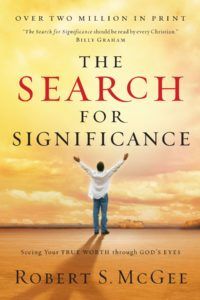 The Search for Significance
Author: Robert S. McGee
Publisher: W Publishing Group
This book is about developing Christ-centered self-worth. It is good for individuals dealing with low self-worth, fear of failure, unhealthy people pleasing, and feelings of inferiority. There is a set of CDs also available.
Additional Articles

Women: Stewarding our Body Image
For most females, the discussion of body image is not necessarily a pleasant one. Culture seems to scream at us to change, conform, lose, or try something and the ongoing messaging of “if-only” is very real. The magazines and billboards of yesteryear have now given rise to the social threads

Know Your Body: Hormones & Mental Health Podcast Episode
The thyroid gland is the master gland of the body. From this command center, hormones are dispatched. Those hormones send marching orders for our bodies to follow. The marching orders orbit closely to those matters that preserve and propagate life. While this bustle of activity happens beneath the boundary of

Women: Created in God’s Image
“And God said, Let us make man in our image, after our likeness: and let them have dominion over the fish of the sea, and over the fowl of the air, and over the cattle, and over all the earth, and over every creeping thing that creepeth upon the earth.
Comments
Leave a Comment