


Mindfulness & Meditation Podcast Episode
Both the secular and the religious tout mindfulness and meditation. It’s no wonder, because they promise a great deal of health to the one who practices them. Does mindfulness and mediation, however, look the same across the secular and religious worldviews? To answer this question, Kaleb Beyer and Isaac Funk speak to both the therapeutic and Christian uses of these practices.
Show Notes:
- Mindfulness – attentive to the present moment.
- Meditation – focused attention.
- Therapeutically these practices help a person have cognitive flexibility. The freedom to allow more into their experience than the one painful script that is running. In this way, mindfulness and meditation help a person uncouple themselves from mental distress in such a way that allows for a felt reality that is informed by accuracy and truth.
- Spiritually, in a Christian sense, this uncoupling allows for a recoupling with God. The goal is not a disembodied state nor an abandonment of self. It is not an emptying but a filling. Not defined by absence but by presence. It allows for a life to be lived with God in the body and in the mind.
Transcript:
The idea is, how do I move through pain and suffering in a different way? I mean, fundamentally, that’s what we’re looking at, right? Rather than fighting with it, or making it worse, or trying to fix it, in a way medicating it. Yes. Greetings and welcome everyone to Breaking Bread, the podcast brought to you by Apostolic Christian Counseling and Family Services.
Great to have you along. Matt Kaufman is my name. I have Kaleb Beyer and Isaac Funk here with me. We’re going to talk about mindfulness and meditation, two words that have already been spoken and elaborated on in podcasts, but we’re going to really do a focus here today on two terms that are widely used in a variety of places.
And I would say even growing in popularity and in acceptance. For example, if I were to say, I practice meditation or practice mindfulness, I’m going to get nodding of the head in a variety of groups and some groups that I’m not real akin to such as a Buddhist might affirm that, or a secular atheist might affirm that.
And I think sometimes that provides a little bit of consternation for the believer as we think about meditation and mindfulness. So, I would love this conversation to set up those terms. Let’s talk about them. Let’s talk about what those differences are and even likenesses where we’re seeing these terms used.
So, glad to have Kaleb. You’re a clinician and understand those terms in that regard. Isaac, you in the discipleship space understand it from that perspective and really a ton of crossover here. So, if that foundation makes sense to the both of you, let’s just step into what is some discomfort here to these two terms?
And let’s maybe tease out some of what we understand them to mean. If we’re speaking to it as a spiritual discipline in a Christian’s life, some of the discomfort comes up as to what makes this distinctly Christian? There’s a fear that I don’t know exactly what I am opening myself up to in practicing something that I don’t see a step-by-step guide for in the Bible.
You see that word used quite a lot in the Scriptures, but as far as the how, it’s not as clear. There are a lot of religions, a lot of non-religions, if you want to call them that, that are offering ways to practice meditation. And I think we’re just trying to find our way through it. It’s like, okay, what makes this work for a Christian’s life?
So, I think you’re placing your finger on maybe the consternation that we have. And that is if I just understood what it meant and how to do it, I’d be comfortable with following the Scripture’s prescription for this. But because it seems unclear, then there’s some unsettledness to it. Yeah. I think the fact that there’s a lack of clarity in an area that’s really important to us, that we value, and rightly so, our relationship with God and living well with him. And when there’s some kind of uncertainty or unknown in that area and space, I think that lack of clarity and even lack of understanding in areas can create consternation. Whether or not it’s an okay thing, the fact that it’s hard to define and clarify, this creates some unsettledness.
Yeah, I think, which is appropriate, we seek to use discernment as we approach various practices or as we approach our life. And so, I think that certainly is an aspect of the discomfort. I think one way to understand a thing is to understand what it’s not, or even if I am to understand what Christian meditation or mindfulness is.
I think not only understanding what it is, but what it is not, or how is it used and approached in some of these other settings. I think we can kind of compare and contrast and say, oh, now we can see our way through. Let’s start with the Buddhist approach. Maybe start with some of that history a little bit.
It’s maybe became popularized. Again, I’m no expert here, but popularized through the Buddhist entrance and then in the 1970s, if I understand it right, it has gained traction and then went to the secular field as well. So, it’s not uncommon or even unfounded for a person to hear mindfulness meditation in Eastern religion, Buddhism.
The Christian Church has such a wide spectrum in America now where you have real conservative and real liberal and people would say new age spirituality that’s crept into the church. I think people are afraid of going there. I think that’s one of the labels that would be put on people in the Christian church who sometimes would use terms like mindfulness and meditation.
So, there’s an uneasiness to say, what am I subscribing to? Yeah, I think you’ve gone off a little far. What do we understand about the Buddhist approach? What are their objectives, for example? And what is their foray into the topic? Again, I’m not an expert at this, but from what I understand a Buddhist would understand that certainly there is suffering in the world and that each of us have cravings and desires.
And so, it becomes my craving that then leads to suffering. And so, the goal, this is really simplified, but the goal is to be able to arrive at enlightenment or nirvana, which is actually being able to release myself from those cravings or detach from them, which is in the aspect of meditation and mindfulness is to get to that place.
But all of that is through the self or within the self. I’ve heard it described, Kaleb, by a Buddhist monk. He was teaching on mindfulness meditation and in the practice and the how to, he was talking about it and using pretty violent terms as far as emptying yourself of all of these things. And he was like, you really have to force it out of you.
And even that language, I think, would be like, okay, well, there might be one difference between a Buddhist work of mindfulness meditation and the way that a Christian would probably view that as an act of grace, an act of faith that God is at work. But what’s interesting here is suffering is the impetus to this type of meditation, or in that worldview or in that religious view and trying to deal with the suffering of humanity, which connects with all of us.
We all are trying to deal with suffering and internal cravings too. Okay. So not all of what you said was all that different than my own personal experience and wrestling and living. Yeah. Is that then the secular view, because I would imagine that doesn’t really lie along religious lines. I would imagine you can take a secular person, and they too are going to be struggling with suffering. So is it similar in their use as well. Does that make sense? Is suffering central to their use?
That’s my question. Yeah, I would say so from the clinical aspect in development and the research is fairly robust in the area of mindfulness within the mental health field and the benefits that it has particularly around pain. And if you think about pain and suffering, how we experience it and feel it in our bodies, from a secular mindset, the idea is how do I move through pain and suffering in a different way?
I mean, fundamentally, that’s what we’re looking at, rather than fighting with it or making it worse or trying to fix it or medicating it. Yes. Well, you mentioned medication. I go back to childbirth. Prior to medication, there were a great deal of classes on Lamaze. How to focus, how to breathe, how to breathe through this thing. I remember my mom actually saying she applied that later in life whenever she was in pain. It’s like, I remember how to do this, but I’ve been through pain before. Yeah. Is that akin to what we’re talking about though?
And maybe, let me just ask this. What does the research say, Kaleb? Is there value in these practices concerning suffering and pain? Absolutely. From a mental health standpoint, the aspect of reducing stress, reducing reactivity, certainly in the area of anxiety, depression, trauma, there are a number of areas within the mental health field that this has been shown to be beneficial. And we would say also in the area of cognitive flexibility, oftentimes what tends to happen with some of these mental health issues is that we see thoughts as these rigid pieces versus just an event that happens. And so then through that, we attach ourselves to certain thoughts that we have that then lead to mental health issues.
So, all of that to say, yes, research is pretty clear that mindfulness is effective and has been effective in these various mental health issues, which is why it’s so popular. Okay, so my head is exploding with follow up questions. One, we’re going to come back to this cognitive flexibility. All right, so I’m going to parking lot that question.
And let’s go now, because we’ve not really defined it, but I think you have spelled out what mindfulness means in terms of slowing down. And this idea of effort and those types of things, Kaleb, can you just say, here’s one way to understand mindfulness? And I don’t know if we need to separate that from meditation and I’m curious if we should.
Yeah. Anyway, let’s start with a mindfulness bit. Well, let’s just start with a therapeutic view. So, Kaleb you have the floor. Sure. Yeah, so mindfulness in a therapeutic sense is simply the awareness of the present moment is what we would say. There are lots of aspects to that but even thinking about often working with couples and one of the things I find really helpful, as a couple is communicating together in the moment when there is a tear or where there’s anger, can we slow down a bit?
What are you noticing right now as you’re turning towards your wife or your husband and talking? So, what in a sense I’m doing is bringing awareness to this moment. And what sort of thoughts are you having? What sort of body sensations are you noticing? And what’s coming up within you? So, in that moment in the counseling room, they might be discussing something from the past.
Yes. But you are allowing more than just the past to be in the conversation. Correct. You’re allowing the present. Yes. Do you want to say something about meditation too? Yeah, I think meditation, we would say, we also use clinically, and that is a more directed attention towards something. So sometimes, for example, we will use an image. We have an image of Jesus and a lamb, and that’s a focused concentration on something specific or a verse. Oftentimes we’ll use Psalms, like, God is my rock. Okay, what does it look like for God to be my rock and, oh, you’ve stood on a rock before or a mountain. You felt the solid sense. So, you’re meditating in the sense of thinking over and allowing your thoughts to orient towards something specific.
That is helping me with the cognitive flexibility. Say some more about that. I think that’s a fascinating concept. I’ve never thought about cognitive flexibility. I’m not a flexible person anyway. I have a hard time touching my toes. But now this is calisthenics to another level. Okay. So that’s a good example.
And actually, I think I’ve learned a lot just from what you’ve said, but let’s just do another round of it. So, in cognitive flexibility, what are we achieving? So, I think we’re achieving the opportunity to move out of autopilot where I just naturally go in this moment as a sense of partly my experiences, partly who I am.
And I just unknowingly in some ways, I mean, knowingly, but just react and respond out of that. And so, to back up and see the forest for the trees, so to speak and to be able to have a different response. So right here, now I’m with you brothers. And so, I can get caught up in thoughts of, wow, am I saying the right thing? Is this coming off right? What do Matt and Isaac think of me at this moment? And if I marry, then I miss the point that we are here together, and the Holy Spirit is present with us here and we can have a conversation together. Now, all of a sudden, I’m starting to have a different experience, but it takes shifting out of thoughts that are normal that we all have in different aspects that I would rigidly see as truth.
So as a therapist, you allow more possibilities. You help people have a larger spectrum of possible outcomes, feelings, behaviors by uncoupling them from a rigid thought that is running their script. Yeah. Isaac, as you listen to that, would love your thoughts about meditation, mindfulness as a Christian practice, even as we fold in the Buddhist awareness of suffering, which we call Eastern.
It’s very present to me. You know, I think I had some suffering. Yeah. That’s not just an Eastern thing. Yeah. So, first of all, I’m just so blessed by having Kaleb here to share what he has to share with us. Because I’m already learning, but one thing I’m not an advocate for, and I don’t think a lot of Christians are, is one of vacuous meditation.
And what we mean by that is a meditation where you’re just forcing everything out. You’re emptying every thought that comes in. But to your point, Kaleb, I think it’s a directed meditation. And I think primarily directed towards the Scriptures. And so, I think that’s, if we’re trying to find what makes it distinctly Christian would be taking the Word of God, focusing on that, giving yourself to that. And then the whole mindfulness part that is pulled in there too, is that anything we do as humans needs to be embodied. We have an embodied spirituality, you know, and God’s in on that. He made us with bodies and intends us to use them as they are intended to be used. So, when I think of mindfulness, I think of an awareness of this present moment and how am I reacting in this moment?
How is my body reacting in this moment as I’m opening the Scriptures, as I’m thinking about Scriptures memorized when I was young? The 23rd Psalm, for example, and I can just sit and meditate on that in the morning. Sometimes this is literally my practice. I’ll just go sit outside for 10, 15 minutes and just meditate on something like that.
And I just come to a calm in my body. That’s an important part of meditating for me. It’s fixing on the Scriptures, letting my body come to rest so that my mind can follow. And so that I can really become focused and aware of God’s presence through his Word to me.
That’s really helpful. So, one comment and one aha. Number one is this idea of an embodied experience, which I think sometimes we can think of as being kind of kooky out of body type of thing. But Isaac, you really brought it very much into our bodies No, this is a very real thing. That’s my comment. Here’s the aha where maybe the Buddhist or the secular intention is an uncoupling of myself and cravings and suffering.
Yeah, and Isaac what you are saying and even your leading Kaleb and focus is that it is actual coupling what we intend to do in a moment of mindfulness and meditation is to find what we want is not the absence of a thing, but the presence of a thing. And that presence being ultimately the Lord.
I think this is true that the greatest thing that a Buddhist could hope for is basically to stop existing. Like that’s the greatest thing that could happen to them is just to get away from it all. So, I think they’re right on with that. Yeah. That’s not the Christian’s goal, right? The Christian’s goal is to be integrated, is to be filled with the presence of God and to sit in suffering.
That’s part of it. We have suffering, we have need, but knowing that we are okay, that where we find ourselves, we’re in the hands of a good Creator God. And that’s distinctly Christian. Yeah. Yeah, I think that’s a really good distinction of, as a believer, is how we walk through it in the way in which we walk through suffering, as Christ did in the way that he responded.
And I really appreciate your comment, Isaac, about the embodied experience, because sometimes I get the sense that we, maybe this is just my perception, really honor the cognitive, knowing, knowledge, understanding. And yet you look at the Old Testament Scripture and the priest, how much sensory was involved in their worship.
And I think as Isaac spoke about that, that’s what I thought about is he’s having an embodied experience where he’s noticing the wind. He is present. Just like we sit down to a meal. How often do I consume my food without even tasting it and smelling it. God has created us with a body, and he’s called us to an embodied experience, and I think that is an important aspect of mindfulness.
That’s really excellent. Okay, so now I want to throw some terms. A lot of these things are wrapped up in terms that we use. I mean, there are some words that I could drop that immediately people will have certain thoughts. Yoga, right? That’s going to trigger a variety of responses in the hearer. Let me give you another one, which I find running in this conversation.
And that’s the comment of nonjudgmental. And I think sometimes we don’t know quite what to do with that. Certainly you’re going to hear that in the secular, right? Take a nonjudgmental moment and consider, right? Meditate with mindfulness in a nonjudgmental way. And I think part of the consternation is, we as believers, we should be judging some things, right?
We should be making some judgment calls. And certainly, the Spirit of God equips us to do that. And so sometimes I feel like there’s a nonjudgmental request. It sounds off. So, Kaleb, as you work with somebody, and you might even instruct them in this moment, I want you to be present in a nonjudgmental way.
What are you asking them to do? Yeah. So, I would start with what we’re not asking them to do. Which is not to say, somehow sin is okay. I mean, there are clear biblical absolutes that we would say, these are true, and we need to be discerning in the way that we approach them and live our lives. So that’s not what we’re asking.
What we are asking is we’re having certain thoughts that we don’t like or certain emotions or certain experiences. And in order for us to move through them, well, there has to be a level of acceptance that they are there. Whether I like them or not. Right? I mean, part of you thinks about depression as really getting caught up in some sense.
This is oversimplifying. But one aspect is about the past and I can get caught in the past and what I shouldn’t have done or should have. Well, what that does is now I’m starting to judge the thoughts that I’m having. And we would say we have a zillion thoughts in the day. And sometimes we have a certain thought and we’re like, that’s crazy, that’s not true.
But for whatever reason, we have other thoughts that we just hold on to. Like, yes, I am a failure. And so, we almost wrestle with our relationship with that thought. And we become tied to our relationship with that thought, which doesn’t allow us to appropriately respond to that thought. Am I getting that right?
Correct. Yes. And we get back to cognitive flexibility. Yeah. That’s going to be my takeaway. Yeah, so the idea is that I can have that thought be present with me, because in some ways I begin to attach myself to it as soon as I make a judgment about it. Okay. I get fixated with the judgment. Exactly. And notice it being there while also pursuing Christ or the Holy Spirit, or how can I be more loving in this moment, even when that thought is there, what is the direction in which I’m moving?
Because we would all say we wrestle. And I think this is one of the distinctions, you know, the Buddhist approach versus Christian approach, we would say we’re fallen and sinners. And one of the aspects is we need God’s help to move us in the direction we need to go. And if we’re sitting there judging and fixating on this thought, it’s pulling us away from being present with you brothers or being present with my wife and moving in the direction that I would say I actually care about.
And I want to live in a life that connects with others around me in God’s presence. Isaac, how do you hear about that? Kaleb’s address of that nonjudgmental thinking through that discipline. Yeah, well, my mind goes to just my own experience and the experience of other people who I’ve worked on these sorts of things within the context of discipleship, and they’ll come out of a time of silence and solitude or meditation, whatever. And they’re getting alone with God. And the idea is to just be present with him, be aware of his presence in you. Like there’s a deeper truth than even what your feelings would often lead you to believe is there.
So, the goal is just to settle into that truth, be okay there. But oftentimes we get flooded with all sorts of other thoughts, right? And some of them are kind of scary of our past or just things that are dogging us in life. And so this person comes back from their time of 15 to 20 minutes of silence and solitude.
Like, I had 200 to 300 different thoughts come at me during this time, and I could not focus on what I was supposed to focus on. And my response is like, well, how amazing to have 200 to 300 opportunities to return to God, right? Like all that you have in the moment is the opportunity to bring whatever that is to God.
You don’t have to judge it. It’s this way, it’s that way, but you can bring it into the hands of God with you. And so anyway, in that way, you’re relinquishing judgment to God. It’s not that you’re getting circumvented. You’re not circumventing judgment. You’re just recognizing who is the judge, perhaps.
And then it hits deep. Yeah, that hits. I’ve just got some personal stuff that hits beyond but yeah, I think that the best hands to put it in for judgment are God’s hands. And sometimes we conclude what that means, but we’re going to find him to be far more merciful, far more right, far more truthful, far more knowing, far more equipped and apt to be a judge of those things than we are ourselves.
To this aspect, one of the things I didn’t mention, but the whole idea of curiosity. And I think that’s a piece that judgment moves us away from being curious and learning anew versus judgment, we would say is not open. It’s closed. And so, part of the nonjudgmental stance, as Isaac pointed out, is the opportunity to have a different response in the moment, to be able to bring this place to the Lord rather than me having to figure it out or come up with it.
So, I think this idea of being curious and open is a response and posture that we as Christians, would say is important. Jesus modeled that certainly with the little children. Or in a crowd being touched on his robe and he pauses and says, somebody touched me. Oh, he was open and aware and responsive at that moment.
It’s a great example. I do actually love that to bring in Jesus as the example of the most present, mindful, meditative one who ever existed, and to see the way he responded to people and the many life events that came to him as interruptions to his daily flow, and yet he was able to respond to each of them in the most perfect, graceful way.
And we’re like, man, why can’t I respond like Jesus? Matt, this might be a great place for us to start and to practice being as mindful as he is, as aware and nonjudgmental. Yeah. Here’s another term. Again, a lot of things are the terms we use. Mantra, for example, if I understand mantra, my mind goes to Eastern Buddhist or secular, this rote rhythmic phrase, perhaps it’s repeated. Yeah. Makes me uneasy, right? Would love to hear your thoughts on mantra and what does that look like in the practice of mindfulness and meditation.
So, when I think about mantra and a repeated phrase, people call it a mantra to help them focus. The word meditate is in the Scriptures. I believe there are different words that are translated as the English word meditate. One of the ways to understand it is the chewing of the cud where you’re just mulling over a thought or idea. There’s another one that is like verbally stating something like murmuring. And David uses this in the Psalms when his love endures forever. Yeah. Love and mercy endures forever.
Isn’t it one of the 130 something Psalms? Yeah. And so literally verbally repeating that, I suppose is a mantra. That word isn’t used in Scripture, but the concept is definitely there. Yeah. And my mind goes to even the Shema prayer and thinking about in some ways, reciting or continuing to repeat a prayer.
I appreciate you asking the question. What is the purpose and the way in which we are doing something? Because even we moved to the New Testament and Jesus is really hard on rote or the people standing on the corners or whatever, like mindless repetitions or something like that.
Yes. He said something like, yeah, they’re just speaking words. Yes, but their heart is not in it. And I think that’s the aspect that Christ really calls us to because in my own life, sometimes my prayers can be in some sense just repeats without actually being a present or aware of what I’m asking or what’s happening in the moment.
So, the objective is not the word phrase, word picture, but the end is God himself. It is a focusing of oneself again, not in the uncoupling of ourselves to suffering and cravings, but actually the coupling of ourselves to God. Yeah. Another thought on the whole mantra thing is scripturally speaking, repeating a phrase of Scripture or something, it’s not like a magic wand.
It’s not like there’s a power, at least we wouldn’t understand this in the Christian context. I don’t think there’s a special power in that phrase. And so if the more you repeat it, the more you’re being filled, it really is just something to help us to set our intention back to God.
And so, when our mind inevitably drifts in times of trying to focus meditatively on Scripture and on God, then having simply the word Father. You just say that to redirect your attention back to God as Father. Not because there’s a special power to it, but it’s a cue for your mind to refocus, I think.
I really appreciate that. Brothers, this has been very enlightening. I’ve learned quite a lot in this conversation. I hope all of our listeners have as well found value in it. Certainly, we’re not experts on all things in these matters, and we’re wrestling with them with everybody else. So hopefully a level of discernment has been brought forward on this idea of meditation, mindfulness, and its effect.
You can’t deny that, but also those boundaries and doing it well, and for the right reasons and seeing it as separate from the rest. And akin to what we’re seeing in society as well, I think it’s really important. So, bless you, each one, for listening. We trust this could be helpful.

Listen on Spotify – Listen on Apple Podcast
For Further Information:
Meditation Podcast Episode
In this episode of Breaking Bread, we walk through the what, why and how of meditation.
Spiritual Disciplines: What is Biblical Meditation?
Throughout the Scriptures we are told to meditate. Yet most of us would have a difficult time defining what meditation is and what it might look like in daily life. Take a moment to consider the following verses and how they provide guidance about what to meditate on and what it might mean to meditate.
Additional Articles
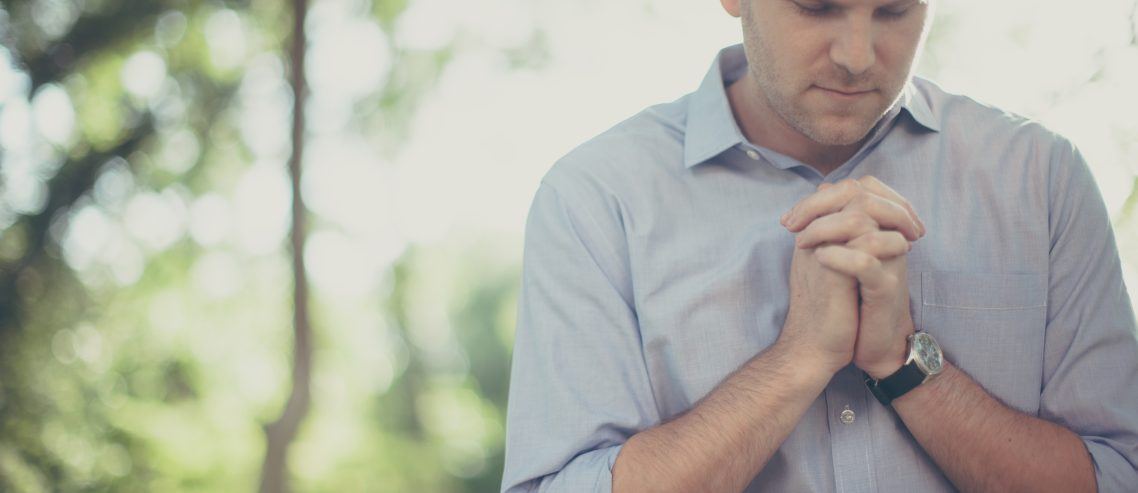
Praying Like the Disciples Podcast Episode
Christ knew what he was doing when he gave his disciples what we have come to call “The Lord’s Prayer.” It is beautiful to the ear. Rhythmic to the tongue. Simple to remember and loaded with power. In this episode, Joe Leman highlights this beauty and power and helps us

Aging with Intention Podcast Episode
To be human is to age. To age well is to transition. To transition well is to adapt. In this episode of Breaking Bread, Ron Messner and Lori Wiegand encourage us to be intentional in the aging process. In so doing, we find abundance of life where scarcity may have been assumed.

Women’s Resources
Providing solid, biblical content for females of all ages is vital as our culture pushes into our view of what femininity should and should not be. This list of resources, while not meant to be exhaustive, was collected from contacts in several different churches, and it offers a variety of
Comments
Leave a Comment