
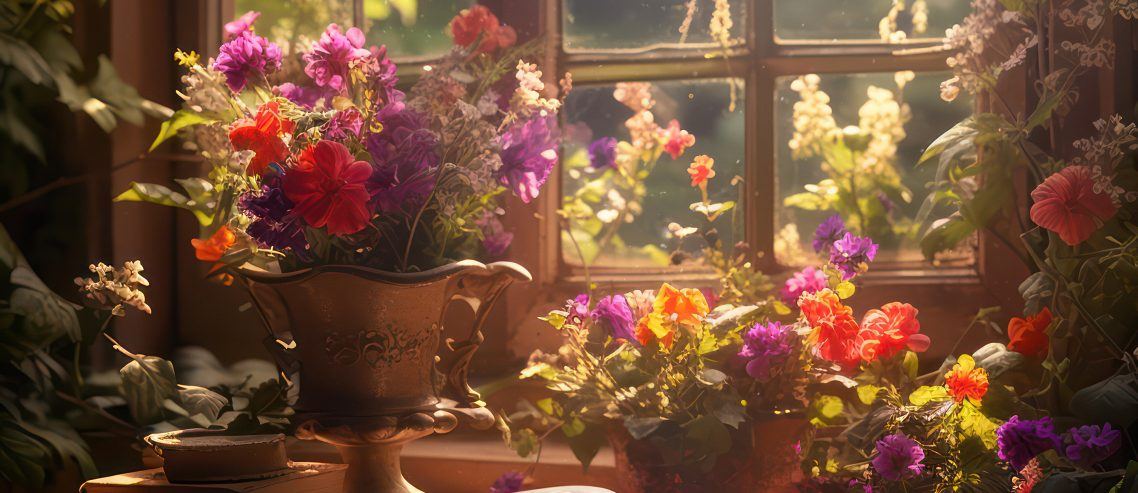

God’s Intention for Beauty Podcast Series
Beauty and Faith
Ecclesiastes 3:11 says that God makes all things beautiful in his time. This truth is curious. It would seem that God has an intention beyond making things right. Or making things work. Or making things whole. He intends more than those…He intends to make things beautiful. In this episode of Breaking Bread, Isaac Funk and Shauna Streitmatter help us understand beauty and faith. When our senses are exercised to detect beauty, we will live a bit more as we were created to live.
Part 1:
Part 2:
Show notes:
Beauty is beautiful.
- Beauty is an intention of God. He creates things beautiful.
- God sets the standard for beauty. Our senses can be exercised to better detect it.
- Anywhere that beauty exists can be a place for worship of God.
- Beauty is detected in our senses. We find art, music, flavors, textures and fragrances pleasing to our senses.
- We detect beauty in our thoughts. We find story and lyric appealing.
- We must linger with beauty to appreciate it. It slows us down.
- Beauty transcends usefulness. Not making life possible but making life worth living.
- God is beautiful. Redemption is beautiful. Resurrection is beautiful.
Transcript:
It seems incomplete to be a human and not to be searching out and creating beauty. I just feel like it’s what God does, it’s who he is, and it’s who he’s created us to be.
Welcome, everyone, to Breaking Bread, the podcast brought to you by Apostolic Christian Counseling and Family Services. Wonderful to have you along. And that intro was Johann Sebastian Bach. I thought listening to him would be a good way to ease into our conversation, to have that conversation with Isaac Funk and Shauna Streitmatter.
Isaac’s an old hat here, so we’re going to pause and linger a bit on Shauna. Shauna, introduce yourself. You’re a new voice in this space and a new face in this agency. Yeah. So, my name is Shauna and I’m a communications creator here on the church outreach team. And I went to school to study graphic design.
And our topic today is God’s intention for beauty, this idea that God intends for beauty to happen. In fact, we read in Ecclesiastes that he makes all things beautiful in his time. Just a moment. I’m always struck when I read a passage, and it surprises me. It’s like, oh, I wouldn’t have said that.
I mean, I can understand. He makes all things right in his time. I could understand. He makes all things good in his time. He makes all things complete in his time. And all those are true, and he does all those things, but it’s been written, he makes things beautiful in his time. Doesn’t that suggest that there is something transcendent about that.
I don’t know what it is anyway, that has launched for me this, I think, fascination of maybe I’ve passed over beauty when I ought not to have. Does that make sense? Well, what I think is interesting too, right after that verse, I believe, is where he says he has placed eternity in our hearts.
And it’s almost like he’s tying these two things together of beauty and eternity, which is not just a measure of length but of breadth and that he’s placed that in each one of us like this longing for more, for eternal things and those things that he makes beautiful. So, I’ve been totally geeking out about this!
I think you’re right, Isaac. There is a big idea here about beauty. And so, our listeners can’t see this, but I brought some hydrangea flowers just for the occasion. Exhibit A, beautiful, and things don’t have to be this way, right? And so, Shauna, I’m just really intrigued. What is beauty?
Yeah, I feel like the definition for beauty in the art world has fluctuated a lot over time. But a pretty generic one would just be something that appeals to the senses of the human. Something that smells nice, or looks nice, or just really is lovely. Appeals to the senses and are lovely to us.
And I really like how you give us some categories. It’s not just visual things that we’re talking about here. But you mentioned all the other senses, such as taste, right? A really good meal is a beautiful thing. There’s touch that feels, there’s fabric that feels, really nice. And all of these come together and help us understand what beauty is.
This question of even what is beauty is one that the philosophers and the artists of old have tried to nail down for so long. And it feels so lofty that it’s hard to feel like enough of an expert to even have anything to say about it at all. And so that’s kind of how I’m coming to this conversation. What can I even say about this thing of beauty that I certainly don’t comprehend all of it, but is that even a nod to God?
Right. That he has this end ideal in making all things beautiful that we can’t even get our minds around. And like eternity we can’t either. For sure. To your point. And even in the secular world you have courses that are dedicated to figuring out answers to this question. People who have genuine interest in understanding.
What is beauty? What is this about? And what good is it for us? It’s almost one of these things that you can’t deny its existence. Yeah. But you can’t put your finger on it either. So, I had this bit of an aha moment, right? I went to the local courthouse. It’s now a museum, McLean County courthouse. One of these. majestic, big, beautiful buildings that they used to make, right? And as I walked through the halls, I’m not sure it was laid out very efficiently, but it was sure laid out beautifully. And as I looked at the detail on the crown molding, for example, the detail on plastering, it occurred to me there was a whole set of blueprints about the beautification of this place that I do see missing in the room that we’re in at the moment where things have been reduced down maybe to usefulness and it just caused me to wonder, have other times and places and peoples and cultures been more aware and had a better pulse on beauty than I?
Yeah, I think here in the West, especially, we have this Children of the Enlightenment, there’s such a rational approach to life and a utilitarian, consumerist based approach to living that we definitely are going to take the function of something over the form of something. And so, we see that in the concrete cast buildings or even the steel and glass skyscrapers that jut up against perhaps some of these older buildings that seem to be more interested in form.
I think it was Oscar Wilde who said art is useless as saying a praise to art. But then you have someone coming on saying that form follows function. They are basically saying that if you get the purpose of it right then the form can take care of itself sort of thing. But what you see about that idea, and you’re pushing against that idea.
Yeah. So, if you see that idea being played out, I think of like the Peoria warehouse or the warehouse district in Peoria that was there and then it slowly just becomes abandoned because it’s ugly. It’s not a beautiful place where people want to be. And so, it’s like when you create something just for the sake of utility, you end up losing utility because no one wants to be there.
No one wants to be a part of it. But if you create something that’s beautiful, it lasts. People want to be there. People will find ways to get into it and to use it. I want to highlight this concept of usefulness, Shauna, I want you to speak to it as well. Because that is a bold statement. I think that we bristle against art or beauty not being useful. And I think we immediately have a posture against that, which really says a little bit more to our ideals. But Shauna, as you come out of the art world and education and so on and so forth, how do you handle that particular notion?
Yeah. I think when people try to claim that beauty is not useful. There’s a little pushback in my world like, no, there is use in this. I see the use every day in it. It’s just more of a reframing and restructuring what that usefulness looks like. So, I think an example is my apartment versus my brother’s apartment. Both of them function perfectly well as apartments. They serve all the purposes they need to.
I think I know where this is going. I’m not going to guess. You’re not going to guess? No, I’m not going to guess. I’m prejudged. That’s okay. So, they both function well as an apartment and serve that purpose, but I’ve chosen to put beautiful things into mine and to create this space that, for me, when there’s beautiful things in it, it becomes inviting and welcoming and somewhere that I want to spend my time.
So, both apartments still function the way they are, but for me, I’ve created the space using beautiful items that are more inviting and welcoming to me. So, that is the use I find in that example. And so, there’s a shift of value on efficiency and usefulness onto some other ideal. I think that’s the powerful thing that God has an ideal beyond use that he is trying to bring about in this world.
You know, Isaac, I think you gave a nod to the classes we take in art and so on and so forth. You’ve taken a lot, Shauna. I remember taking art appreciation, music appreciation and like, total eye roll, like this isn’t useful to me. That was my line, right? This isn’t useful to me. I’m just going to get this credit out of the way. Well, man too bad. I missed the chance to curate a love for beauty and senses that detect it, right?
And so, I’m looking at two of you and, Isaac, I know you’re musical, you were a musical educator at one point in time. So, I think both of you have an ear and an eye for beauty. And so, I would love to again, pose this question, where is there beauty that perhaps we’re missing it and how can we grow?
I think we could talk about this for a long time because, yeah, it’s as far as your imagination would allow you to go with it. I think back to Genesis 1, and you have God. And that’s part of beauty is it’s something that is created either by us or by God himself. And if it is by us, it is informed by that which God has created himself.
But as God’s creating and it’s the day and the night and the land from the sea and all these things. Then he creates man and he’s looking at all these things, he’s calling them good. What’s interesting about that to me is that the same word in Hebrew for good is the same word for beautiful.
And so that’s like God looking at his work and saying, that’s beautiful. You just informed me there and you gave me a space to think about when I am in the creative process, I should also be thinking about beauty. That’s the way God thinks. I mean, per your example of setting up the apartments, right? You brought into that creative activity and brought beauty into it, which I think is a fun thing to think about. This is what’s childlike about creation. Think of a child, three, four-year-old thrusting into your hands a piece of art that they just created. They think this is Van Gogh, right? And they hand this to you because it’s something that they think is beautiful.
They’re like, this is beautiful. So, this is how we were wired. Kids are prolific artists. Oh yeah. Somehow that gets worked out of us. I don’t know. What happens to us, Shauna? I think we just prioritize different things in life at some point. And just really focus on feeling like we have to be useful with every moment of our time, instead of really taking time to sit and let ourselves create, which does have a use, but we don’t value that use as much.
I’ve just picked up perhaps on a hindrance to beauty and that is time. Is that a fair statement? Moving quickly or rush or speed breaks down not only the creative process, but also beholding beauty activity. Is that a true statement?
But that’s a real problem, and I think what true beauty does, not just in like high arts type beauty, but just in the everyday places where you can find it, perhaps in this flower here on the table, is that it stands in the face of human machine that just keeps on chugging forward, and it just stands disinterested.
And it’s there just waiting for someone to catch it. And the saying, stop and smell the roses, makes sense. To enjoy that beauty, you’re going to have to stop. Is this part of God’s ideal then in bringing beauty in the world, to bring a healthy pace to the human experience and you can’t take in an art museum fast.
I mean, you just can’t do it if you know what you’re doing now, if you don’t know what you’re doing like me. And so, Shauna, like when I go to the Chicago Art Institute, tell me what I should be doing. You know what I mean? That’s how inept I am. I feel like I’ve lost the faculties of seeing beauty. I don’t see it when it’s five feet in front of my face.
Yeah, I think just to let yourself gaze on something for longer than just to find its usefulness, but just to really take in the whole thing and think about all the different components that are working together just to make it what it is and just to allow that to move you.
Can you give us some categories? And would you say that everything in the museum and the Chicago Art Institute is beautiful, or is it like that’s another question? I would have to, like well, now we got into a whole different discussion. Actually, we’re going to open that can of worms, Isaac. I won’t forget. Okay, what are some of the categories?
I mean you can look at color or the forms or the shapes that are in that. Or even, if I’m looking at a landscape, just the skill that had to go into that to represent that landscape in the image before you. Kind of looking at maybe the brush strokes they used or how realistic or not realistic it is.
Yeah. Elise and I went to the Louvre years back in Paris. Yeah. I’ll be, like, I know what’s there ought to be beautiful to me. And so, I just sit there and I take it in, right? But I don’t know what to look for. But I noticed that as I gaze, as you said, Shauna, an important part about encountering beauty is to gaze upon it or to linger with it.
It will actually start to do things to me, and then I think I start to realize that’s beautiful. Whereas, maybe upon first glance, I wouldn’t necessarily see it that way, or just because it’s in the Louvre that it’s a beautiful thing. I don’t know that to be the case until I stop and look and realize, oh, it’s pulling something out of me that seems divinely planted.
The image of God in me is something that’s calling out to that, and therefore I call it beautiful, which maybe that’s a different discussion, but I don’t think it is at all. I don’t think it is at all. And it’s really touching on a certain pleasure. Can we say that? Can we bring that word into the conversation as well?
It is a pleasing thing to behold beauty. Am I right about that? I think it is pleasurable. I think it is consoling. I think of comfort. Like it consoles you in your sorrow. It’s something I feel like enhances joy. Yeah, and pleasure. Absolutely. Okay, so beauty doesn’t make life possible. Beauty makes life livable. Right? Isn’t that what we’re talking about?
That’s good, yeah. Which, I think, provides so much context for what we’re talking about here. And why we should talk about this. We ought to be engaging beauty. It ought to be something that we engage with. It is a gift from God, and it’s an intention from God. And to engage it is going to be hugely helpful to our emotional, spiritual lives, Social lives.
I don’t think you worship without beauty. Worship me in the beauty of holiness, as we read in the Scriptures, right? Yeah. I think it’s so essential to who we were created to be that it seems incomplete to be a human and no to be searching out and creating beauty ourselves.
I just feel like that’s what God does. It’s who he is. And it’s who he’s created us to be. Okay, so now for the can of worms that I promised we’d come back to. We have a common phrase, and that is, beauty is in the eye of the beholder. At some level, that’s got to be true, and at some level, that’s got to not be true.
If we are saying God is the originator of beauty, and God is the orchestrator, and the ultimate first-person creator, then there ought to be some beauty that is agreed upon. I don’t know. How does that hit, Shauna? I’d like to hear, Shauna. I don’t know the answer to this question.
I don’t know if that the original statement beauty is in the eye of the beholder. I don’t know what the intent of even saying that sort of thing was. But I think the result of it, whether it was meant to be this or not, is that now people look at anything and they say, it’s beautiful because I say it’s beautiful.
And I think that becomes a real problem for us. And so, you have artists that are creating music, sculptures, whatever, that is literally a urinal, you know, or like some other things I’m not going to say on this podcast that people are like, this is beauty because first of all, I say that’s beauty. And you ought to see it that way too because who are you to judge my taste, right? Which is kind of what you end up getting with. But then you miss essential elements of what we’ve been talking about that is actually in the nature of beauty itself. It is something that is transcendental and that actually draws you to eternal things, draws you to the divine creator of beauty.
And so, I think there does have to be a line drawn. I don’t think it is in the eye of the beholder in that sense, although tastes and appetites and desires, you might say, can shift, but it’s not the same. So, Shauna, speak to the taste and appetites. Yeah, I think there’s within any art field, whether that’s music or design interior or different art, like painting.
I think there are different styles and categories within that, that certain people enjoy more than others. And it’s just a way that beauty and art itself has become divided up in our world and sectioned off to make sure that people are seeing exactly what they want to see and exactly what they find beauty in.
You know, you’ve got the jazz genre, right? You’ve got the classical genre and all of this together is beautiful music, even though you might be partial. But, Isaac, your point is still well made. We can’t just say something’s beautiful. We cannot necessarily just make that pronouncement. We don’t have that power.
One thought that occurs to me is what is the ugliest thing? It’s interesting, if we go to the other category, what is putrid and ugly and repulsive? And I think it’s death. I mean, anybody on a farm, they know what a dead pig looks like after a couple of days. Enough said, and every sense of the human sense is crying out as repulsive.
And there again, we get a nod back to God, don’t we? We get a nod back to that creation. Isaac, as you mentioned. He created it living, called it beautiful. Yeah, I think that is an excellent example of what is juxtaposed against beauty. And it’s one of the things that makes beauty what it is. Because beauty, we experience in the midst of a fallen, broken material world, I would say that is partially why we can even acknowledge that there is beauty because we see everything else. It’s like beauty stands in the face of brokenness and in the face of darkness and in the face of death and says that doesn’t have the final word.
Most beautifully seen in the story of Easter. And Jesus, that’s right, there was something good about Good Friday. Yes, it had all the ear markings of ugly and it would have been forgotten to history. And even the Romans thought it was disgusting. But then they get to Sunday morning, you get to Easter, and suddenly Friday was Good Friday, and it was a beautiful Friday.
It is through the lens of Easter of what comes next, that there’s nothing more beautiful than a crucified Lord. The beautified Christ, his death and resurrection. This is now expanding our view of what beauty is. We’re going to draw this conversation to a close just for this episode, but we will return to explore this further.
I hope you can be with us.
Transcript:
Oftentimes I find myself with all these artworks that I’ve created, and I’m like, wait, how did I get this many? It’s like, I just desire to be in that process, to be creating, and I find a real beauty in taking something, bringing color and form and texture to it, and giving it a whole different…
Greetings and welcome everyone. This is Breaking Bread, the podcast brought to you by Apostolic Christian Counseling and Family Services. I’m very glad to air the second part of the conversation that I had with Isaac Funk and Shauna Streitmatter on God’s intention for beauty. Beauty, we experience in the midst of a fallen, broken material world.
And that’s sometimes why I would say that is partially why we can even acknowledge that there is beauty because we see everything else. It’s like beauty stands in the face of brokenness and in the face of darkness and in the face of death and says that doesn’t have the final word most beautifully seen in the story of Easter.
Yes. That’s right. There was nothing good about Good Friday. Yes, it had all the ear markings of ugly and it would have been forgotten to history. And even the Romans thought it was disgusting. But then you get to Sunday morning, you get to Easter, and suddenly Friday was Good Friday.
And it was a beautiful Friday. It is through the lens of Easter, of what comes next, that there’s nothing more beautiful than a crucified Lord. Isaac, you just expanded items that we are going to call beauty. Okay? Before that comment, we’ve kind of narrowed our focus to things that we see, things that we taste, things that we hear, in those senses.
But you just expanded beauty to be conceptual, beauty to be a narrative. Hopefully, yeah, I just want to put my finger on that to expand our view here of things that are beauty. Narratives are beauty. And what narratives are the most beautiful? You mentioned Christ. His life coming forth from death and then all that it does.
Right. At the risen Christ, Easter morning. At that beautiful sight, evil knows that beauty is coming for it. And so evil does everything in its power to undermine beauty in the world and in each of us. Because we are made not only to create beauty, but to become beauty, to become like Christ.
Okay. So now since that was a surprising witness of where beauty exists, I’m going to ask both of you, where have you seen beauty that most people miss it? Or said another way, where have you seen beauty that surprised you? So, I’ll say that there is a temptation when asked where you see beauty to go to those grand things to the sunsets, to the mountains, to the rivers, the waterfalls, these grand vistas or whatever. But I do think it’s so important and useful to understand that we can find beauty in the small things, the lesser-known things, which Jesus himself was brilliant at.
We see him doing that in the Scriptures. He saw a poor widow casting in two mites. That’s beautiful. Nobody else saw that. But then Jesus took that, and he framed that up for his disciples. He’s like, come over here, look at this. I’m going to tell you what’s happening here. And he made it beautiful.
That’s it. If we got good at this. Seeing beauty where it exists, I think it would change our life for the better. One of the places we need to learn to see beauty the most is in the broken places. And it’s in the broken parts of ourselves, the broken parts of our story, our broken relationships, and our failures.
I think that when we can look at those in light of what’s coming, in light of what Jesus has done, is doing in us, around us, that those things then become beautiful. They become the Good Fridays to the Easter that’s coming. I can look at somebody who I love very much and see their struggle and see their pain and their disability, and I can look at them in light of the day that’s coming.
Where they are made new, and I can look at them and see the ways that God is, breaking through in their hearts in ways that they never would have experienced had they not experienced the brokenness, the darkness of the life that we’re walking in. And I can look at those stories now, I can look at those relationships, I can look at those people and see beauty, something that says death is not the end. It doesn’t have the final word, but beauty will.
Isaac, that makes sense to me because God is making all things beautiful in his time, because that’s really what you’re saying there. There is a beauty in the process. So, I’m going to look at my artist now, Shauna. Tell me a little bit about the artistic process. Is it all about the end game for you? Is that it? Or is the process as much a part of the artist’s delight?
Yeah. I mean, oftentimes I find myself with all these artworks that I’ve created and I’m like, wait, how did I get this many? It’s like, I just desire to be in that process to be creating, and I find a real beauty in taking something generally a white piece of paper and bringing color and form and texture to it and giving it a whole different that then to me is beautiful to use the skills that I’ve been given and the tools that I have in front of me and to create something new and beautiful.
I don’t know. I’m not an artist, but I would have to think that actually doing the painting is what they love, not just the end result. Am I right about that? Yeah. There’s something really cool about being able to watch that beauty come forth and to watch the transformation that happens. Yeah. Have you ever worked on a project and it’s like you’re not getting it? It’s not there.
Oh yes. Many times. I don’t know. Maybe you have words for this. It just not right. I don’t know. Yeah. It’s not looking at you right. And then you break through. I don’t know. What is that like? I think that breakthrough can come from spending more time with the artwork or spending time away from it and then coming back in, rediscovering what you’ve done. Do you ever find that you were going in one direction and find yourself in another place? Yeah, definitely. I think that’s really fascinating, the creative process, right? And, how beauty comes about. It’s not linear, necessarily. Can be kind of a winding road.
Right? Yep. It just thrills me to hear that experience, Shauna and against Isaac, what you’re saying, you see beauty in your own life and in the lives of the people you love. God is in a creative process with that person, bringing them to a beautiful end in time.
And sometimes we think we know where we’re going, and we find ourselves in a different place. Right? Yeah. It is important to realize, I think, that beauty isn’t instantaneous. You don’t sit down to create something and poof, it’s there, it’s done and it’s beautiful. There’s time that goes into that. The other thing that makes me think about is that beauty without being released for others seems incomplete.
It’s almost like something becomes beautiful through the act of people. This is going back to what I was saying earlier, it’s almost the result of what is created. What it does to people. Yeah. It’s part of what makes it beautiful. And so, is beauty incomplete until it’s given to others?
We’ll take it. Let’s see. Let’s take a novel, for example, a beautifully written novel. If it’s never read, who beholds the beauty and what effect does it have? Is that your point? Yeah, like a beautiful novel is not beautiful closed up on a shelf. It’s only beautiful when it’s opened up and the story is engaged in. I like that. Shauna, I’m coming back to you on this. Where do you find beauty? Yeah, where?
People often miss it. Yeah, I think a lot of times I find it in nature, whether that’s sunbeams across the wall in my apartment, or a rainy day. Rainy days to me are very beautiful. Just the whole process the day is going through. I think also of people. I find a lot of beauty in people. I was at the Brooklyn Tabernacle last year, and they were doing a new members ceremony and so all these people went to the front and were saying where they were from, like the countries they were from. And the number of countries that were represented in that group was beautiful to me and like an image of heaven almost.
I also think of Isaac and his love for coffee. He finds beauty in a cup of coffee every morning, like there’s just so many small places that you can find beauty in. I mean, I think some people find beauty in a nicely mowed lawn. There’s a beauty in the face of a child, beauty in the laugh of a friend, in the arms of a mother. The smile of every human being is beautiful.
Isn’t it? Amazing? There’s something so incredible just how God relates, like the blessing of, may God turn his face towards you, may God look right at you in the same way a child, an infant, when you pick up your infant in your arms who’s just gazing at you, looking for the one that’s looking for it.
Yeah. I’ve actually read some commentaries who believe that, may the Lord lift his countenance upon you, that phrase is an idiom for smiling. May the Lord smile upon you. And there’s such a beautiful thing about thinking about God smiling. Because we do that to beauty, don’t we? Whatever it is, we smile either facially or inwardly, we smile.
Now, you had brought up, Isaac, that we worship, and worship is beauty. I would like as we bring this to a close here, how can we employ beauty in our worship of God? Now that we’ve put it on top of mind in our heads, like, you know what, God’s about beauty. And this is now a way for me to live and to honor him.
What does that look like in practice? I think that to start with using beauty as worship, you have to be intentional in recognizing beauty all around you. I think of a few weeks ago. My young group was singing on our local college campus, just out in public. And it’s a place that gets a lot of foot traffic, and so there were a lot of people walking by.
And most of them just walk right past us, maybe smile or something. But I noticed one man, he stopped and was just standing watching us. And so, I went over, and I invited him and I was like, hey, do you want to join us? And he was like, sure. And as I was talking to him, he said something that really stuck out to me.
He said, it was so beautiful. I just had to stop. And I thought about all the other people that walked past and may have even recognized the beauty for a second but didn’t take time to actually stop and to linger in that and how many times in my day to day do I miss those opportunities. Whether it’s on the car ride to work maybe there’s something beautiful out the window that I could stop and linger on or maybe after dinner you go outside instead of just sitting inside in front of the TV. Purposefully putting yourself in the way of beauty and then there is a connection you need to make between God in that place, God in that thing.
Am I right about that? Coach us on this, Isaac Yeah. Well, something that I said in the past is always connecting the gifts to the giver. And I think that therein is worship when you can connect a gift to the giver. So, if God creates something, if God gives you something that is beautiful, then recognizing that it comes from the ultimate beauty draws us into worship, right?
Now there is a temptation just to stop. And to worship the thing that is beautiful that you’re beholding. Yes, there is a temptation there. Yeah. And yet we have to go the next step after that. And to say the giver of that is so far beyond even the beauty that I’m holding. This is but a sliver of the glory that is contained in God.
One of the things that I would like to accomplish by this episode is that we would see beauty as something that God is using to connect with us, to provide vision for us, to love on us with, and I think both of you have helped us. Thank you. So that we could see why he’s doing and how he’s doing that and that we could go forward from this place having our eyes and our ears and our taste and our minds attuned to where beauty is present, and it is present all around.
And as you said there, Isaac, connect the gift and the giver. And when we do that, we worship God, don’t we? And what a gift that would be to build that into our discipline, right? Right. Into how I operate as a human being. That’s really what you’re suggesting. Right. Yeah, because beauty is easy to miss, and that’s one of the things about beauty too, is how it doesn’t demand attention.
It just stands in it, but it welcomes. It’s just like whoever would like to see can come and see, but it doesn’t demand a price. It’s easy to miss. We have to train in it. And there are people who can help us to do that. Like artists, or people like Shauna who have been trained to spot it. To know what it looks like.
So other people help us in that endeavor. And then, yeah, treating it as a discipline. Just building it into your life. And just allow yourself to do that as a discipline. I don’t know, once, twice, three times a week. I think over time you would absolutely see that to have an effect on you as a person, the person that you are and your ability to recognize beauty in a multitude of other areas of life.
And thereby become a person who worships Christ all day long. Thanks, Isaac. Thanks, Shauna. It was a real pleasure to be a part of this conversation. The intro music was Johann Sebastian Bach. I’m really learning to like Bach. I haven’t always liked Bach. Take him or leave him would have been my attitude two years ago.
But, you know, I thought my wife really likes Bach. I should probably like Bach. You know, if I don’t like Bach, kind of shame on me. Surely there’s something there. A devout man of God dedicated his music to Christ in the 18th century. Bach has long stood the test of time as being pleasing to the ear.
And I have spent a lot of time listening to Bach. And by lingering in him, I have acquired a taste for Bach. And I think that’s the hope that we have. I’m not artistic, or I don’t see things that way, or I don’t care much for this or that. Linger in it long enough, and it will grow a space in you for that appreciation and beauty.
Now let Bach’s Suite No. 3, Movement 2 bless you as this episode draws to a close.

Listen on Spotify – Listen on Apple Podcast
Additional Articles

Women: Created in God’s Image
“And God said, Let us make man in our image, after our likeness: and let them have dominion over the fish of the sea, and over the fowl of the air, and over the cattle, and over all the earth, and over every creeping thing that creepeth upon the earth.
Spiritual Disciplines Podcast Series
The practiced pianist, athlete, and mathematician have in common that they make hard things look easy by way of practice. The same is true for the practicing Christian. In this episode of Breaking Bread, Isaac Funk and Fred Witzig help us understand what spiritual disciplines are and how they
Patience Podcast Episode
Life is full of unpleasantness. With the unpleasantness we can’t change, we will need to endure through it. The skill of enduring this unpleasantness is patience. It is no wonder that patience is exhorted in Scripture. In this episode of Breaking Bread, Kathy Knochel highlights this fruit of the Spirit
Comments
Leave a Comment